
Ensure CER compliance with NMI M6-1 certified metering solutions. Discover critical Class 0.5S accuracy requirements, TLEG/DLEG calculations & sub-metering methodologies for LGC creation in Australian renewable power stations.
NMI approved energy metering plays a critical role in accurate electricity measurement, compliant billing and fair cost allocation across commercial, industrial and multi tenant environments. Approved meters are tested against Australian requirements to ensure energy consumption is measured reliably where electricity usage data is used for billing or financial settlement.
This page serves as your knowledge hub for NMI approved energy metering and compliance. From understanding pattern approval requirements and meter selection to installation, commissioning and ongoing data management, you will find practical guidance, technical information and expert updates. Explore how NMI approved meters and energy management software can support accurate billing, improve visibility and provide dependable data across complex electrical networks.

NMI approved meters are essential in apartment buildings, shopping centres, retirement villages, business parks and other multi-tenant properties where electricity use is measured for billing. They help ensure each tenant is charged according to accurately recorded consumption.
Reliable metering also supports clearer cost allocation between common areas, individual tenancies and shared services. This gives property owners, operators and embedded network managers greater confidence in billing data and helps reduce disputes.

Commercial and industrial sites often need to measure electricity use across buildings, departments, production areas or individual pieces of equipment. NMI approved meters provide dependable data where energy costs are being allocated between different users or business units.
Accurate metering can also support energy reporting, budget control and operational decision-making. By identifying where electricity is being consumed, organisations can better understand costs and improve accountability across the site.

Renewable energy generators rely on accurate metering to record the electricity produced by solar farms, wind farms, hydro systems and other eligible power stations. NMI approved meters provide dependable energy data that can support Large-scale Generation Certificate (LGC) calculations and compliance reporting.
Reliable metering helps reduce the risk of inaccurate claims, data gaps and audit issues. It also gives generators and project operators greater confidence that recorded generation data can be traced, verified and used to support certificate creation.

Ensure CER compliance with NMI M6-1 certified metering solutions. Discover critical Class 0.5S accuracy requirements, TLEG/DLEG calculations & sub-metering methodologies for LGC creation in Australian renewable power stations.

Four quadrant metering separates import, export and reactive energy at Australian sites. Learn how it works, why direction matters and which meters suit.

The SRES expands to 1 MW from October 2026. Here is what bigger commercial solar means for metering, self consumption and site data.
electrical power meters nmi approved smart meters 
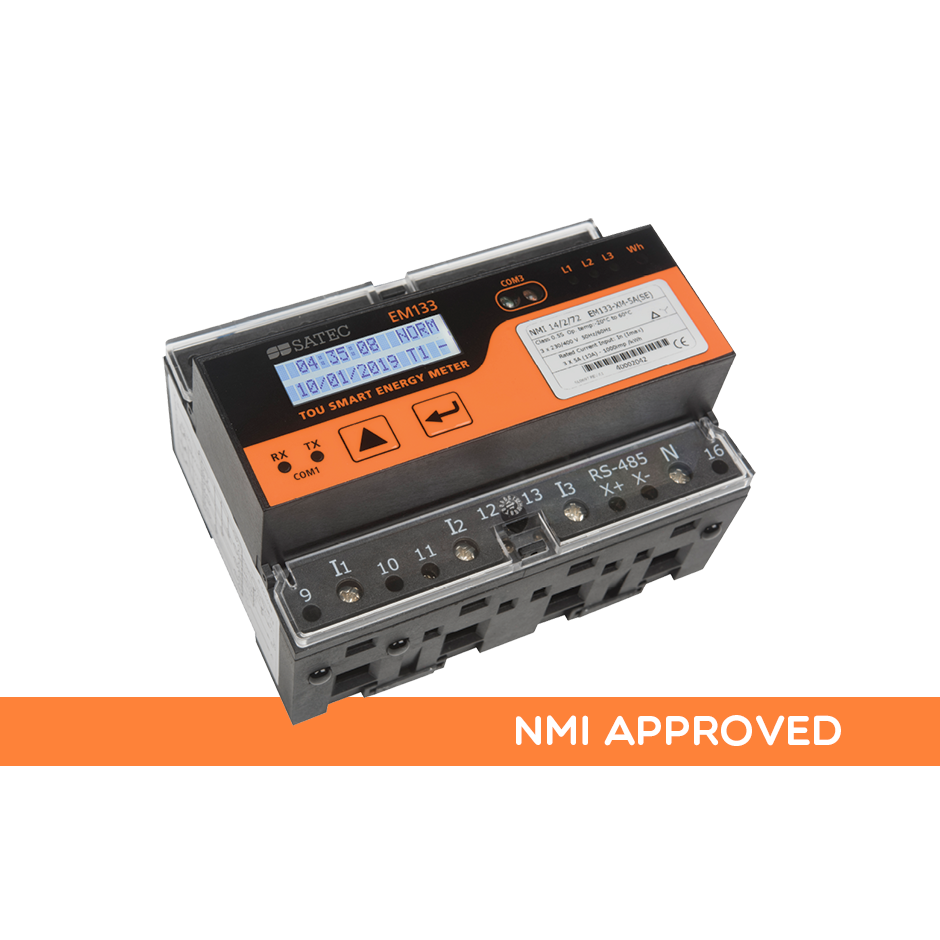
EM133-XM Smart Energy Meter
multi channel energy meters nmi approved smart meters 
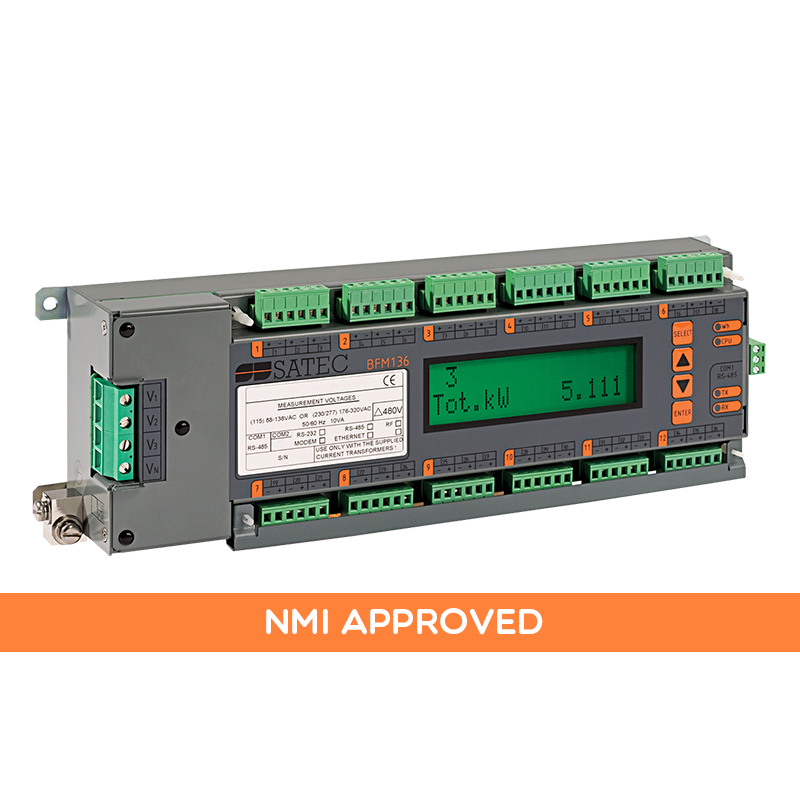
BFM136 Multi Circuit Energy Monitor
jQuery.noConflict(); jQuery(document).ready(function($){ "use strict";
$(window).load(function(){
$("#randomtofrw71rw4n1vmmd1kji_port .optionset li a").each(function() {
var filter_class = $(this).attr('data-option-value'); if ($('#randomtofrw71rw4n1vmmd1kji_port').find(filter_class).length){ // implies *not* zero $(this).parent('li').show(); }else{ $(this).parent('li').hide(); }
});
$('#portfolio-tags').css('opacity','1'); function watchport() {
$("#randomtofrw71rw4n1vmmd1kji_port .portfolio_block").isotope('layout');
}
setInterval(watchport, 100);
});
});
The NMI Approved Energy Metering Blog Library is designed to be your central hub for understanding the requirements that support accurate electricity measurement, compliant billing and fair cost allocation. Where electricity data is used for trade, tenant billing or financial settlement, the meter must meet relevant Australian legal metrology requirements. Our collection of blogs explores NMI pattern approval, meter accuracy, verification and practical applications to help you understand what compliant metering involves.
Here you’ll find practical guidance on selecting NMI approved meters, meeting NMI M 6-1 requirements and understanding verification procedures such as NITP 14.2. From embedded networks and multi-tenant properties through to commercial facilities and renewable energy projects, this library brings together clear and actionable content to support property owners, metering providers, engineers, retailers and energy professionals in maintaining accurate, reliable and compliant electricity measurement.
jQuery.noConflict();
jQuery(document).ready(function($){ "use strict";
/*!!!!!!!!!!!!!!!!!!!!!!!!!!!!!!!!CONFIG!!!!!!!!!!!!!!!!!!!!!!!!!!!!!!!!!!!*/
var html_template = "type1"; var column = "blog_4_col"; var cat = "nmi-pattern-approval-nitp-14"; var tn_size = ""; var more_option = "cutted"; var order = "DESC"; var orderby = "date"; var now_open_works = 0; var first_load = true;
/*!!!!!!!!!!!!!!!!!!!!!!!!!!!!!!!!CONFIG!!!!!!!!!!!!!!!!!!!!!!!!!!!!!!!!!!!*/
function get_blog_posts (this_obj) {
if(typeof(this_obj)=="undefined") {data_option_value="*";} else {var data_option_value = this_obj.attr("data-option-value");}
if (first_load == true) {
var works_per_load = 5; first_load = false;
} else {
var works_per_load = 4;
}
$.ajax({
type: "POST", url: mixajaxurl, data: "html_template="+html_template+"&now_open_works="+now_open_works+"&action=get_blog_posts"+"&works_per_load="+works_per_load+"&column="+column+"&first_load="+first_load+"&category="+cat+"&tn_size="+tn_size+"&more_option="+more_option+"&order="+order+"&orderby="+orderby+"", success: function(result){
if(result.length<1){ $(".rd_prderf2iim3qmiq8carw.blog_load_more_cont a").html("No more posts"); } now_open_works = now_open_works + works_per_load; first_load = false; var $newItems = $(result); $("#rd_prderf2iim3qmiq8carw").isotope( 'insert', $newItems, function() { $("#rd_prderf2iim3qmiq8carw").ready(function(){ $("#rd_prderf2iim3qmiq8carw").isotope('layout'); //Blog $('#rd_prderf2iim3qmiq8carw .isotope-item').each(function(){ $(this).css('margin-top', Math.floor(-1*($(this).height()/2))+'px'); }); }); $("#rd_prderf2iim3qmiq8carw").isotope('layout'); $(window).trigger('resize'); }); $(".wpb_row:empty").remove(); $(".wpb_column:empty").remove(); $(".wpb_wrapper:empty").remove(); $(".post-attachement").fitVids(); $(".entry").fitVids(); $(".video_sc").fitVids(); /* global mejs, _wpmejsSettings */ // add mime-type aliases to MediaElement plugin support mejs.plugins.silverlight[0].types.push('video/x-ms-wmv'); mejs.plugins.silverlight[0].types.push('audio/x-ms-wma'); $(function () { var settings = {}; if ( typeof _wpmejsSettings !== 'undefined' ) { settings = _wpmejsSettings; } settings.success = function (mejs) { var autoplay, loop; if ( 'flash' === mejs.pluginType ) { autoplay = mejs.attributes.autoplay && 'false' !== mejs.attributes.autoplay; loop = mejs.attributes.loop && 'false' !== mejs.attributes.loop; autoplay && mejs.addEventListener( 'canplay', function () { mejs.play(); }, false ); loop && mejs.addEventListener( 'ended', function () { mejs.play(); }, false ); } }; $('.wp-audio-shortcode, .wp-video-shortcode').mediaelementplayer( settings ); }); $('.wp-audio-shortcode').removeClass('wp-audio-shortcode'); $('.flexslider').flexslider({ animation: "slide", //String: Select your animation type, "fade" or "slide" slideDirection: "horizontal", directionNav: true, start: function(slider){ // init the height of the first item on start var $new_height = slider.slides.eq().height(); slider.height($new_height); }, before: function(slider){ // init the height of the next item before slide var $new_height = slider.slides.eq(slider.animatingTo).height(); if($new_height != slider.height()){ slider.animate({ height: $new_height }, 400); } } }); $('.zilla-likes').unbind().bind('click', function() { var link = j$(this); if(link.hasClass('active')) return false; var id = $(this).attr('id'), postfix = link.find('.zilla-likes-postfix').text(); $.post(zilla_likes.ajaxurl, { action:'zilla-likes', likes_id:id, postfix:postfix }, function(data){ link.html(data).addClass('active').attr('title','You already like this'); }); return false; }); if( $('body.ajax-zilla-likes').length ) { $('.zilla-likes').each(function(){ var id = $(this).attr('id'); $(this).load(zilla_likes.ajaxurl, { action:'zilla-likes', post_id:id }); }); } $('a.prettyPhoto').prettyPhoto(); $(".refresh_icn").removeClass("fa-spin"); $(".refresh_icn").removeClass("fa-refresh"); $(".refresh_icn").addClass("fa-plus"); } }); } $(".get_blog_posts_btn").click(function(){ $(".refresh_icn").removeClass("fa-plus"); $(".refresh_icn").addClass("fa-refresh"); $(".refresh_icn").addClass("fa-spin"); get_blog_posts(); $(".masonry_ctn").isotope('layout'); return false; }); /* load at start */ $(window).load(function(){ get_blog_posts(); $('.masonry_ctn').isotope({ // options itemSelector : '.ajax_post', layoutMode : 'masonry' }); function watchblog() { $(".masonry_ctn").isotope({ // options itemSelector : '.ajax_post', layoutMode : 'masonry' }); } setInterval(watchblog, 100); });});
What a sub meter needs to bill tenants in NSW: NMI approval, verification, accuracy class and how the 2026 embedded network reforms raise the stakes.
Multi-tenant submetering in Australia: when it is allowed, the NMI approval bills need, fair cost allocation and the compliance failures to avoid.
Understand what NMI approval covers for CT connected electricity meters in Australia, including accuracy class, sensor combinations, verification and billing use.
MID approved energy meters Australia: Why European certification cannot legally bill tenants here, what NMI pattern approval requires and how to check any meter.
The SRES expands to 1 MW from October 2026. Here is what bigger commercial solar means for metering, self consumption and site data.
NEM metering installation types explained from Type 1 to Type 9, including the new Type 8 and Type 9 categories and what they mean for Australian sites.
Smart electricity meter vs traditional meter explained for Australian sites, covering interval data, NMI approval, the 2030 rollout and choosing the right meter.
Four quadrant metering separates import, export and reactive energy at Australian sites. Learn how it works, why direction matters and which meters suit.
Discover how the NMI approved SATEC EM133-XM turns accurate meter data into smarter energy decisions, clearer billing and better reporting.
Incorrect energy readings can distort tenant billing and cost recovery. Learn how accurate metering helps reduce disputes, recover costs and improve energy transparency.
Get fortnightly updates delivered straight to your inbox.
SATEC – Solutions And Technology for Energy Control
SATEC’s presence in Australia brings together 40 plus years of experience and knowledge for Energy Management Solutions.
The culmination of local expertise and SATEC’s Global leadership in metering, power quality analysers and software provides a source of knowledge to satisfy customer’s ever changing demands for today’s Energy and Power Quality Applications.
Can your smart energy meter deliver a detailed load profile? Learn the logging, memory and software you need to analyse demand circuit by circuit.
Why utilities should pair extended range CTs with the NMI approved EM133-XM for load growth, better light load accuracy and fewer CT ratios to stock.