

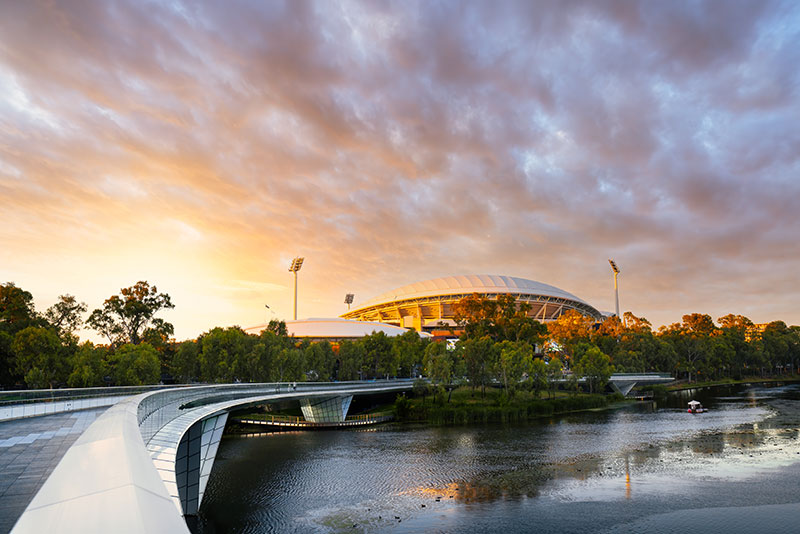
Sports stadiums and arenas are among the most operationally complex facilities in Australia. On a quiet mid-week morning, a venue might support only groundskeeping crews, administration staff and players in training. On event day, that same facility must power tens of thousands of fans, broadcast infrastructure, commercial kitchens, corporate hospitality suites, field lighting, scoreboards, public address systems, security networks and public transport coordination, all at the same time.
This dramatic shift in demand makes energy management uniquely challenging. Unlike a standard commercial building with relatively predictable consumption patterns, a stadium’s energy load can rise sharply before the gates open, peak during the event and fall away quickly once crowds have dispersed. Without accurate visibility into how and where energy is being used, facility teams are often left responding to problems only after the electricity bill arrives.
That is why energy monitoring at sports stadiums has become a core operational tool for Australian venue operators. It provides the data needed to understand where power is being consumed, when demand is rising and how operational decisions affect cost, efficiency and performance.
Key Points
Stadium energy profiles shift dramatically between event and non-event days, making traditional energy management largely ineffective.
Real-time monitoring replaces reactive bill-based management with decisions that can be made before, during and after events.
Demand charges under Australian electricity tariffs can represent a substantial portion of a large venue’s total energy costs.
Energy data helps venue operators maintain fan comfort while reducing unnecessary heating, cooling and lighting expenditure.
Accurate monitoring supports sustainability reporting, NABERS benchmarking and compliance with Australia’s evolving ESG disclosure requirements.
SATEC meters paired with Expertpower software provide Australian stadium operators with a scalable, site-wide energy visibility and management solution backed by more than 50 years of global energy metering experience.
Why Stadium Energy Use Is So Complex
A modern Australian sports venue is closer to a small city than a single building. It may include playing field lighting, public concourses, commercial kitchens, bars, restaurants, function rooms, corporate suites, media rooms, administration offices, retail tenancies, car parks, digital signage, lifts, escalators, security systems and large-scale HVAC plant. Each area carries a different energy profile.
Some loads are constant. Others only activate on event days. Some are essential for safety and regulatory compliance while others can be refined with better scheduling and operational controls.
Many venues still rely on limited meter data. A main incoming meter can show total site consumption but it cannot explain which areas are driving demand. It cannot reveal whether a food and beverage tenancy is using more energy than expected, whether HVAC is conditioning spaces too early or whether lighting schedules are aligned with the actual event programme.
Energy monitoring solves this by breaking consumption into meaningful data. Instead of treating the venue as one large energy load, operators can see the performance of individual systems, zones and tenants across the entire facility.
From Energy Bills to Real-Time Decisions
Traditional energy management in large venues is often reactive. A high bill arrives and the facility team investigates what may have occurred weeks earlier. By that time the event has passed and the opportunity to correct the issue is long gone.
Real-time monitoring changes this process. Facility managers can observe demand patterns as they develop. They can identify unusual spikes, compare event days with non-event days and track how energy use changes across different event types. A football match, a music concert and a trade exhibition may all use the same venue yet their energy profiles can look completely different.
Field events require sustained field lighting, broadcast power and crowd movement systems. Concerts often place greater demand on production equipment, temporary power installations and high-output lighting rigs. A conference or trade show may draw less peak power overall but operate across longer hours with a different load pattern entirely.
With the right energy data, venue teams can plan more accurately. They can adjust schedules, allocate costs across tenants more fairly and identify operational habits that are driving unnecessary consumption.
How Event Type Affects Energy Demand
The table below illustrates how energy demand varies across common event types at Australian stadiums and arenas. Understanding these differences allows facility managers to plan resources and set realistic energy budgets for each event type.
| Event Type | Field / Stage Lighting | HVAC Demand | Catering Load | Broadcast / AV | Typical Duration | Overall Energy Profile |
|---|---|---|---|---|---|---|
| Field Events | High | High | Moderate | Moderate to High | 3 to 4 hours | High peak, rapid ramp-up |
| Cricket (Day-Night) | Very High (floodlights) | High | High | High | 7 to 8 hours | Extended high load |
| Concert / Live Music | Very High (production) | High | Moderate | Very High | 4 to 6 hours | Sustained high load with demand spikes |
| Conference / Trade Exhibition | Low to Moderate | Moderate | Low to Moderate | Low | 8 to 10 hours | Lower peak, longer operating window |
| Non-Event Day | Low (maintenance only) | Low | Minimal | None | Ongoing | Baseload only |
Managing Peak Demand on Event Days
One of the most significant financial challenges for large Australian venues is peak demand. Under the electricity tariffs applied across the National Electricity Market, energy costs are not based solely on total consumption. Demand charges, which are calculated from the highest level of power drawn during a set measurement interval, can represent a substantial portion of a venue’s electricity bill and persist across the entire billing period regardless of how efficiently energy is managed at other times.
For stadiums and arenas, this matters because demand can surge sharply before and during major events. Industry data indicates that on match days, electricity demand can increase four to five times from a baseload of around 200 kVA to more than 1,000 kVA as lighting, HVAC, catering equipment, escalators, digital screens and broadcast systems all ramp up together. That single peak can shape costs for the entire month.
Energy monitoring gives operators a clearer view of when demand starts rising and which areas contribute most. This information supports better sequencing of equipment start-up, smarter HVAC pre-conditioning strategies and improved event-day procedures. The goal is not to compromise the fan experience. It is to use energy more intelligently so that comfort, safety and performance are all maintained while avoidable costs are reduced.
Improving Fan Comfort Without Wasting Energy
Fan comfort is a core priority for any Australian venue operator. No stadium or arena can afford uncomfortable spectators, poor air quality or operational disruptions during an event. At the same time, heating and cooling large public spaces in the Australian climate can be expensive, particularly during summer events or in humid coastal cities.
Energy monitoring helps venue teams find the right balance. By reviewing energy data alongside occupancy figures, weather conditions, event timing and building management system outputs, operators can make better decisions about when to run HVAC systems and at what level. This is especially valuable in enclosed arena environments, hospitality spaces and mixed-use areas.
Some zones may need conditioning well before others. Some may not need to run at full capacity once crowds have settled into seated areas. Better monitoring gives operators the evidence to refine these settings rather than relying on assumptions or fixed schedules. Over time, this leads to more efficient event templates. A venue can build energy profiles for different event types and use those profiles to improve planning for future events of the same kind.
Supporting Sustainability and ESG Reporting in Australia
Australian sports organisations face growing pressure to demonstrate environmental leadership. Fans, sponsors, local councils, investors and governing bodies increasingly expect venues to show measurable progress on sustainability. This expectation is reinforced by Australia’s evolving Environmental, Social & Governance (ESG) disclosure landscape, including ASIC climate-related guidance and the Safeguard Mechanism administered by the Clean Energy Regulator.
Energy monitoring makes this commitment measurable. It turns broad sustainability goals into trackable performance indicators. Instead of stating that a venue is working to reduce its energy footprint, operators can show exactly where reductions are occurring and how specific initiatives are performing over time. This supports formal sustainability reporting, tenant engagement, sponsor communications and internal business cases for capital investment.
If a venue upgrades to LED lighting, installs rooftop solar, improves HVAC efficiency or introduces automation controls, energy monitoring provides the before and after data needed to demonstrate real impact. Accurate monitoring also supports NABERS Energy benchmarking, which is increasingly used by Australian venues to measure performance and communicate progress to stakeholders. It gives sustainability claims substance and credibility rather than broad generalisation.
Finding Hidden Energy Waste
Large venues often contain hidden energy waste that is difficult to identify without sub-metering. Equipment may run well outside required hours. Empty areas may remain fully lit. Tenancies may carry unexpected usage patterns. Mechanical systems may work against each other due to poor scheduling or incorrect control settings.
A robust monitoring system can surface these issues. The data may reveal unusual overnight consumption, unexplained weekend loads or sharp spikes linked to particular systems or zones. Once these patterns become visible, facility teams can investigate and take corrective action. In many cases, savings come from simple operational changes rather than major capital works. Adjusting start times, correcting control settings, identifying faulty equipment or improving post-event shutdown procedures can all deliver meaningful reductions in both consumption and cost.
Why Power Quality Matters in Stadiums
Energy monitoring extends beyond consumption data. Australian stadiums and arenas rely on sensitive electrical systems including broadcast equipment, scoreboards, LED lighting controls, audio systems, ticketing infrastructure and security technology. These systems can be affected by poor power quality in ways that are not visible from standard consumption readings alone.
Voltage fluctuations, harmonic distortion and other power quality issues can affect the performance, reliability and operational life of critical equipment. During high-profile events where any disruption is unacceptable, the ability to detect and act on these issues early is genuinely valuable.
Advanced metering gives venue operators a better understanding of electrical conditions across the site. This helps maintenance teams detect issues earlier, supports more reliable operations and reduces the risk of unexpected failures at precisely the wrong moment.
SATEC Meters: A Proven Solution for Australian Venues
For stadium energy monitoring, the quality of the metering system is critical. Venue operators need accurate data from across the site, not just a single view of total energy use. This is where the SATEC energy metering range is well suited to stadiums, arenas and large entertainment venues across Australia.
Advanced electrical meters from the SATEC range are designed to capture detailed energy and power quality data. NMI pattern-approved for use in Australian applications, they can be deployed for main metering, sub-metering, tenant metering and monitoring of major loads such as field lighting, HVAC, food and beverage areas, plant rooms, EV charging infrastructure and event-related power systems.
For facility managers, this creates a much clearer picture of how energy moves through the venue. Comparing different zones, identifying peak demand contributors and tracking the performance of critical systems becomes straightforward rather than speculative. This supports better decisions before, during and after major events. The energy metering range is also well suited to retrofit environments where space may be constrained and disruption needs to be carefully managed.
Many Australian stadiums and arenas are existing facilities with complex electrical infrastructure that was not originally designed with sub-metering in mind. A practical metering solution must work within those constraints while still delivering accurate and reliable data. When paired with Expertpower energy management software, venue teams can turn raw meter data into actionable insight.
Expertpower provides automatic data collection from energy meters and presents it through customisable dashboards, giving operators real-time visibility into consumption, demand and power quality across the entire site. Rather than raw readings sitting in isolation, the platform makes it straightforward to identify trends, set alerts for abnormal conditions and generate reports that support both operational decision-making and sustainability reporting.
Integration with building management systems and SCADA platforms adds further capability, which is particularly valuable in complex venue environments. Together, the metering hardware and Expertpower software deliver a practical and scalable solution for venues that want to improve energy visibility and operate with greater confidence.
Smarter Venue Operations Start With Better Data
Energy monitoring at sports stadiums is an operational tool as much as it is a sustainability initiative. It helps teams control costs, improve system reliability, plan events more effectively and work towards long-term energy performance goals. For stadiums and arenas, every event is an opportunity to learn.
The more data a venue collects over time, the better it understands its own patterns and behaviours. This creates a progressively smarter operating model where decisions are based on evidence rather than guesswork. As energy costs continue to rise across the National Electricity Market and stakeholder expectations around sustainability grow stronger, venues that invest in quality monitoring will be better positioned to adapt and respond.
They will know where energy is being used, where demand is peaking and where improvements will have the greatest impact on both cost and performance. In an environment where fan experience, operational reliability and financial performance all matter, better energy visibility is the foundation for smarter venue operations.
FAQs - Energy Monitoring at Sports Stadiums and Arenas
What is the difference between energy monitoring and simply reading an electricity bill?
An electricity bill shows total site consumption after the fact but cannot identify which systems, zones or tenants are driving costs. Energy monitoring provides real-time, granular data that allows facility managers to act on issues as they occur rather than weeks later.
How does energy monitoring help reduce peak demand charges at Australian stadiums?
By tracking how demand builds across a site in real time, operators can sequence equipment start-ups more effectively and avoid multiple high-draw systems ramping up simultaneously. This helps prevent the sharp demand peaks that drive up costs under National Electricity Market tariff structures.
Can energy monitoring support NABERS ratings and sustainability reporting?
Accurate sub-metering data provides the verified consumption records needed to support NABERS Energy benchmarking and formal ESG reporting. It also gives venues the before and after evidence required to demonstrate the impact of energy efficiency initiatives to sponsors, investors and governing bodies.
Are SATEC meters suitable for older stadiums with complex electrical infrastructure?
SATEC’s energy metering range is well suited to retrofit environments where switchboard space is limited and disruption needs to be minimised. The meters are NMI pattern-approved for Australian applications and can integrate with existing building management and SCADA systems without requiring major infrastructure changes.
Explore related topics:
For Your Industry
- Building Energy Management Analytics: The Complete Guide for Commercial Buildings
- Commercial HVAC Energy Optimisation: What Meter Data Reveals That Setpoints Don’t
- Why Load Shedding Is Becoming Essential For Commercial And Industrial Energy Management
Standards & Compliance
Related Reading
Trending in Your Sector


