

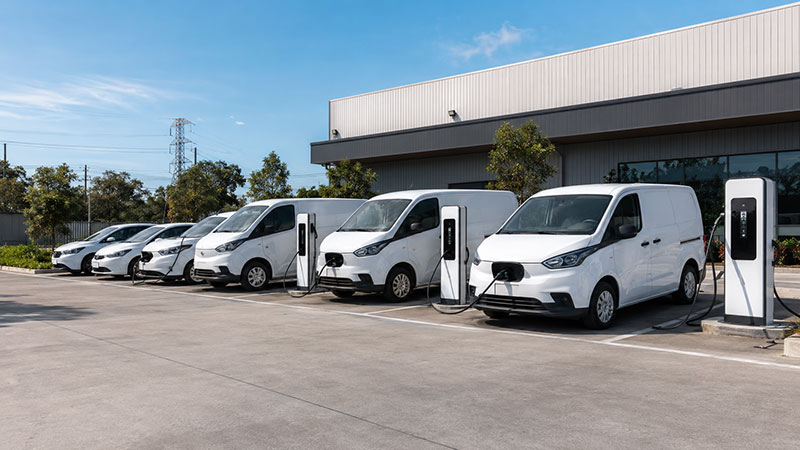
Australia’s electricity system is changing quickly. More businesses and households are installing solar, battery storage, EV chargers and controllable equipment. These resources can consume, store or export electricity at different times of the day.
Until now the market has made it difficult to measure and trade those resources separately from the rest of a property. Secondary settlement points are designed to remove that barrier. They form part of the Flexible Trading Arrangements reform in the National Electricity Market.
The change matters most to large commercial and industrial sites. It could allow a business to use one energy provider for its general supply and another for a battery or an EV charging system at the same premises.
Key Points
A secondary settlement point is a separately identified metering point behind a premises’ primary connection point, used to settle a specific flexible resource in the energy market.
Secondary settlement points, Type 8 meters and the new NMI Service Provider role commence on 1 November 2026 under Release 2 of the Flexible Trading Arrangements.
Only large customers can engage a second financially responsible market participant at the same premises. Small customers keep a single retailer.
Participation is voluntary. No business is required to establish a secondary settlement point simply because it owns flexible equipment.
Distribution network charges continue to be allocated at the primary connection point and subtractive settlement applies to the energy measured at the secondary point.
SATEC supplies NMI pattern approved meters and the Expertpower platform, giving sites the accurate interval data and visibility needed to assess whether a secondary settlement point is worth pursuing.
What Is A Secondary Settlement Point?
A secondary settlement point is a separately identified metering point located behind a premises’ primary connection point. It measures the electricity consumed or exported by a particular device, system or group of loads.
The primary connection point remains the site’s connection to the distribution network. It continues to measure the overall flow between the premises and the grid. The secondary point sits inside the installation and records the energy associated with one flexible resource.
Take a large commercial facility with a battery energy storage system. Energy flowing into and out of that battery can be measured separately from lighting, air conditioning and production equipment.
This distinction matters for settlement. It gives the market a clear way to identify the energy belonging to a specific asset without treating that asset as a separate physical premise.
What A Secondary Settlement Point Is Not
It is not a second network connection. It is not an embedded network. It is also not standard sub metering because it carries formal market roles, data obligations and compliance requirements.
Why Australia Is Introducing Flexible Trading
Traditional arrangements were designed when customers simply bought electricity from the grid. One retailer managed everything recorded at the connection point.
Consumer energy resources have made that model less suitable for some sites. A modern facility may combine rooftop solar, batteries, EV chargers, thermal storage and price responsive equipment. Different providers may be better placed to manage each of those assets.
The Flexible Trading Arrangements make those relationships easier to establish. The reform applies across the National Electricity Market, so it covers Queensland, New South Wales, the Australian Capital Territory, Victoria, South Australia and Tasmania. Western Australia and the Northern Territory sit outside the NEM.
Where The Reform Is Up To
The AEMC made the final rule in August 2024. AEMO is delivering it in two releases.
Release 1 went live on 31 May 2026 and introduced Type 9 metering for street furniture such as kerbside EV chargers and smart streetlights. Release 2 follows on 1 November 2026. That release brings secondary settlement points, Type 8 meters and the new NMI Service Provider role into the market.
Victoria needed additional work because the National Energy Customer Framework does not automatically apply there. A separate AEMC rule change finalised in April 2026 addressed drafting that risked restricting secondary settlement points at premises with Victorian advanced metering infrastructure.
One Premises With More Than One Energy Provider
This is the change large energy users care about most. An eligible large customer will be able to engage one provider for general electricity supply and a second provider for a flexible resource measured at a secondary settlement point.
A commercial property could keep its existing retailer for building consumption while using a specialist to manage a large battery. A transport depot could use a dedicated provider for its EV charging system while offices and workshops stay with the main retailer.
Previously this usually meant creating an embedded network or establishing an additional connection point. Both routes carry cost, exemption requirements and administrative effort.
Small customers are treated differently. They can separate flexible resources at a secondary settlement point but they continue to have only one financially responsible market participant at their premises.
The commercial value will depend on equipment capability, electricity prices, market access and service agreements. Separate measurement creates the foundation for these arrangements rather than guaranteeing a financial return.
How Secondary Settlement Points Support Flexible Resources
Flexible resources can change when they consume or export electricity. A battery may charge when prices are low and discharge during a demand peak. EV charging can be shifted away from site peaks. Industrial equipment may reduce load temporarily in response to a signal.
Measuring those activities separately makes it easier to verify how a resource performed. It also clarifies which energy flows belong to the provider managing that resource. Accurate settlement, performance verification and clear financial responsibility all depend on it.
The arrangements may suit battery energy storage systems, commercial and fleet EV charging, controllable generation, demand response equipment and flexible industrial loads. They could also support participation in virtual power plants where distributed resources are coordinated together.
Some limits apply. A secondary settlement point cannot be established for a scheduled resource or within a regulated stand alone power system.
Type 8 Meters And The New Market Roles
The reform introduces Type 8 metering installations as a cost effective way to measure energy at secondary settlement points. The category splits into two.
Type 8A applies to large customer secondary settlement points. Type 8B applies only to small customer secondary settlement points and may use measurement capability built into equipment such as an EV charger. A small customer’s primary connection point must remain Type 4.
The existence of Type 8 does not mean every meter automatically qualifies. Devices must meet the applicable technical, accuracy, data and procedural requirements, and AEMO approval applies to devices used in these installations. Commissioning of a Type 8A installation must be carried out by an appropriately accredited Metering Provider.
A new accredited role also appears. The NMI Service Provider is responsible for establishing and maintaining the NMI for a secondary settlement point. One point often surprises businesses. Distribution network charges continue to be allocated to the financially responsible market participant at the primary connection point.
Subtractive settlement is used, so the energy at the secondary point is netted off the primary point rather than billed as a separate network connection.
Comparing The Options
| Feature | Primary Connection Point | Secondary Settlement Point | Embedded Network |
|---|---|---|---|
| Purpose | Measures total energy between the site and the distribution network | Measures one flexible resource behind the primary connection point | Distributes energy to tenants or occupants behind a parent connection |
| Meter Types | Type 1 to 4, Type 9 for street furniture | Type 8A for large customers, Type 8B for small customers | Parent market meter plus child sub meters |
| Number Of Retailers | One financially responsible market participant | A second provider is possible for large customers only | One at the parent connection, with on selling behind it |
| Network Charges | Applied at this point | Allocated at the primary connection point using subtractive settlement | Applied at the parent connection point |
| Registration Effort | Standard connection process | New NMI created by an NMI Service Provider | AER exemption or authorisation required |
| Available From | In place today | 1 November 2026 | In place today |
| Best Suited To | Whole of site supply | Batteries, EV charging and controllable loads at large sites | Multi tenant buildings and precincts |
Why Metering Data Sits At The Centre Of Flexible Trading
Reliable data becomes essential once two providers are financially responsible for different energy flows at the same property. Missing intervals, incorrect configurations or communication failures can affect settlement and make performance impossible to verify.
A suitable metering system needs to capture energy at the required intervals. It also needs to communicate that data securely to authorised parties. Accurate time synchronisation, onboard data storage and event records help operators investigate any inconsistency.
Businesses considering a secondary settlement point should review their metering architecture early. Existing meters may deliver valuable operational data while still needing assessment against the formal market requirements for the proposed arrangement.
How SATEC Supports Flexible Energy Metering
Advanced electricity meters for commercial, industrial and multi circuit applications are SATEC’s core business, backed by more than 50 years of energy management expertise.
The NMI approved EM133-XM delivers Class 0.5S accuracy, interval data recording and flexible communications in a compact DIN rail format. These capabilities suit the detailed monitoring required around batteries, EV charging systems and other flexible loads.
Data from these meters can flow into Expertpower for centralised collection, reporting and analysis. Energy managers can then compare consumption patterns, examine demand and track selected equipment across a site.
Building that visibility now is the practical step available before November. Understanding how a battery or charging system actually behaves is what tells you whether a secondary settlement point is worth pursuing at all.
The right meter and communications configuration will depend on the resource, the connection arrangement and the market requirements that apply. Project stakeholders can work with the SATEC team to identify a suitable measurement solution.
Formal acceptance of a secondary settlement point must be confirmed with the appointed Metering Coordinator, the NMI Service Provider and other responsible market participants.
Preparing For The New Arrangements
There is no reason to wait until November before reviewing your site. Start by identifying assets that can shift consumption, store electricity or export energy. Their operating patterns and potential market value can then be assessed.
Next, review the switchboard layout, communications infrastructure and existing metering. Early planning reveals whether a resource can be measured independently and whether additional equipment will be needed.
Secondary settlement points will not suit every property. For sites with large batteries, EV fleets or genuinely controllable loads, they offer a practical route towards greater choice and better value from flexible energy resources.
FAQs - Secondary Settlement Points
When do secondary settlement points become available?
They commence on 1 November 2026 as part of Release 2 of the Flexible Trading Arrangements. Release 1, covering Type 9 metering for street furniture, went live on 31 May 2026.
Do I have to establish a secondary settlement point if I have a battery?
No. Participation is entirely voluntary and no customer is required to establish one simply because they own flexible equipment.
Is a secondary settlement point the same as sub metering?
No. Sub metering measures energy for operational or billing purposes behind the meter, while a secondary settlement point is recognised in the market with its own NMI, meter type requirements and data obligations.
Will a secondary settlement point mean paying network charges twice?
No. Distribution network charges continue to be allocated at the primary connection point and subtractive settlement applies to the energy measured at the secondary point.
Explore related topics:
For Your Industry
- Type 8 Energy Meters Explained: What Secondary Settlement Points Mean For Large Energy Users
- Type 9 Energy Meters Explained: What Street Furniture Metering Means for Councils
Standards & Compliance
- NEM Metering Installation Types Explained: A Complete Guide To Types 1 To 9
- The First Din Rail Multifunction Energy Meter with NMI Pattern Approval
Related Reading
Trending in Your Sector


