

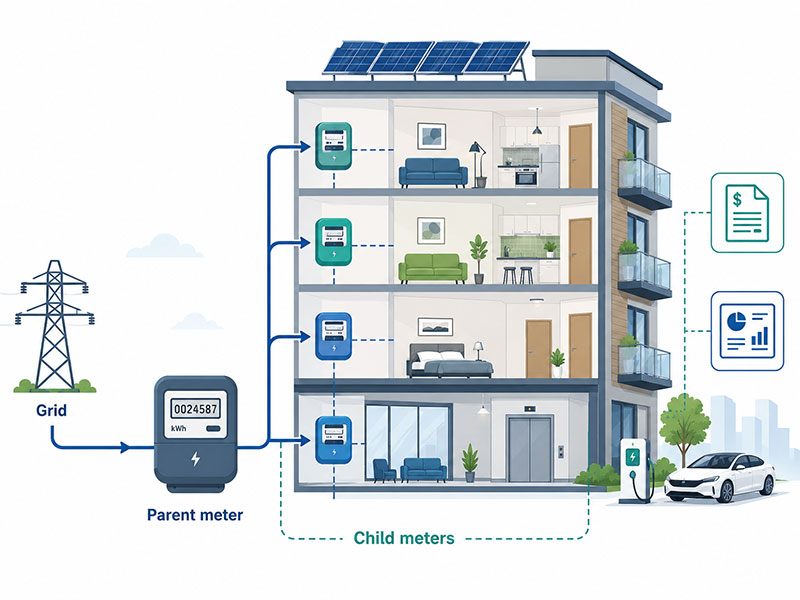
An embedded electricity network is a private electricity network operating within a larger site such as an apartment building, shopping centre, retirement village or commercial property. Instead of every tenant or resident having a direct individual connection to the public electricity grid, the site has one main connection point. Electricity enters through a parent meter and is then distributed internally to apartments, shops, offices, common areas and other loads.
For building owners, operators, strata managers and embedded network managers, accurate metering is essential. It affects billing, compliance, tenant confidence and the way energy performance is managed across a site. Understanding how parent meters, child meters and tenant billing work together is the first step to managing an embedded network well.
Key Points
An embedded electricity network distributes power to multiple tenants or premises through a single parent connection point on a private electrical network.
The parent meter records total electricity entering the site from the grid and is the master measurement point for the whole building or precinct.
Child meters are sub-meters installed downstream of the parent meter to measure electricity use for each individual apartment, tenancy or load.
Accurate child metering is the foundation of fair tenant billing, cost recovery and dispute resolution in embedded networks.
Embedded network operators in Australia must comply with Australian Energy Regulator (AER) guidelines, including new consumer protection requirements introduced following the AER’s August 2025 Final Decision.
SATEC’s NMI-approved meters, including the EM133-XM DIN rail meter, are well suited to both parent and child metering applications in Australian embedded networks and are backed by over 40 years of energy management expertise.
How an Embedded Electricity Network Works
In a standard electricity arrangement, each customer has their own direct relationship with an electricity retailer and a direct metering point connected to the distribution network. In an embedded electricity network, the property has a central supply arrangement and electricity is distributed within the site from that point. The site operator typically buys electricity in bulk from a retailer and then recovers costs from tenants or residents based on measured consumption.
The same network may also support on-site solar allocation, common area energy monitoring and management of shared services such as lifts, lighting and car park equipment. Embedded networks are found across a wide range of property types in Australia including apartment buildings, shopping centres, retirement villages, industrial estates, office buildings and mixed-use developments.
The Regulatory Context in Australia
Embedded network operators in Australia are subject to oversight by the AER. Operators must obtain an exemption from the requirement to register as a network service provider and comply with the conditions set out in the AER’s Retail Exempt Selling Guideline and Network Exemptions Guideline. In August 2025 the AER published its Final Decision following a review of the exemptions framework for embedded networks.
The decision introduced several changes including stronger consumer protections and new registration requirements. From 1 January 2026 the deemed exemption classes are closed to new embedded network configurations, meaning most new networks must register an exemption with the AER. Property owners, developers, strata managers and network operators should review whether these updated guidelines apply to their current or future activities.
What Is a Parent Meter?
The parent meter is the main electricity meter for the embedded electricity network. It measures the total electricity entering the site from the grid and is the master measurement point for the entire building or precinct.
The parent meter records total electricity supplied to the site before it is measured among apartments, tenancies, common areas or equipment. This data is important for reconciling electricity purchased from the retailer against electricity used within the property.
What Is a Child Meter?
A child meter is a sub-meter installed downstream of the parent meter. It measures electricity use for an individual customer, tenancy, apartment, shop or service within the embedded electricity network. If the parent meter shows the total electricity entering the site, child meters show where that electricity is consumed.
Each child meter records a specific point of use such as an apartment, retail tenancy, EV charging area or plant room. Child or sub meters are critical for tenant billing. They allow the operator or billing provider to allocate electricity costs based on actual consumption rather than estimates or broad averages. This matters in buildings where usage patterns vary significantly between tenants.
In a well-designed embedded electricity network, child meters provide the visibility needed to bill fairly and manage disputes with confidence.
NMI Pattern Approval for Child Meters
Any electricity meter used for billing or trade measurement in an Australian embedded network must hold NMI pattern approval under the NMI M 6-1 standard. This requirement has applied in Australia since January 2013. Meters used for sub-metering for tenant billing must also comply with NMI M 6, NMI M 13 or NMI R 46 standards as applicable and must be supplied with NITP-14 test verification certification.
Selecting a meter that is not NMI-approved for a billing application which is not compliant and can expose operators to disputes and regulatory risk.
How Tenant Billing Works
Tenant billing in an embedded electricity network depends on accurate metering data, clear tariffs and a billing process that reflects the rules applying to the site. The parent meter captures the total electricity supplied to the property. Child meters capture the electricity used by each tenant or customer. The billing system then uses child meter data to generate individual bills.
A tenant bill may include electricity consumption charges, supply charges and other approved charges depending on the arrangement in place and the applicable regulatory requirements. Poor metering creates real problems. If data is incomplete, delayed or difficult to access, billing becomes harder to explain and defend. Tenants may question whether their bill is correct and property managers may spend more time handling complaints.
Why Meter Accuracy Matters
In an embedded electricity network, meters are the foundation of customer billing, cost recovery, compliance and energy management. Accurate meters support fair allocation of electricity costs. They also help building operators identify unusual consumption, detect possible faults and monitor trends over time.
When a tenant says their bill seems too high, reliable interval data can show whether usage has changed or whether a specific load may be driving the increase. Modern buildings are becoming more energy complex. Solar, batteries, EV charging, central plant and smart building systems all create new measurement challenges.
A strong metering solution helps stakeholders understand what is happening inside the network rather than relying on guesswork.
Parent Meter vs Child Meter: A Comparison
| Feature | Parent Meter | Child Meter |
|---|---|---|
| Position in Network | Upstream at the grid connection point | Downstream of the parent meter |
| What It Measures | Total electricity entering the site from the grid | Electricity used by an individual apartment, tenancy or load |
| Primary Purpose | Whole-site reconciliation and demand monitoring | Individual tenant billing and consumption tracking |
| NMI Approval Required? | Yes, where used for trade measurement | Yes, required for all embedded network billing applications (since January 2013) |
| Number Per Site | Typically one per supply connection point | One per tenancy, apartment, EV charger or defined load |
| Key Data Outputs | Total site consumption, peak demand, power quality | Interval data, consumption history, billing reads |
| Supports Dispute Resolution? | Yes, helps reconcile whole-site usage | Yes, provides individual consumption evidence |
| Relevant SATEC Products | PM180, PM335, PRO Series | EM133-XM, BFM Series |
SATEC Metering Solutions for Embedded Networks
Accurate metering is essential in embedded networks and SATEC’s product range is well suited to child metering applications in the Australian market. For child metering and individual tenancy measurement, the EM133-XM is an NMI-approved DIN rail meter with Class 0.5S accuracy. Its compact format is well suited to switchboards where many meters must be installed in limited space. This makes it particularly practical for retrofit projects in existing buildings that need improved metering without a major redesign of electrical infrastructure.
The BFM136 offers multi-circuit metering capability, which can further reduce switchboard space and installation time where multiple circuits need to be measured. All NMI-approved meters in the SATEC range are factory tested under ISO 17025 standards with testing to NMI NITP 14, and are supplied with NITP-14 test verification certification. This provides a defensible, auditable billing foundation that supports embedded network operators in meeting their compliance obligations.
Expertpower, SATEC’s energy management software, can help turn metering data into usable information by supporting monitoring, reporting and analysis of consumption patterns, demand and site performance across the network. Together, SATEC meters and Expertpower provide a strong metering foundation for embedded electricity networks that need accurate billing data, practical installation options and deeper energy visibility.
Bringing It All Together
An embedded electricity network depends on good data. The parent meter shows how much electricity enters the site. The child meters show how much each tenant, apartment or load consumes. Tenant billing depends on turning that data into clear and accurate charges.
For building owners, strata managers, developers and facilities teams, the quality of the metering system makes a real difference. With the right meters and software in place an embedded electricity network can be more transparent, easier to manage and better prepared for the demands of modern buildings. The regulatory environment for embedded networks in Australia is evolving.
The AER’s 2025 Final Decision has introduced new requirements that will take effect progressively. Getting the metering infrastructure right now supports both current compliance and future readiness
FAQs - What Is an Embedded Electricity Network?
What is the difference between a parent meter and a child meter in an embedded electricity network?
A parent meter records the total electricity entering a site from the grid, while child meters (also called sub-meters) measure the electricity used by individual apartments, tenancies or loads downstream. Together they allow the operator to allocate costs accurately across the network.
Do child meters in Australian embedded networks need to be NMI-approved?
Yes. Any electricity meter used for billing or trade measurement in an Australian embedded network must hold NMI pattern approval under the NMI M 6-1 standard. This requirement has applied since January 2013 and meters must be supplied with NITP-14 test verification certification.
What are the regulatory requirements for embedded network operators in Australia?
Embedded network operators must obtain an exemption from the requirement to register as a network service provider with the AER and comply with the conditions of the AER’s Retail Exempt Selling Guideline and Network Exemptions Guideline. Following the AER’s August 2025 Final Decision, most new embedded networks must register a formal exemption from 1 January 2026 and operators must meet strengthened consumer protection requirements.
How does Expertpower support embedded network management?
Expertpower is SATEC’s energy management software platform. It supports monitoring, reporting and analysis of consumption patterns, demand and site performance. When connected to SATEC meters across a site it helps building operators turn interval and billing data into actionable information for cost management, compliance and energy reporting.
Explore related topics:
For Your Industry
Standards & Compliance
Related Reading
- What Is A Switch Test In Tenant Energy Metering Commissioning?
- Smart Electricity Energy Meter vs Traditional Meter: What Is the Difference?
Trending in Your Sector


