

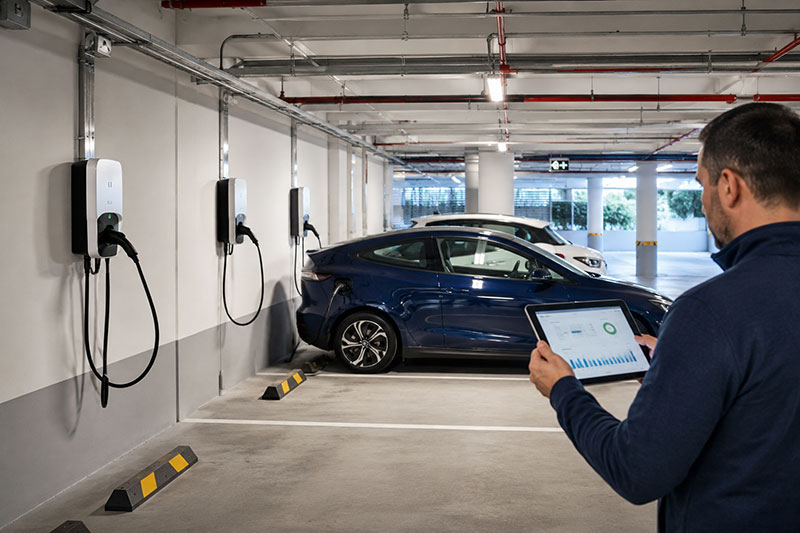
Electric vehicle uptake is reshaping the way apartment buildings across Australia think about electricity. For years, many strata schemes treated EV charging as a future issue. That future has now arrived in car parks, visitor bays and strata committee meetings right across the country.
Demand for residential charging is growing alongside those numbers and apartment residents are feeling that pressure. The challenge is that most existing apartment blocks were not designed with multiple EV chargers in mind. Their electrical infrastructure may be perfectly adequate for normal residential use yet still struggle when residents begin asking for charging access at the same time.
This is where retrofit metering becomes an important part of the conversation. Rather than treating EV charging as a simple matter of installing chargers wherever there is space, apartment buildings need a way to understand, measure and manage the energy being consumed. Retrofit metering gives strata committees, building managers and residents the visibility they need to make practical decisions before demand becomes difficult to manage.
Key Points
Most Australian apartment blocks were not designed to support multiple EV chargers, making proactive planning essential.
Retrofit metering measures EV energy use separately from other building loads, enabling transparent and accurate cost recovery.
Real usage data helps strata committees plan staged rollouts without overcapitalising on infrastructure too early.
A user-pays billing model reduces disputes between EV and non-EV owning residents.
Energy metering gives building managers clear visibility over load trends, helping to protect existing electrical capacity.
SATEC’s NMI-approved meters and Expertpower platform provide apartment buildings with a proven, scalable foundation for managing EV charging demand.
Why Apartment EV Charging Is Different
Installing EV chargers in an apartment block is not the same as installing one in a detached home. In a house, the owner controls the switchboard, the parking space and the electricity account. In an apartment building, the situation is considerably more complex.
Car spaces may be privately owned, allocated, leased or shared. Electrical infrastructure may be part of common property. The cost of electricity may need to be recovered from individual users. Some residents may want charging immediately while others may not own an EV for years. Without accurate metering, this can quickly become a fairness issue.
If EV charging is connected to common power without a clear way to measure individual use, non-EV owners may feel they are subsidising other residents. If individual residents are left to organise their own solutions, the building can end up with inconsistent installations and poor visibility over total electrical demand.
Retrofit metering helps apartment blocks avoid this situation. It allows buildings to measure EV charging energy use separately from other loads and allocate costs more transparently.
Understanding Demand Before It Becomes a Problem
One of the biggest risks for apartment buildings is underestimating future EV charging demand. A building may start with one or two residents requesting chargers. That can seem manageable at first. Over time, demand can increase quickly as more residents move to electric vehicles.
Retrofit metering helps building managers track actual usage patterns rather than relying on guesswork. It shows when charging is happening, how much energy is being consumed and whether demand is rising over time. This information is valuable when planning the next stage of EV infrastructure. For example, a building may discover that most charging happens overnight and that average energy use is lower than expected. Another building may find that peak charging periods are starting to overlap with other high-demand loads.
Both scenarios call for different planning decisions. Good data helps strata committees avoid overcapitalising too early while still preparing for future growth. It also gives electrical consultants and contractors clearer information when assessing capacity, load management requirements and upgrade pathways.
Fair Billing for Residents
Billing is one of the most common sticking points in apartment EV charging. Residents want confidence that they are only paying for their own electricity use. Owners corporations want to recover costs accurately. Strata managers want a process that does not create unnecessary administration. Retrofit metering supports a user-pays model by measuring the electricity consumed by EV chargers or dedicated charging circuits. This makes it easier to attribute costs to the right resident, tenant or shared charging account.
Fair billing is not only about recovering money. It also builds trust. When residents can see that EV charging is being measured properly, there is less room for disputes over common property electricity costs. This is especially important in buildings where only a small number of residents use chargers in the early stages. As EV adoption grows, transparent billing becomes even more important. A system that works for two chargers may not work for twenty. Retrofit metering gives buildings a more scalable foundation.
Supporting Smarter Load Management
Many apartment blocks have limited spare electrical capacity. This does not always mean EV charging is impossible. It means the building needs a smarter approach. Retrofit metering can work alongside load management strategies by providing the energy data needed to understand real conditions. Instead of assuming the worst, building managers can monitor actual consumption and identify when demand is approaching critical levels.
This visibility can inform decisions such as staged charger rollouts, charging schedules, demand limits or future infrastructure upgrades. It can also help buildings avoid unnecessary electrical work by showing how existing capacity is actually being used. EV charging should not be planned in isolation. It sits within a broader electrical environment that may include lifts, lighting, HVAC, pumps, common area loads and other essential systems. Metering gives the building a clearer picture of how EV charging fits into that environment.
A Practical Pathway for Older Apartment Blocks
Older apartment buildings often face the biggest barriers to EV charging. Their switchboards, risers and car park layouts may not have been designed for modern energy needs. Running new cabling can be expensive. Space may be limited. Approval processes within strata can be slow.
Retrofit metering is useful because it can form part of a practical staged approach. A building does not always need to solve every future EV charging scenario in a single project. It can start by improving visibility, measuring common loads and putting a framework in place for fair cost recovery. This helps committees make decisions based on evidence. It also makes conversations with residents more productive.
Instead of debating broad assumptions about cost and capacity, the building can refer to measured data and a clear implementation plan. For many strata schemes, the goal is not to install the maximum possible number of chargers immediately. The goal is to create an electrical and billing structure that can grow as resident demand grows.
SATEC Metering Solutions for Apartment EV Charging
Smart electrical metering solutions from SATEC are well suited to retrofit metering projects in apartment blocks. NMI-approved energy meters are particularly relevant where accurate, compliant measurement is required for billing or cost allocation. In apartment EV charging scenarios, this helps owners corporations recover energy costs with greater confidence and reduces the risk of disputes between EV users and other residents.
Meters are also designed with practical installation environments in mind. Apartment buildings often have space constraints in switchrooms and distribution boards. Compact metering solutions are valuable in retrofit projects where installers need reliable measurement without unnecessary complexity. The EM133-XM is Australia’s first NMI-approved retrofit energy meter and uses split-core current sensors that do not require disconnection of live conductors. This makes it particularly well suited to existing buildings where minimising disruption during installation is important.
The BFM136 multi-circuit energy monitor extends this capability further. It allows multiple EV charging circuits to be metered from a single device and is the only multi-circuit energy monitor covered under NMI M 6-1 in Australia. For apartment blocks planning a staged rollout of chargers, this offers a practical and space-efficient solution.
The Expertpower software platform adds another layer of value by helping users view and analyse energy data. For buildings preparing for EV charging demand, this visibility supports better planning, easier monitoring and more informed conversations with electrical contractors, strata managers and residents. Power quality monitoring capability is also relevant here.
EV charging adds a new type of electrical load to apartment buildings and understanding how that load behaves over time helps building stakeholders manage infrastructure more confidently. Together, SATEC meters and Expertpower give apartment blocks a practical pathway from guesswork to measurable energy management.
Planning for EV Demand with Confidence
Retrofit metering is not just about installing meters. It is about helping apartment buildings make better decisions as EV charging demand grows. The buildings that plan early are more likely to avoid conflict, cost surprises and fragmented installations. They can create clearer rules for residents, better billing arrangements and a more realistic pathway for future charger expansion.
For strata committees, the first step is usually understanding the building’s current electrical position. From there, retrofit metering can help measure actual EV charging use, identify trends and support a staged upgrade strategy. This approach is especially useful in buildings where residents are at different stages of EV adoption. Some may already need charging. Others may be waiting for their next vehicle purchase. A metered framework allows the building to support early adopters without losing sight of future demand.
Building Readiness Starts with Visibility
Apartment blocks do not need to wait until EV charging demand becomes urgent. By investing in retrofit metering early, they can create the visibility and structure needed to manage change properly. Accurate metering supports fair billing, better planning and more confident decision making. It helps building managers understand what is happening today and prepare for what is likely to happen next.
As EV ownership continues to grow across Australia, apartment buildings with clear energy data will be in a stronger position. They will be better equipped to respond to resident requests, manage electrical capacity and scale charging infrastructure in a fair and practical way. For many existing buildings, retrofit metering is the bridge between today’s electrical infrastructure and tomorrow’s EV charging needs.
FAQs - How Retrofit Metering Helps Apartment Blocks Prepare for EV Charging Demand
What is retrofit metering and why does it matter for apartment EV charging?
Retrofit metering involves installing smart energy meters into an existing building’s electrical infrastructure without major modifications. It allows apartment blocks to measure EV charging energy use separately from other loads, making accurate cost recovery and fair billing possible.
Who pays for EV charging electricity in an apartment block?
With retrofit metering in place, costs are attributed directly to the resident or tenant using the charger through a user-pays model. This removes the risk of EV charging costs being absorbed by common power and shared across all residents regardless of whether they own an electric vehicle.
Do apartment buildings need to upgrade their entire electrical system before adding EV chargers?
Not necessarily. Retrofit metering helps building managers understand actual electrical capacity and usage patterns first, allowing decisions to be made on real data rather than worst-case assumptions. In many cases, a staged approach to charger installation is more practical and cost-effective than a full infrastructure overhaul.
What makes NMI-approved meters important for apartment EV charging in Australia?
In Australia, electricity meters used for billing must be approved by the National Measurement Institute (NMI) to ensure accuracy and compliance. Using NMI-approved meters gives owners corporations confidence that energy costs are being measured correctly and reduces the risk of billing disputes between residents.
Explore related topics:
For Your Industry
- Strata Electricity and EV Charging: What Apartment Buildings Need to Know
- How Solar, Batteries And EV Charging Work Within An Embedded Electricity Network
Standards & Compliance
- MID Approved Meters In Australia: Why They Cannot Legally Bill Tenants
- NMI Approved Retrofit Energy Metering
Related Reading
Trending in Your Sector


