

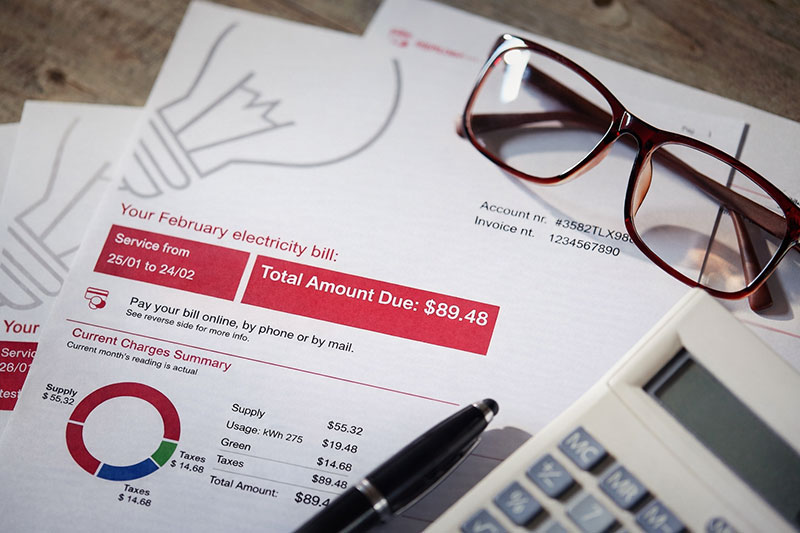
If you manage a building or pay energy charges as part of a tenancy agreement, understanding bundled and unbundled energy bills is becoming increasingly important. Rising energy costs and growing expectations around transparency are pushing owners, landlords, strata managers and tenants to look more closely at how electricity charges are presented and recovered.
At first glance the difference seems straightforward. A bundled bill typically wraps energy costs into a total kWh energy cost, incorporating regulatory, environmental and other charges. An unbundled bill separates energy from other costs and shows it as its own line item, such as regulatory, environmental, network and Time Of Use (TOU) charges . In practice the choice between these two models can affect trust, compliance, budgeting and how clearly people understand what they are paying for.
This matters across residential developments, commercial tenancies, mixed-use sites, student accommodation, retirement living and multi-tenant properties where energy use can vary significantly from one occupant to another. Once people understand how bundled and unbundled energy bills work it becomes much easier to decide which model best suits the property and the people using it.
Key Points
Bundled energy bills combine electricity costs with other charges such as regulatory, environmental, network and Time Of Use (TOU) charges, reducing billing visibility for occupants.
Unbundled energy bills separate electricity as a distinct charge, making it easier to understand consumption costs and allocation methods.
The Australian Energy Regulator (AER) has introduced new transparency and consumer protection obligations for embedded network operators, with key requirements phasing in from 1 January 2026 and 1 July 2026.
In Australian commercial and industrial markets, larger energy users typically receive unbundled bills as standard, while small and medium enterprises and residential customers are generally on bundled billing structures.
Fair cost allocation is a central concern in multi-tenant properties, where bundled billing can see low-usage occupants subsidising those with higher consumption.
Accurate sub-metering is the foundation of any credible billing model. NMI-approved meters such as those offered by SATEC provide the reliable consumption data needed to support transparent and defensible billing in Australian properties.
What Are Bundled Energy Bills?
Bundled energy bills combine electricity charges with other electricity-related costs. Instead of receiving a separate line item bill for multiple energy charges, the occupant may see up to six line items, including TOU charges.
In Australia, residential and small to medium enterprise (SME) customers are generally billed on a bundled basis. The various components of energy supply including network charges, environmental levies and retail costs are rolled into a single per-kilowatt-hour rate rather than shown separately.
For some property owners bundled billing feels simpler. It reduces the number of invoices being issued and can make administration easier in small or less complex sites. For occupants it may appear more convenient because there is less paperwork and fewer separate charges to track.
The downside is that bundled billing reduces visibility. When electricity is folded into a larger charge people often cannot see how much energy they actually used or whether their costs are rising due to higher consumption or changing tariffs. That lack of detail can also make it harder to encourage energy-saving behaviour.
What Are Unbundled Energy Bills?
Unbundled energy bills separate electricity charges. The occupant can see energy as a distinct charge rather than part of an all-inclusive amount.
In the Australian context, unbundled billing is standard for large market or Commercial and Industrial (C&I) customers. These businesses consume significant amounts of electricity and receive itemised invoices that break out network charges, market rates, metering costs, environmental levies and retail margins separately. This structure gives energy-intensive businesses the ability to scrutinise each component and work with brokers or consultants to negotiate the elements that are open to competitive pricing.
For landlords and building managers, unbundled billing can also improve communication. Rather than disputes about whether charges are reasonable there is a stronger basis for explaining how costs were measured and allocated. That clarity is becoming more valuable as energy prices remain under pressure and building users expect better data.
The Key Difference Between Bundled And Unbundled Energy Bills
The main difference between bundled and unbundled energy bills is transparency. A bundled model prioritises simplicity in presentation. An unbundled model prioritises visibility and accountability. One incorporates the energy component inside a broader payment while the other shows it separately. That difference affects several practical issues.
- Budgeting tends to be easier when charges are itemised.
- Tenant communication is often smoother when the numbers are clear.
- Energy efficiency initiatives usually work better when occupants can actually see the impact of their usage.
This does not mean bundled billing is always wrong or unbundled billing is always right. The best choice depends on the building setup, the type of occupants, the metering infrastructure in place and any regulatory requirements that apply to the site.
The Regulatory Picture In Australia
The Australian Energy Regulator (AER) has been actively strengthening consumer protections for people on embedded networks, which are private electricity networks commonly found in apartment buildings, strata schemes, retirement villages, student accommodation and commercial properties where electricity is on-sold by the building operator.
Following a review that commenced in November 2023 the AER published its final decision in August 2025. Key changes include requirements for exempt sellers to publish their customer tariffs, effective 1 July 2026 and obligations to include energy ombudsman contact details on customer bills from the same date.
Stronger consumer protections including family violence provisions apply from 1 January 2026. These reforms mean building operators who on-sell electricity can no longer treat billing as a back-office matter. Transparency is now a regulatory expectation and properties that have relied on opaque or bundled billing arrangements will need to consider how their practices hold up under increasing scrutiny.
Why More Property Owners Are Moving Toward Unbundled Billing
There is a growing preference for billing structures that are easier to explain and easier to justify. Occupants want to understand their costs. Owners want defensible billing practices. Building managers want fewer disputes and better data. Unbundled billing supports these goals by giving energy charges their own place on the invoice.
That can be especially useful in larger properties where some tenants consume far more electricity than others. It also helps when a site wants to promote better energy awareness because people are far more likely to pay attention to their consumption when they can actually see it. Bundled billing can still work in certain environments. It may suit short-stay occupancy, all-inclusive residential offers or properties where separate metering is not practical.
Even so, the trend toward transparency means many owners are reconsidering whether a bundled approach continues to serve them well over time, particularly in light of new AER obligations.
How Billing Structure Affects Fairness
Fairness sits at the centre of the discussion around bundled and unbundled energy bills. If energy costs are pooled into a broader charge low-usage occupants may end up subsidising high-usage occupants. That can create frustration even if the system was designed for convenience.
An unbundled approach gives owners and managers a better opportunity to align charges with real consumption or a more clearly defined allocation method. That is especially important in commercial and multi-tenant settings where energy use can be influenced by business type, equipment, operating hours and occupancy density.
Clearer billing can also improve the relationship between building operators and occupants. When people feel that charges are visible and grounded in reliable data trust tends to improve.
Why Metering Matters So Much
None of this works well without accurate metering. The billing model may be bundled or unbundled but the quality of the data behind it determines whether charges are credible. If a building lacks the right metering setup owners may have to estimate usage or rely on broad allocation methods. That limits transparency and creates room for error.
Once interval data and reliable sub-metering are introduced it becomes much easier to support clearer billing structures and better energy management. In Australia, meters used for tenant billing purposes must be pattern approved and verified under National Measurement Institute (NMI) requirements as outlined in NMI M 6-1. Using a non-approved meter for trade measurement purposes is not compliant with Australian law.
This is an important consideration for any property operator running an embedded network or on-selling electricity to occupants. Metering also opens the door to deeper insight. Building operators can identify high-consumption areas, compare usage patterns, verify charges and make better decisions about upgrades or operational changes.
How SATEC Products Support Better Energy Billing
For sites reviewing bundled and unbundled energy billing, metering is the foundation that makes a better billing model possible. The BFM136 Branch Feeder Monitor is NMI-approved under NMI M 6-1 for sub-metering in the Australian market, making it suitable for tenant billing in residential projects, office buildings, shopping centres and mixed-use developments. It monitors up to 12 three-phase circuits or 36 single-phase circuits and supports multi-tariff time-of-use billing, which is increasingly important given the complexity of Australian electricity pricing structures.
Where individual tenancy metering is required rather than multi-circuit monitoring, the EM133-XM offers a compact DIN rail-mounted alternative. Also NMI-approved with Class 0.5S accuracy, it supports single and three-phase configurations, time-of-use tariff registers and four-quadrant metering for sites with solar or bi-directional energy flows. The EM133-XM-HACS variant accepts split-core current sensors, making it well suited to retrofit installations where downtime needs to be minimised.
In multi-tenant environments accurate metering helps owners and managers understand where electricity is being used and how costs can be allocated with greater confidence. This is particularly valuable when moving toward unbundled billing because the invoice needs to reflect trustworthy usage data that can be defended if questioned.
Energy visibility beyond a single meter reading is also supported through the Expertpower energy management platform, which allows building operators to monitor performance, analyse consumption trends and improve oversight across the site.
For retrofit projects the compact design of both the BFM136 and EM133-XM offers a practical advantage where switchboard space is limited. Buildings do not have to choose between better billing clarity and the realities of an existing installation because modern metering infrastructure can be implemented in a way that supports smarter billing and stronger energy management without disrupting the existing setup.
Choosing The Right Approach For Your Property
There is no single answer that fits every building. Some sites will continue to use bundled billing for simplicity. Others will see clear value in separating electricity charges from other costs, particularly as regulatory expectations in Australia continue to evolve. What matters most is whether the billing model supports transparency, fairness and confidence in the underlying data.
As expectations rise across the market many property owners are finding that clearer billing starts with better metering. Understanding bundled and unbundled energy bills is not just about terminology. It is about giving owners and occupants a clearer view of energy costs and creating a billing structure that stands up to scrutiny. When supported by accurate NMI-approved metering and strong energy data that approach can improve trust, support fairer cost recovery and help buildings operate more efficiently.
FAQs - Bundled And Unbundled Energy Bills
What is the difference between a bundled and unbundled energy bill?
A bundled bill incorporates electricity costs within a broader charge such as regulatory, environmental, network and Time Of Use (TOU) charges, while an unbundled bill shows energy as a separate, itemised charge. Unbundled billing gives occupants and building operators greater visibility over what they are actually paying for.
Do Australian building operators need to use approved meters when on-selling electricity to tenants?
Yes. Any meter used for tenant billing in Australia must be pattern approved and verified under National Measurement Institute (NMI) requirements as outlined in NMI M 6-1 and using a non-approved meter for this purpose is not compliant with Australian law.
What new obligations apply to embedded network operators in Australia?
The Australian Energy Regulator (AER) has introduced new transparency requirements including obligations for exempt sellers. Strengthened consumer protections apply from 1 January 2026.
Can older buildings be retrofitted with sub-meters to support fairer tenant billing?
Yes. Compact multi-circuit meters such as the SATEC BFM136 are specifically designed for retrofit installations where switchboard space is limited, allowing multiple circuits to be metered within a single device without costly rewiring.
Explore related topics:
For Your Industry
Standards & Compliance
Related Reading
- Your Meter, Your Data, Your Platform: Why Energy Metering Should Work With Third-Party Software
- How Solar, Batteries And EV Charging Work Within An Embedded Electricity Network
Trending in Your Sector


