

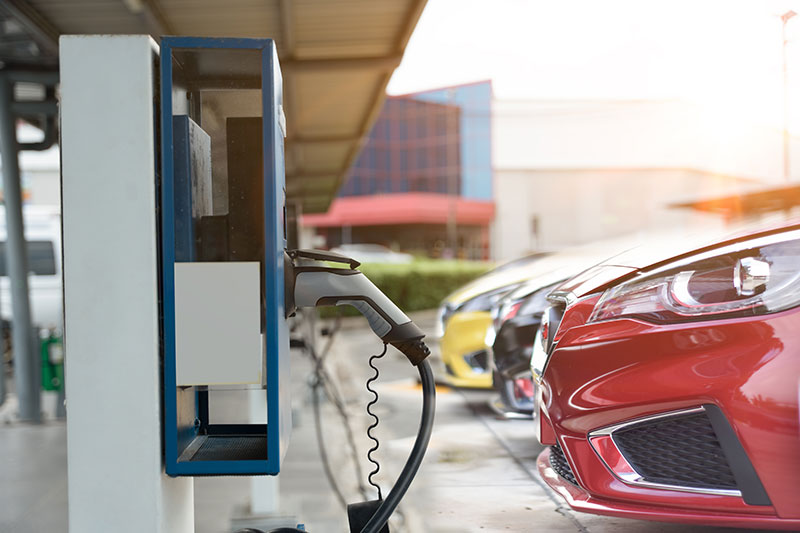
Electric vehicle adoption is accelerating across Australia and charging infrastructure is expanding with it. What once looked like a future planning issue is now a day-to-day operational challenge for property owners, facility managers, developers and energy professionals.
Australia now has more than 410,000 EVs in the national vehicle fleet and there are now at least 4,192 high-power public charging plugs across the country, representing a 22 per cent increase in just one year. As more EV chargers are installed across commercial buildings, strata complexes, workplaces, shopping centres and industrial sites, the electrical network behind them is being asked to do far more than it was originally designed for.
That shift is one of the main reasons a Power Quality Audit has become essential. EV chargers are not simple loads. They rely on power electronics and draw energy in ways that can introduce harmonics, voltage fluctuations, phase imbalance and other disturbances into an electrical system. In some cases the issues appear quickly. In others they build gradually as more chargers are added to the site.
Either way, the consequences can include nuisance tripping, overheating, unexplained equipment faults, poor charger performance and growing pressure on the wider network. A power quality audit helps uncover these risks before they become expensive problems.
Key Points
Australia’s EV charging network is growing rapidly and the electrical infrastructure behind it is being pushed well beyond what it was originally designed to handle.
EV chargers are nonlinear loads that introduce harmonics, voltage fluctuations and phase imbalance into a site’s electrical system, often in ways that standard energy monitoring cannot detect.
In Australia, harmonic voltage distortion is generally assessed against connection specific planning levels set by the network service provider. AS/NZS 61000.3.6 applies to medium and high voltage systems, while for low voltage public systems an 8% voltage THD figure is often referenced as a compatibility level under IEC 61000-2-2. Any compliance obligations depend on the specific network connection requirements and the conditions set by the relevant supply authority.
Skipping a power quality audit can lead organisations to replace equipment or increase supply capacity without addressing the real cause, resulting in higher costs and ongoing reliability problems.
A power quality audit establishes a baseline before chargers are installed and identifies emerging risks after deployment, making it far more cost-effective than diagnosing faults after they appear.
SATEC’s range of NMI-approved meters and power quality analysers, combined with Expertpower software, gives building owners and energy managers the billing-grade accuracy and analytical depth needed to manage EV charging loads with confidence.
How EV Charging Changes the Electrical Profile of a Site
Traditional building loads tend to follow patterns that are relatively familiar. HVAC systems, lighting, lifts and general power all create demand but their impact on power quality is often easier to predict. EV charging adds a different layer of complexity.
Chargers can operate for long periods at high load. Fast chargers in particular can place significant stress on the electrical supply. Even AC chargers can create issues when many units are installed together in a commercial car park or mixed-use development. The cumulative effect can alter the site’s electrical profile in ways that are not always visible through standard energy monitoring alone. This matters because a site can appear to have enough capacity on paper while still suffering from power quality problems in practice.
Demand is only one part of the story. Voltage performance, harmonic distortion and load interaction also matter when chargers are added to the network. EV chargers cause harmonics because they are electronic equipment that converts AC grid power to the DC power needed for batteries.
In Australia, the relevant standard for harmonic voltage distortion is AS 61000.3.6, which is compatible with IEEE 519 recommendations and sets a maximum total harmonic distortion of 8 per cent. Exceeding that threshold can create compliance obligations with the supply authority and lead to filtering requirements being imposed on the site.
Why Energy Data Alone Is Not Enough
Many facilities already monitor consumption, peak demand and billing data. That is useful but it does not tell the full story. A site may know how much electricity is being used without understanding whether the quality of that supply is putting infrastructure at risk.
A power quality audit goes deeper. It looks at the condition and behaviour of the electrical supply over time. It can identify sags, swells, harmonics, transients, flicker and imbalance that may be affecting chargers or other critical equipment connected to the same network. This is especially important where EV charging is added to existing infrastructure rather than being designed into a new build from day one.
Many retrofit projects involve switchboards, transformers and circuits that were never intended to support clusters of high-demand electronic loads. When issues start appearing, they are often misdiagnosed as charger faults or capacity shortfalls when the real cause sits within the site’s power quality profile.
The Risks of Skipping a Power Quality Audit
Without a power quality audit, organisations can end up solving the wrong problem. A site may respond to charger complaints by replacing equipment, changing software settings or increasing supply capacity. Those steps may help in some cases but they can miss the real issue if harmonics or voltage distortion are involved. That leads to higher costs and longer delays without addressing the root cause.
A poor quality supply can also affect more than the chargers themselves. Sensitive building systems, meters, automation controls, UPS equipment and tenant infrastructure may all be exposed to the same disturbances. In strata, commercial and mixed-use environments that can create operational headaches well beyond the car park. The financial impact can grow quickly. Downtime affects user confidence. Repeat service callouts consume time and budget. Unresolved electrical issues can shorten equipment life and increase maintenance pressure.
For organisations investing in EV charging as a visible part of their sustainability or customer experience strategy, unreliable performance can also damage brand perception.
When a Power Quality Audit Should Happen
A common mistake is waiting until there is already a problem. In reality the best time for a power quality audit is before major charger deployment begins. That creates a baseline and helps determine whether the existing system is ready for the new load profile.
A follow-up audit is also valuable after installation, especially on sites where charger usage is expected to grow over time. This allows operators to compare pre- and post-installation conditions and spot emerging issues before they escalate.
There are several scenarios where a Power Quality Audit is particularly important:
- A site planning multiple EV chargers across a shared switchboard
- Chargers being added to an older building with limited visibility into electrical performance
- Sites that already carry sensitive loads such as data systems, medical equipment, industrial automation or tenant submetering
What a Power Quality Audit Should Reveal
A good audit should do more than produce a set of numbers. It should provide a clear view of how the electrical system is behaving and where risk sits. That includes understanding whether harmonics are increasing under charger load, whether voltage conditions remain stable during charging events and whether certain times of day create more stress on the network.
It should also help clarify whether the issue originates from charger operation, site infrastructure or the interaction between the two. Most importantly it should support decisions. That may mean confirming the need for filtering, redesigning load allocation, improving monitoring or selecting more appropriate metering points.
A power quality audit is not just a diagnostic exercise. It is a practical foundation for better infrastructure planning.
Why SATEC Is the Right Metering Solution for EV Charging Sites
For sites deploying EV charging infrastructure, metering quality matters just as much as charger quality. You need accurate visibility into what is happening across the network and you need data that supports both day-to-day management and deeper analysis. This is where SATEC provides a strong solution.
SATEC has focused on power metering, power quality analysis and energy management since 1987. In Australia, SATEC offers a full range of smart energy metering and power quality solutions, from compact DIN-rail meters through to high-end analysers and cloud software.
Our portfolio includes Class A (IEC 61000-4-30) power quality analysers and National Measurement Institute (NMI) approved revenue meters that are well suited to sites needing to understand how EV charging is affecting both building performance and energy use.
SATEC’s NMI-approved meters, combined with Expertpower software, give operators billing-grade accuracy, power quality monitoring and centralised visibility across multiple sites and circuits. That combination matters in an Australian context where meters used for tenant billing or trade measurement must meet NMI approval requirements.
SATEC’s value is not only in capturing data. It is in turning that data into usable insight. With the right metering architecture in place, building owners and energy managers can track charger-related demand, identify abnormal events and build a clearer picture of site performance over time.
Expertpower is a comprehensive energy management system that turns meter readings into actionable views so teams can track trends, identify anomalies and support reporting. It brings monitoring, meter data management, power quality analysis and billing together in one platform.
For EV charging projects that need a reliable metering backbone, SATEC products help bridge the gap between installation and long-term operational control.
Building a Smarter Approach to EV Growth
EV charging is becoming a core part of modern building infrastructure in Australia. As adoption rises, the question is no longer whether charging will affect site electrical performance. The question is whether that impact is being measured and managed properly.
A power quality audit gives organisations the insight they need to install chargers with confidence, protect existing assets and make better decisions about future expansion. It shifts the focus from reacting to faults to designing for reliability from the start. That is why power quality can no longer be treated as a secondary issue in EV charging projects. It is central to performance, resilience and long-term value.
FAQs - Why EV Charging Infrastructure Now Requires a Power Quality Audit
What is a Power Quality Audit?
A power quality audit assesses the condition of an electrical system to identify issues such as harmonics, voltage fluctuations, transients and imbalance. It helps determine whether power quality problems could affect equipment performance and reliability.
Why do EV chargers create power quality concerns?
EV chargers use power electronics that can introduce harmonics and other disturbances into the electrical network. When multiple chargers operate on the same site, those effects can become more significant.
When should a site carry out a Power Quality Audit for EV charging infrastructure?
A power quality audit should ideally be done before installing multiple chargers and again after installation if usage is expected to increase. This helps establish a baseline and detect any emerging issues early.
How can SATEC help with EV charging power monitoring?
SATEC provides advanced metering and power quality analysis solutions that give sites better visibility into charger related electrical behaviour. With Expertpower, users can monitor performance, analyse events and make better infrastructure decisions.
Explore related topics:
For Your Industry
- Electric Truck Charging: Why Depot Metering Is The Key To Managing New Power Demand
- Three Phase EV Charging and Load Management: How to Avoid Overloading Your Site
Related Reading
- DC Meters For EV Chargers: What They Do, Why They Matter And How To Choose
- Triplen Harmonics Explained: How Harmonic Spectra Reveal Neutral Conductor Overloading
Trending in Your Sector


