

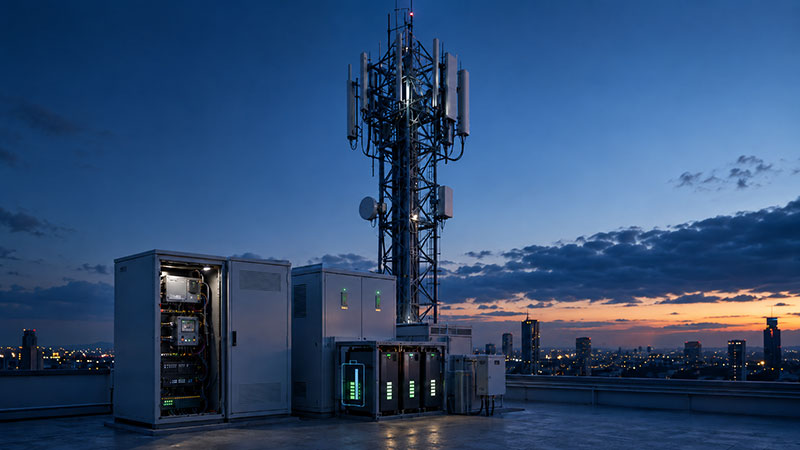
Telecommunications networks are expected to run continuously. Whether the site is a major exchange, mobile tower, network hub, comms room or edge facility, the power system behind it has one main job: keep critical equipment online. That sounds simple until you look at the electrical reality.
Australian telecommunications sites often combine grid supply, backup batteries, Uninterruptible Power Supply (UPS) systems, rectifiers, generators, cooling, security systems, routers, switches, radio equipment and in some cases solar or battery energy storage. Many sites are unmanned. Some are remote. Others sit inside larger commercial or industrial facilities where the telecommunications load is only one part of a more complex electrical environment.
This is where power monitoring for telecommunications becomes essential. Uptime does not start with the generator or the battery. It starts with visibility. If operators cannot see how power is being used, how equipment is performing and when electrical conditions are changing, they are left reacting after a problem has already affected the network.
Key Points
Telecommunications networks depend on stable, reliable power. Electrical visibility is the foundation of uptime planning.
Power quality monitoring helps diagnose faults that cause nuisance alarms, intermittent errors and shortened equipment life at remote or unmanned sites.
Backup power assets such as batteries, generators and UPS systems require active monitoring to confirm they will perform when needed.
Remote power monitoring reduces unnecessary site visits by giving teams clear electrical data before dispatching technicians across a wide geographic area.
As 5G infrastructure and edge computing expand across Australia, accurate metering data supports capital planning and helps operators identify where sites are approaching electrical capacity.
SATEC power meters and Expertpower energy management software give telecommunications operators a proven, Australian-supported solution for monitoring critical loads, power quality and energy performance across distributed sites.
Why Australian Telecommunications Sites Need Better Electrical Visibility
The consequences of inadequate power visibility are well documented in Australia. The 2023 Optus national outage affected approximately 10 million mobile customers and 400,000 fixed-line customers for most of a working day and remains the largest single telecommunications outage in Australian history. While that event was triggered by a routing change, it underscored how quickly a loss of network control can cascade across infrastructure.
Australia’s 5G rollout is also driving rapid site expansion. As of early 2024, Telstra had 5,082 5G sites nationally, Optus had 4,038 and TPG had 3,050, according to the ACCC Mobile Infrastructure Report. Operators are managing more sites, more equipment and more pressure to maintain service continuity. A single site may not look complex in isolation but across a national or regional network, small electrical issues can become expensive and difficult to manage without reliable data.
Power monitoring helps facilities teams, network operators and asset managers understand what is happening across the site. It can reveal how much energy is being consumed, where the major loads are, when peaks occur and whether the supply is stable enough for critical equipment.
Uptime Depends on More Than Backup Power
Backup power is a critical part of telecommunications resilience yet backup systems are only effective if they are monitored properly. Batteries, generators and UPS systems need to be tested, maintained and understood within the wider electrical system. A backup battery may be installed for emergency use but its condition, load support time and performance under real conditions still need attention.
A generator may be ready to start but the transfer event may affect sensitive loads. A UPS may protect critical equipment but it may also hide upstream issues until they become larger problems. Power monitoring for telecommunications sites provides the data needed to understand these systems before an outage occurs. It can show the normal load profile of the site, the demand on essential circuits and the behaviour of power systems during changeover events.
This information helps operators confirm whether backup assets are suitable for the loads they are expected to support. Without this visibility, resilience planning becomes guesswork. With it, operators can make better decisions about battery capacity, generator sizing, maintenance priorities and future upgrades.
The Role of Power Quality Monitoring
Energy consumption is only one part of the picture. Power quality is just as important for telecommunications sites because the equipment is sensitive and the operating environment can be demanding. Power quality issues can include voltage sags, swells, harmonics, transients, frequency variations and poor power factor. These issues may come from the grid, from nearby loads or from equipment within the site itself.
Rectifiers, cooling systems, inverters, EV chargers and variable speed drives can all affect the electrical environment. The impact may not always be dramatic at first. Poor power quality can show up as nuisance alarms, communication errors, overheating, reduced equipment life or intermittent faults that are hard to diagnose. These problems are particularly frustrating when the site is remote or unmanned because every investigation may require a technician visit.
Power quality monitoring helps turn these vague symptoms into evidence. It records electrical events and gives operators a clearer view of what happened, when it happened and how severe it was. That information is valuable for fault investigation, maintenance planning and conversations with utilities, contractors or equipment suppliers.
Remote Sites Need Remote Insight
Many Australian telecommunications assets are spread across wide geographic areas. Some are located on rooftops, towers, regional properties, industrial sites, transport corridors or remote land. Sending technicians to inspect every power concern is costly and inefficient across a country of this scale.
Remote power monitoring can reduce unnecessary site visits by giving teams a clearer view of electrical conditions before they dispatch support. If a site is showing abnormal demand, repeated power quality events or signs of backup system stress, the issue can be prioritised. If the data shows normal operation, the team may avoid a visit altogether.
This is one of the strongest arguments for power monitoring for telecommunications in an Australian context. It supports uptime while helping reduce operational cost. Instead of waiting for alarms, complaints or equipment failures, operators can use electrical data to identify risk earlier.
Supporting Growth, 5G and Edge Infrastructure
Australian telecommunications networks are not standing still. More sites are being upgraded to support higher capacity equipment, edge computing, additional cooling and stronger backup systems. Some locations are also being assessed for solar, batteries or other energy resilience upgrades. These changes affect electrical demand.
A site that was suitable five years ago may now be approaching its limits. Cooling loads may increase. Backup requirements may change. Power quality issues may become more noticeable as more power electronics are added. Energy metering gives operators the baseline data they need before upgrades begin. It helps answer practical questions:
- How much spare capacity does the site have?
- Which loads are growing?
- When do demand peaks occur?
- Are there power quality issues that should be addressed before new equipment is added?
This data can support better capital planning and reduce the risk of under-designed upgrades. It also helps organisations compare sites across a portfolio and decide where investment should be prioritised.
Energy Efficiency Without Compromising Resilience
Telecommunications sites need to reduce energy waste without putting uptime at risk. Power monitoring makes this balance easier. It can reveal high base loads, inefficient cooling behaviour, poor power factor, abnormal equipment consumption and demand peaks that may be increasing operating costs. The goal is not simply to use less energy. The goal is to understand which energy use is essential and which may be avoidable.
A site may identify cooling systems running harder than expected, equipment drawing abnormal current or loads that have changed since the original design. With accurate data, operators can make targeted improvements while protecting service continuity. This is especially important as energy costs continue to rise and infrastructure teams are being asked to do more with limited budgets.
How SATEC Supports Telecommunications Sites
SATEC provides power meters and power quality analysers well suited to the demands of telecommunications infrastructure. Products can be installed at the main incoming supply, distribution boards, generator connections, UPS outputs, rectifier feeds, cooling systems, battery interfaces and other essential circuits across a site.
The meter range covers key electrical parameters including voltage, current, power, energy, demand, power factor and harmonics in both AC and DC systems. This matters for telecommunications operators because many sites run DC-powered equipment including rectifiers, batteries and solar storage that standard AC meters cannot measure accurately.
SATEC’s DC metering solutions, which include Hall Effect Sensor-based meters from the PRO Series range, are specifically designed for these applications. For mission-critical environments, the PM180 offers Class A accuracy, advanced logging and support for leading communications protocols including IEC 61850, DNP3 and Modbus. These are the same protocols used in utility and substation automation systems, meaning SATEC meters can integrate into existing SCADA or network management infrastructure without requiring additional hardware.
Expertpower, SATEC’s energy management software platform, brings metering data from distributed sites into a single web-based interface. For organisations managing telecommunications assets across a state or national footprint, this supports remote visibility without the need for specialist client software or on-site IT expertise. Teams can monitor usage, review trends, compare locations and identify unusual electrical behaviour from any browser.
This combination of metering hardware and energy management software helps turn raw electrical data into practical operational insight. It supports uptime, maintenance planning, energy management and long-term infrastructure decisions across the full telecommunications asset portfolio.
Building More Resilient Telecommunications Networks
Power is one of the foundations of telecommunications uptime in Australia. Network equipment, backup systems and communications infrastructure all depend on electrical conditions that are stable, visible and well managed. Power monitoring for telecommunications gives operators the information they need to manage that foundation properly. It supports better fault investigation, stronger backup power planning, remote site management, energy efficiency and future upgrades.
For telecommunications providers, infrastructure owners and organisations managing critical communications assets, electrical visibility is not just a technical detail. It is part of keeping Australians connected. When the power system is understood, measured and monitored, the network is better prepared for whatever comes next.
FAQs - Power Monitoring for Telecommunications Sites
What is power monitoring for telecommunications sites?
Power monitoring involves using electrical meters and software to measure and track voltage, current, energy consumption and power quality across a telecommunications site. It gives operators real-time visibility into how power is being used and alerts teams to issues before they affect network performance.
Why is power quality monitoring important for telecommunications equipment?
Telecommunications equipment is sensitive to electrical disturbances such as voltage sags, harmonics and transients, which can cause nuisance alarms, intermittent faults and premature equipment failure. Power quality monitoring records these events so operators can diagnose problems accurately rather than guessing at the cause.
Can power monitoring reduce the number of technician call-outs to remote sites?
Yes. By providing continuous electrical data from unmanned or remote sites, power monitoring allows teams to assess whether a fault requires a physical visit or can be investigated and resolved remotely. This is particularly valuable across Australia where telecommunications assets are often spread across large geographic areas.
Do telecommunications sites need DC metering as well as AC metering?
Many telecommunications sites run DC-powered equipment including rectifiers, backup batteries and solar storage systems, which standard AC meters cannot measure accurately. DC metering provides the additional visibility needed to monitor these assets and confirm that backup power systems are performing as expected.
Explore related topics:
For Your Industry
- Monitoring Power in Hospitals, Airports and Critical Facilities: Where Reliability Comes First
- Cloud Power Quality Monitoring: Boosting Data Centre Uptime & Efficiency in Australia
Standards & Compliance
- Class A vs. Class S Power Quality Meters: Advanced Monitoring for Critical Infrastructure
- Harmonics Monitoring: Power Quality Compliance & Uptime Protection for Australian Facilities
Related Reading
Trending in Your Sector


