

When a building owner or strata manager charges electricity to tenants, the numbers on the bill need to be more than “about right.” Tenants are paying for a measured quantity of energy. That measurement sits in the same category as weighing produce at a supermarket or filling up at a petrol bowser.
This is where power consumption metering intersects with Australian trade measurement law and why the phrase “meter for trade” matters so much for tenancy billing.
This article explains what “meter for trade” means in Australia, when you need it, what compliance typically involves and how to set up energy metering that stands up to scrutiny without turning your billing process into a monthly headache.
Why Power Consumption Metering Is a Big Deal for Tenancy Billing
Electricity is often recovered from tenants in commercial buildings, mixed-use sites, retirement living, shopping centres, business parks and embedded network arrangements. The moment consumption is used to calculate a charge, metering becomes the foundation of a commercial transaction.
Good power consumption metering supports fair and transparent tenant billing, fewer disputes and less time spent explaining invoices, cleaner cost recovery (especially where multiple tenancies share infrastructure) and better insight into peak demand and operational efficiency.
Poor metering, on the other hand, can trigger billing complaints, require costly recalculations and create reputational risk. In the worst case, you may be asked to justify whether the meter is legally suitable for trade use.
What "Meter for Trade" Means in Australia
In Australia, “for trade” generally means a measuring instrument is used to determine the quantity of goods or services supplied where money changes hands based on that measurement. For electricity, the “goods” are kilowatt-hours (kWh). The measuring instrument is your electricity meter or submeters.
A meter for trade is a meter that meets trade measurement requirements under Australia’s measurement framework. In practice, this typically involves the meter being approved for trade use (pattern approved against relevant standards), verified (tested and marked or certified as compliant) and installed and used correctly so the measurement remains accurate and defensible.
The key idea is simple. If you are billing a tenant based on measured consumption, you want power consumption metering that is demonstrably accurate and compliant for the purpose of trade.
Who Oversees This and What Standards Come Into Play?
Australia’s trade measurement system is administered by the National Measurement Institute (NMI). NMI sets the rules and guidance around measuring instruments used for trade, including electricity meters and can take compliance action where required.
Electricity meters used for billing are generally expected to align with relevant Australian and IEC metering standards and the trade measurement requirements that apply to their use. The exact obligations can vary based on the arrangement (direct retail supply versus embedded network versus private on-charging). Yet the risk profile is similar.
If you are charging based on meter readings, those readings need to be trustworthy and defensible. Pattern approval standards for electricity meters include NMI M 6 (based on NMI M 6-1 2020), NMI M 13 (based on Standards Australia adoption of IEC standards), and NMI R 46 (based on International Organisation for Legal Metrology Recommendation 46, OIML R 46 2012).
Verification of meters must follow NITP 14 (National Instrument Test Procedures for Utility Meters), which defines the testing protocols that verify each meter’s accuracy before it can be used for trade.
When Do You Actually Need a Meter for Trade?
A helpful way to think about it is this. If the meter reading determines what someone pays, treat it as trade. Common scenarios include
- Commercial tenancy submetering where the landlord bills tenants for electricity consumption
- Multi-tenanted sites where energy costs are apportioned using meter readings
- Retirement living or community-style developments where residents are charged by consumption
- Industrial estates or mixed-use properties where the parent meter feeds multiple downstream users
There are also arrangements where electricity costs are recovered as part of rent or a fixed outgoings amount (not consumption-based). Those setups can reduce reliance on meter accuracy for billing. Yet they often introduce other challenges, like fairness and incentives for energy efficiency.
Many sites still choose power consumption metering even when charges are structured differently, simply to understand usage and manage costs.
What to Look for in a "Meter for Trade" Setup
“Meter for trade” is not just a box you tick on purchase day. It is a system outcome. You need a compliant meter, correct verification, correct installation and correct ongoing use.
Here is what that typically means in the real world.
Approval and suitability: Look for meters that are explicitly intended for revenue-grade or trade applications. In Australia, many compliant meters are described as pattern-approved or trade measurement compliant, depending on how the supplier documents approvals and certifications.
All electricity meters used for trade must be pattern approved and verified.
Verification and traceability: Trade-use meters must be verified and marked so their compliance can be demonstrated. Verification follows NITP 14 procedures and is performed by appointed utility meter verifiers.
This is especially important when you need to defend bills during a dispute or audit.
Correct installation and sealing: Even an approved meter can become questionable if installed incorrectly or tampered with. A robust metering design considers enclosure selection, wiring integrity, CT/VT correctness where applicable, sealing and access control.
Data integrity and billing readiness: Tenancy billing needs more than a kWh number. You also need reliable interval data where required, clear allocation to the right tenancy, and reporting that aligns with invoice cycles.
Strong power consumption metering includes the data chain from meter to invoice.
Submetering for Tenancy Billing: Common Approaches
Most tenancy billing uses one of these patterns.
- Direct metering per tenancy (whole-board metering): each tenancy has a dedicated meter measuring all supply to that tenancy. This is generally the cleanest billing model.
- Circuit-level or load-level metering: specific loads (such as HVAC, EV charging or after-hours circuits) are metered separately. This is common for cost recovery and operational fairness.
- CT metering for higher loads: current transformer (CT) metering is used where direct-connect meters are not suitable for the current levels. CT ratios and commissioning become critical for accuracy.
Regardless of the approach, the goal is the same. Power consumption metering that is accurate, verifiable and easy to translate into tenant invoices.
Practical Steps to Reduce Disputes and Compliance Risk
A tenancy billing metering project goes smoother when the operational details are designed in from day one.
- Define the billing rules early. Decide what gets billed (kWh only, demand, time-of-use, losses, common area allocation) and how often.
- Match meter capability to billing complexity. Basic kWh billing needs less than interval-based time-of-use recovery. Commission properly. Confirm phase mapping, CT polarity, ratios and expected load profiles.
- Maintain an audit trail. Keep meter documentation, certifications, commissioning records and a change log for tenancy alterations.
- Use software that supports billing workflows. Automated reads, exception flags and clear reports reduce manual errors.
This is where the “meter for trade” concept becomes practical. Compliance is important and the day-to-day outcome is just as important. You want fewer billing arguments and less admin.
How SATEC Provides the Metering Solution
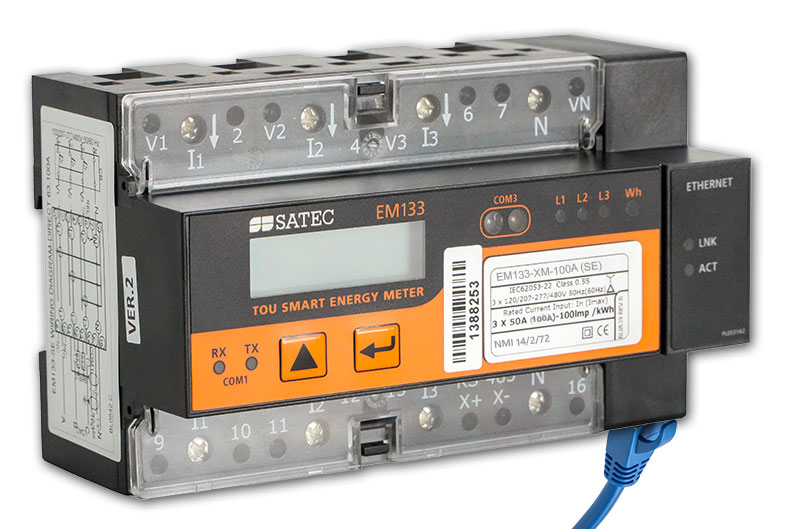
SATEC’s portfolio is built for sites that need dependable power consumption metering with the accuracy, robustness and data quality required for tenancy billing.
Pattern-approved metering for confidence in billing
SATEC supplies pattern-approved meters suited to Australian requirements, helping ensure your tenancy billing is backed by metering that is appropriate for trade and revenue-style use.
That matters when stakeholders want assurance that invoices are grounded in compliant measurement. SATEC’s meters are supplied with NITP 14 test verification certification, aligning with legal requirements in Australia.
Designed for real buildings, retrofits, and multi-tenant complexity
Tenancy environments often include tight switchboards, staged upgrades, changing tenancy boundaries and a mix of loads that do not behave nicely.
SATEC meters are built for practical deployment, supporting common metering architectures across commercial and industrial sites.
Beyond kWh: visibility that helps operators, not just accountants
Accurate billing is the baseline. Many sites also want to understand power quality issues, unusual load behaviour and peak events that drive cost.
SATEC’s capability in power quality monitoring helps teams see what is happening behind the bills. This can reduce callbacks and support better energy decisions.
Expertpower software for turning reads into reporting
Metering is only useful when the data becomes action. Expertpower supports monitoring and reporting so consumption data can be reviewed, validated and shared in a way that aligns with tenancy billing processes.
That reduces manual spreadsheet work and makes it easier to explain outcomes when questions come up.
If your goal is power consumption metering that can support tenancy billing with confidence, SATEC’s meters and software work together as an end-to-end metering solution, from compliant measurement through to usable data.
Building Trust Through Compliant Metering
Tenancy billing relies on trust. Trust that the meter is accurate, trust that the numbers are defensible and trust that the process is consistent month to month. In Australia, “meter for trade” is the concept that anchors that trust in a regulatory framework. Well-designed power consumption metering reduces disputes, improves transparency and creates a cleaner operational workflow.
When the meters are appropriate for trade use and the data chain is solid, tenant billing becomes a routine process rather than a recurring argument.
Talk to our team of experts today about your power consumption metering needs.
FAQs - Power Consumption Metering for Tenancy Billing: What "Meter for Trade" Means
What does “meter for trade” mean in Australia?
It means the electricity meter is suitable for use in a transaction where people are charged based on measured consumption. It meets trade measurement requirements for accuracy and verification.
Do I need a meter for trade to bill tenants for electricity?
If your invoices are calculated from meter readings (kWh), you should use trade-suitable energy metering so the charges are defensible and consistent with trade measurement expectations.
What’s the difference between a standard submeter and a trade-suitable meter?
A trade-suitable meter is approved and verified for billing purposes, while a basic submeter may be intended for monitoring only and may not meet verification or compliance requirements.
How can SATEC help with tenancy billing metering?
SATEC provides NMI-approved meters for accurate power consumption metering and pairs them with Expertpower software to support reliable monitoring and reporting for billing workflows.