

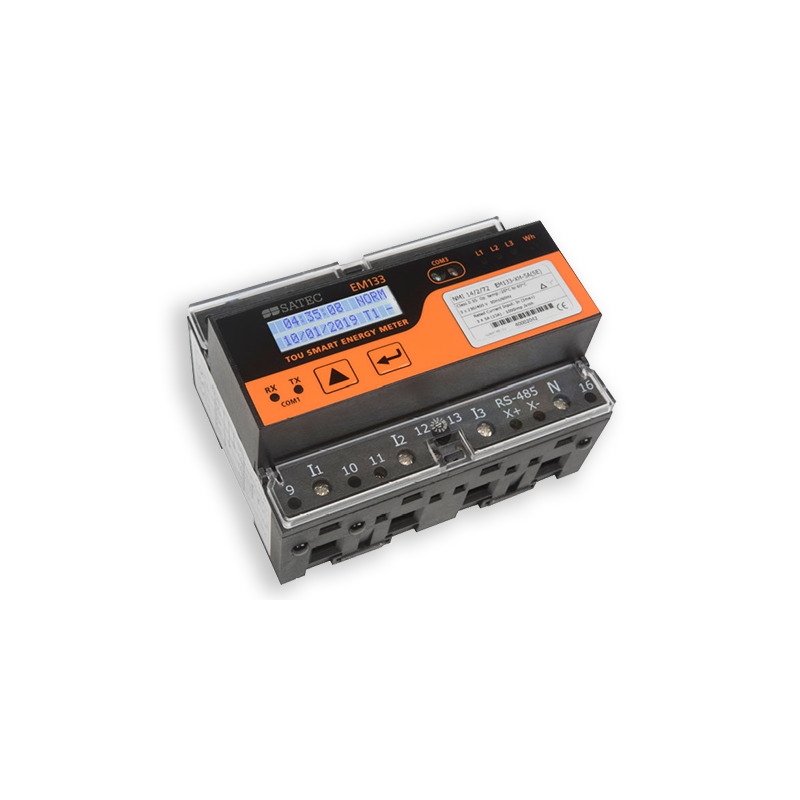
One of the many technical and metrology requirements for obtaining pattern approval and verification from The National Measurement Institute (NMI) for any active-energy electricity meter to be used for trade is for the energy meter to pass the 12KV impulse test. This stringent requirement places further design challenges especially when the energy metering is designed in a compact case. These requirements apply to all watt-hour meters used for single phase or three phase (polyphase) installations.
Impulse Voltage test are per IEC/AS 62052.11 and SP-Method 1618, specified values for impulse voltage and stored energy come from SP-Method 1618 (Impulse Voltage 12KV +0%, -15%) (Stored Energy 9.0J +/- 1.0J) these values are higher than values per IEC/AS62052.11.
SATEC (Australia) has overcome many barriers in obtaining NMI approval for their Din Rail Energy Meters, setting the standards in NMI metering for compact metering designs. Installations for Commercial Buildings where multiple tenant or sub-metering is required must now be a NMI approved meter where electricity billing for trade applies.
Find out more about the NMI Approved EM133 Smart Energy Meter.
Explore related topics:
For Your Industry
- What Is an Embedded Electricity Network? Parent Meters, Child Meters and Tenant Billing Explained
- What Is A Power Energy Data Logger And When Should You Use One?
Standards & Compliance
- How NMI Approved Energy Meters Support NABERS Certification
- NMI M6-1 Compliant LGC Metering Essentials for Renewable Power Stations
- NMI M6-1 Compliant LGC Certified Energy Meters for Renewable Energy Compliance
Related Reading
- NMI Approved Energy Meter With Ethernet: Why the EM133-XM Changes How You Manage Power
- NMI Approved DIN Rail Meters For Embedded Networks
Trending in Your Sector
- Metering Accuracy Class “S” – There is a Difference
- Understanding the Difference with IEC 61000-4-30 Between Class A and Class S
Trending Outside Your Sector


