
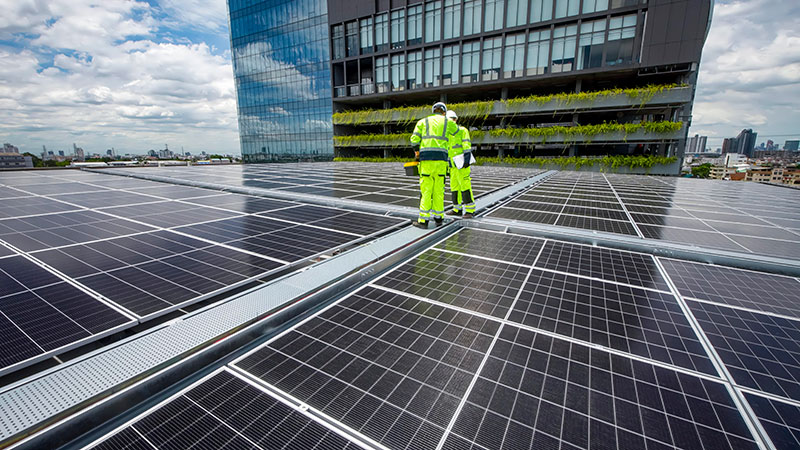
Solar assets are expected to deliver reliable savings and stable performance over many years. When output drops unexpectedly the financial impact can build quickly. Small losses often go unnoticed at first, especially in larger systems where underperformance in one area can be masked by healthy generation elsewhere. That is why solar power monitoring systems have become essential for owners, operators and facility managers who want to protect energy yield and catch faults early.
A well-designed monitoring setup does far more than display total generation on a dashboard. It helps users compare expected and actual performance, identify where losses are occurring and determine whether the issue is affecting a panel group, a string, an inverter or a wider part of the installation. With the right visibility, teams can move from guesswork to targeted action.
Key Points
Solar underperformance often goes unnoticed for weeks or months, quietly eroding returns before any fault is identified.
In Australia’s current energy market, with falling feed-in tariffs and emerging export charges, what a system actually produces has a direct bearing on financial outcomes.
Monitoring systems compare output across strings, arrays and time periods to flag underperforming sections without manual inspection of every module.
Inverters can degrade gradually rather than fail outright, and continuous monitoring is the most reliable way to detect efficiency losses early.
Accurate data quality is the foundation of effective fault detection — poor metering leads to false alarms, missed issues and misleading conclusions.
SATEC’s NMI-approved meters and Expertpower software provide the electrical intelligence needed to validate solar performance, support compliance and investigate faults with confidence.
Why Underperformance Is So Hard to Detect Without Monitoring
Solar systems rarely fail all at once. More often, performance declines in small steps. A handful of shaded modules, a damaged connector, a drifting inverter or an imbalance between strings can quietly reduce output for weeks or months before anyone notices. Energy bills may rise and payback periods may weaken yet the root cause remains hidden.
This is where solar power monitoring systems make a real difference. They bring together live and historical data so that even subtle deviations stand out. Instead of relying on rough assumptions, operators can see whether generation is in line with irradiance, weather conditions, site demand and known system characteristics.
Monitoring also matters because similar symptoms can have very different causes. A drop in output may be linked to dirt accumulation, panel degradation, DC wiring faults, inverter clipping, phase imbalance or power quality issues. Looking only at total energy production rarely tells the full story.
With feed-in tariffs falling sharply across most Australian states, complex time-of-use pricing structures and network export charges now in place in parts of NSW and South Australia, comprehensive monitoring has become essential for anyone serious about maximising solar returns. The days of simply sending surplus generation to the grid at a generous rate are largely over. What a system actually produces and how efficiently it operates now has a direct bearing on financial outcomes.
How Monitoring Systems Spot Underperforming Panels and Strings
Panel and string underperformance often starts with mismatch. One section of the array may be producing less power than the others due to shading, soiling, damage, hotspot formation or cabling issues. In some cases the loss is seasonal. In others it signals a technical fault that needs attention.
Solar power monitoring systems help expose these issues by comparing output across strings, arrays and time periods. When one string consistently generates less than comparable strings under similar conditions, the system can flag that difference for investigation. That makes it easier to isolate the problem area without checking every module manually.
This data becomes even more valuable when trends are tracked over time. A sudden drop may point to a fault or disconnection. A gradual decline may indicate soiling or ageing. Either way, monitoring shortens the path from symptom to diagnosis.
At the panel level, direct visibility depends on the hardware architecture. Some sites use module-level electronics for granular monitoring. Others rely on string and inverter data to infer where the problem sits. Even without module-level hardware, a strong monitoring platform can still show that a specific section of the system is underperforming and needs closer inspection.
How Monitoring Systems Reveal Inverter Issues Early
Inverters are central to solar performance. When they drift out of tolerance, trip intermittently or operate below expected conversion efficiency, system output suffers immediately. These issues can be difficult to spot without continuous data because the inverter may not fail outright. It may simply produce less than it should.
A good monitoring platform tracks inverter output, runtime, alarms, availability and performance trends. This helps operators see whether one inverter is lagging behind others with a similar load profile. It also helps distinguish between inverter faults and upstream DC-side issues.
For example, if several strings feeding one inverter appear normal but AC output is consistently low, the inverter itself may need attention. If output losses line up with voltage fluctuations or abnormal harmonics, the cause may involve broader electrical conditions. Monitoring gives technicians a much clearer starting point before they arrive on site.
Why Data Quality Matters in Fault Detection
The usefulness of any monitoring platform depends on the quality of the data feeding it. Inaccurate or incomplete measurements can lead to false alarms, missed issues or misleading conclusions. This is why reliable metering is so important within solar power monitoring systems.
High-quality electrical metering helps validate generation data and supports deeper analysis of how a site is performing. It can show real energy flow, voltage and current behaviour, phase conditions and power quality factors that influence system output. That added layer of verification helps operators separate a genuine equipment issue from a reporting anomaly.
When metering is integrated properly, it becomes much easier to compare production against demand, confirm export and import behaviour and assess how the solar system is interacting with the wider electrical network. This is particularly relevant in Australia where two-way pricing structures are emerging across multiple distribution networks and the accuracy of metered data has direct financial and compliance implications.
Where SATEC Fits as the Metering Solution
SATEC’s products are well suited to the metering side of solar monitoring. For organisations that need dependable electrical insight, SATEC provides advanced metering and monitoring tools that support accurate measurement, verification and diagnostics across commercial and industrial energy systems.
In a solar environment, SATEC meters can help users understand whether a drop in performance is isolated to one inverter, linked to a feeder or tied to broader electrical conditions affecting system efficiency. Their ability to capture detailed electrical parameters supports faster fault identification and more confident decision-making. This is particularly valuable on sites where operators need more than a simple generation total and want to understand the quality and behaviour of the power being produced and consumed.
SATEC also adds value where visibility, compliance and control matter. With NMI-approved meter options that meet Australian trade measurement requirements under NMI M 6-1 and carry NITP-14 test verification certification, strong power quality capabilities and software support via Expertpower, SATEC offers a metering solution that can sit alongside a broader solar monitoring architecture. That means businesses can use SATEC to strengthen the data foundation behind performance analysis, energy accountability and ongoing optimisation.
This positioning is important. SATEC is not a panel-level device attached to every module. It is the metering solution that helps validate performance, highlight anomalies and provide the electrical intelligence needed to investigate underperforming panels, strings and inverters with greater confidence.
For sites that need to demonstrate compliance with Clean Energy Regulator requirements or support Large-scale Generation Certificate (LGC) creation, the accuracy and traceability that NMI-approved metering provides adds a further layer of assurance.
The Operational Value of Early Detection
The real benefit of monitoring is speed. The sooner an issue is detected, the easier it is to correct before losses accumulate. That can reduce maintenance costs, avoid extended downtime and improve return on investment. It also helps teams prioritise maintenance more effectively.
Instead of sending technicians out with limited information, operators can use monitoring data to narrow the likely cause and location of the problem. That leads to more efficient site visits and better use of maintenance resources.
Over time, solar power monitoring systems also support better strategic decisions. They help asset owners understand recurring issues, compare site performance, assess equipment reliability and plan upgrades based on evidence rather than assumptions.
Building a Stronger Solar Monitoring Strategy
Spotting underperforming panels, strings and inverters is not just about collecting more data. It is about collecting the right data and presenting it in a way that supports action. Monitoring should help users move quickly from detection to diagnosis and from diagnosis to resolution.
For solar operators who want clearer performance visibility, accurate metering should be part of that strategy. When combined with the right software and system architecture, it can reveal losses that would otherwise remain hidden and give operators a more complete picture of how their solar assets are performing day to day.
As solar installations become more central to energy cost control and sustainability targets across Australian commercial and industrial sites, monitoring is no longer optional. It is a practical tool for protecting output, improving reliability and making sure solar investments deliver what they were designed to produce.
FAQs - How Solar Power Monitoring Systems Help Spot Underperforming Panels, Strings and Inverters
What are solar power monitoring systems?
Solar power monitoring systems track the performance of a solar installation in real time and over time. They help identify faults, underperformance and trends that may affect energy output.
Can solar power monitoring systems detect underperforming strings and inverters?
Yes. They can compare performance data across different parts of the system to show where output is falling below expected levels.
Do solar power monitoring systems always show panel-level issues?
Not always. Panel-level visibility depends on the system design but monitoring can still highlight which area of the system needs further inspection.
How does metering improve solar monitoring?
Accurate metering adds trusted electrical data that helps validate performance and diagnose issues more precisely. It also helps separate real equipment problems from reporting errors or data gaps.
Explore related topics:
For Your Industry
Standards & Compliance
Related Reading
- Solar Energy Monitoring vs Inverter Monitoring: What’s the Difference?
- Solar Data Logger + Metering: How to Build a Monitoring System You Can Trust
- Solar Power Monitoring: Turn Solar Generation Into Measurable Savings
Trending in Your Sector


