

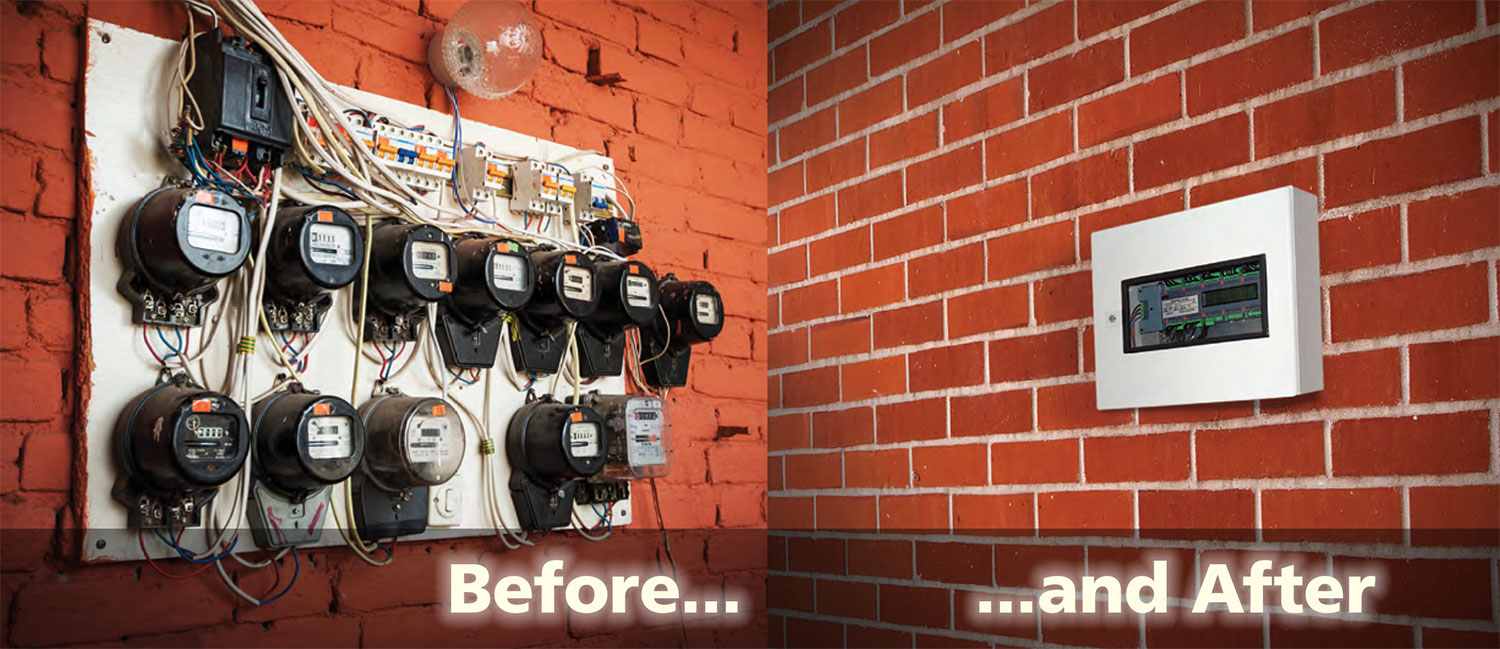
Existing switchboards rarely offer the luxury of available space for retrofitting. In many commercial and industrial sites across Australia, every section is already doing a job and every upgrade must work around what is already installed. That creates a real challenge when building owners, facility managers and electricians need to expand the visibility of energy data throughout the facility. They want metering data for billing, load analysis, compliance or power monitoring yet the switchboard itself may be crowded, ageing and difficult to modify.
This is exactly where retrofitting with CT meter becomes valuable along with a split core current transformer. A CT meter makes it possible to add meaningful energy monitoring without relying on large and invasive changes to the switchboard utilising split core CTs. Instead of forcing a complete redesign, split core CTs give projects a practical path to retrofit metering in a way that respects the physical limits of the site.
When switchboard space is tight, that flexibility can make the difference between a project moving ahead or stalling indefinitely.
Key Points
Older Australian commercial buildings were not designed to accommodate modern metering requirements, making retrofit solutions essential.
A CT meter measures current indirectly via current transformers, when using split core CTs which alleviates the need to break existing circuits or rewire main conductors.
CT-based metering along with split core current transformers can assist with the physical footprint subject to the installation infrastructure. This reduces disruption and project risk.
In Australia, any meter used for tenant billing must be pattern-approved and verified under National Measurement Institute (NMI) requirements as outlined in NMI M 6-1.
A staged approach to metering, starting with the circuits that matter most, is far more practical than attempting a full overhaul in one step.
SATEC’s metering range, including the NMI-approved BFM136, is designed specifically for CT-based retrofit applications in Australian buildings and can reduce switchboard space and installation time by up to 75% compared to discrete metering installations.
Why Space Constraints Are Such a Common Problem
Older buildings were not designed with today’s metering expectations in mind. Switchboards were built to distribute power safely and reliably, not to provide detailed data at multiple points across a site. As energy costs have risen, accountability for individual tenants usage in addition to reporting requirements have grown under frameworks such as NABERS and the National Construction Code, many facilities have found themselves trying to fit modern metering into infrastructure that was never intended to accommodate it.
The issue is not always the size of the main board alone. It can also involve restricted access, limited DIN rail space, dense cabling and the practical risks of working inside an operational switchboard. In some cases there is room for one more device but not enough room for multiple conventional meters across several circuits.
In others the board can physically accept new hardware but the installation becomes expensive and disruptive once rewiring and downtime are factored in. A CT meter combined with split core current transformers helps reduce these pressures by changing how current is measured and how metering can be added to existing infrastructure.
How a CT Meter Works in Retrofit Environments
A CT meter works with current transformers to measure current indirectly. Instead of routing the full load current directly through the meter, the current transformer captures the electrical current flowing through the conductor and provides a scaled signal to the meter.
This approach is especially useful in retrofit projects where space, access and installation disruption are all major considerations. That indirect measurement method brings an important advantage in existing switchboards. It allows metering to be introduced without forcing a major rebuild around the main conductors.
Installers can often position the split core current transformers around existing cabling and connect them back to the metering device in a far more manageable way than a full direct-connected arrangement. The result is a metering solution that is better suited to live, crowded and physically constrained environments.
Why a CT Meter Is Well Suited to Tight Switchboards
The biggest benefit of a CT meter in this context is flexibility. In a retrofit switchboard, space is not only about the footprint of the meter itself. Space also includes room for cable terminations, safe working access and the ability to install the solution without creating unnecessary complexity.
A CT meter supports this in several ways. It reduces the need for major reconfiguration around high-current conductors, which matters greatly in older boards where the original layout leaves little room to work. It also enables a more practical installation pathway for submetering and monitoring points that would otherwise be difficult to add.
When combined with compact metering hardware it can deliver more measurement capability from a smaller physical footprint. This is especially important where the project goal is not just to meter one incoming supply. Many Australian sites want to monitor multiple loads, tenant feeds, distribution sections or critical plant.
A traditional one-meter-per-point approach can consume space very quickly. A CT-based approach opens the door to smarter and more compact designs.
Reducing Disruption Matters Just As Much As Saving Space
Space constraints and access constraints usually go together. A switchboard that is physically crowded is also more likely to be difficult to work in, which means installation time matters. So does the ability to avoid unnecessary shutdowns or extensive board modifications.
A CT meter in combination with split core current transformers supports a less disruptive retrofit strategy because it is designed for conditions where simplicity and adaptability are essential. For building owners and operators, that can mean shorter installation windows and lower project risk. For contractors, it can mean a metering design that is easier to implement within the realities of an existing site.
This matters in office towers, apartment buildings, shopping centres, industrial plants and education campuses across Australia, where outages are difficult to coordinate and downtime carries real cost.
NMI Compliance: What Australian Sites Need to Know
In Australia, any electricity meter used for billing purposes must be pattern-approved and verified under National Measurement Institute requirements, specifically NMI M 6-1. This is not optional. Using a non-approved meter for trade measurement purposes is not compliant with Australian law.
This compliance requirement applies directly to CT-based submetering used for tenant billing in commercial and strata settings. When specifying a CT meter for billing applications in Australia, the metering solution must carry the appropriate NMI approval.
This is an important distinction between monitoring-only applications and those where the data is used to charge tenants or recover costs. Specifiers and electrical contractors should confirm NMI approval status before selecting any metering product for billing use.
Better Data Without Demanding a Switchboard Rebuild
One reason retrofit metering projects stall is the assumption that obtaining useful energy data requires major electrical works. In reality, the appropriate CT meter in conjunction with split core current transformers can help avoid that all-or-nothing choice. It offers a way to collect meaningful electrical data while working within the limits of the existing board. That makes it easier to start with the circuits or areas that matter most.
A site might begin by monitoring large mechanical loads, common services, tenant supplies or critical equipment and expand later as needs evolve. This staged approach is often far more realistic than attempting a full metering overhaul in one step.
When the metering architecture is chosen well, the data can also be integrated into broader monitoring and energy management systems. That gives stakeholders a clearer view of how electricity is being used and where action can be taken to improve performance.
CT Meter vs Direct-Connected Meter: Retrofit Switchboard Comparison
| Consideration | CT Meter | Direct-Connected Meter |
|---|---|---|
| Installation method | Split core CTs clamp around existing conductors. No need to break the main circuit. | Full load current (less than 100A) routed directly through the meter. Requires circuit interruption. |
| Switchboard space required | Low CTs and a compact meter unit and/or multi-circuit metering options consolidate monitoring. |
Higher Each meter needs its own footprint and terminations. |
| Retrofit suitability | High Designed for live, crowded boards with minimal disruption. |
Moderate Practical for lower-current circuits; more disruptive at higher currents. |
| Current range | Suitable for high current loads; CT ratio sized to suit the circuit. | Limited by the meter’s rated current, typically used on smaller loads. |
| NMI compliance (Australia) | Available e.g. SATEC BFM136 is a multi-circuit NMI-approved energy meter under NMI M 6-1 for tenant billing |
Available Pattern-approved direct-connected meters exist for lower current applications |
| Multi-circuit monitoring | Excellent Single device can monitor up to 36 single-phase or 12 three-phase circuits. |
Limited One meter per circuit; space and cost multiply quickly. |
| Installation disruption | Lower Split core CTs can often be installed with minimal or no board shutdown. |
Higher Isolation and rewiring of main conductors typically required. |
| Typical applications | Tenant submetering, commercial buildings, industrial plants, strata, university/college campuses, hospitals and data centres. | Smaller commercial sites, low-current circuits, simple single-point monitoring. |
| Software integration | Supported — e.g. SATEC Expertpower platform for energy analytics and billing | Varies by product; integration capability depends on communication protocols offered |
How SATEC Products Provide the Metering Solution
The SATEC metering range is well suited to projects where switchboard space is limited and retrofit practicality matters. With over 50 years of global experience and a dedicated Australian presence, the company’s product portfolio covers a wide range of applications including submetering, revenue metering and broader energy management.
The BFM136 Branch Feeder Monitor is a multi-circuit energy monitor approved under NMI M 6-1 in Australia and is specifically designed for CT-based installations. It can monitor up to 36 single-phase circuits or 12 three-phase circuits in any combination, using SATEC’s High Accuracy Current Sensors (HACS).
That level of consolidation is significant in retrofit projects: SATEC’s multi-circuit metering technology can reduce switchboard space and installation time by up to 75% compared to existing metering installations.
For sites requiring a single-circuit NMI-approved solution, the EM133-XM provides a compact DIN-rail mounted option with Class 0.5S accuracy and strong integration capability. Both product lines support standard communication protocols including Modbus and BACnet, making integration with building automation or SCADA systems straightforward.
The Expertpower energy management platform ties the hardware together on the software side. It turns meter data into something operationally useful by supporting energy monitoring, management reporting and tenant billing across sites. For retrofit projects, that combination of compact hardware, CT-based flexibility and connected software is what makes the solution work in the real world.
Making Smarter Use of Existing Infrastructure
A crowded switchboard does not mean a site has to give up on better energy visibility. It simply means the metering approach has to be smarter. A CT meter in conjunction with split core current transformers helps solve the practical limitations of existing boards by making measurement more adaptable, less invasive and more realistic for retrofit conditions.
That is why CT-based metering has become such an effective answer for buildings and facilities across Australia that need better data without major reconstruction. When paired with the right hardware and software platform, it allows operators to gain control over energy use while making the most of the infrastructure they already have.
For sites facing tight switchboards and limited room to move, a CT meter and split core current transformers is often the most practical way forward.
FAQs - How a CT Meter Helps Solve Space Constraints in Existing Switchboards
Do CT meters need to be NMI approved for use in Australian buildings?
Only if the meter is being used for billing or trade measurement purposes, in which case NMI pattern approval under NMI M 6-1 is a legal requirement. Monitoring-only applications do not carry the same obligation but billing applications, such as tenant submetering, must use an approved meter.
Can a CT meter be installed without shutting down the switchboard?
Yes, with the use of split core CTs. Split core current transformers can often be fitted around existing conductors with minimal disruption, which is one of the key advantages of CT-based metering in operational buildings.
How many circuits can a single CT meter monitor?
This depends on the product selected. The SATEC BFM136, for example, can monitor up to 36 single-phase circuits or 12 three-phase circuits in any combination from a single device for billing purposes.
Is CT-based metering suitable for older Australian buildings with legacy switchboards?
Yes, it is often the most practical option. CT meters combined with split core current transformers measure current indirectly without requiring main conductors to be broken or rewired. They work well in legacy switchboards where space is limited and disruption needs to be minimised.
Explore related topics:
For Your Industry
Standards & Compliance
Related Reading
- Compact Multi-Circuit Energy Meters: Smarter Retrofits for Australian Switchboards
- Smart Electricity Energy Meter vs Traditional Meter: What Is the Difference?
Trending in Your Sector


