

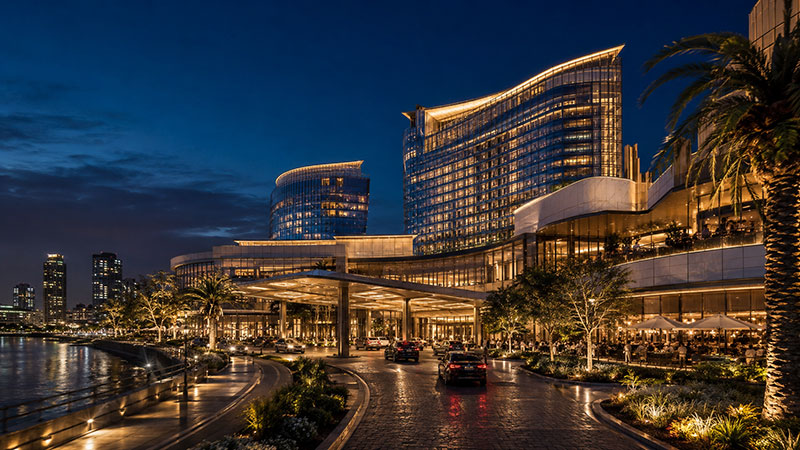
Casinos and integrated resorts bring gaming floors, hotels, restaurants, theatres, conference spaces, pools, spas and car parks together on one site. Many of these areas run around the clock. That creates steady energy demand and makes cost control difficult.
Effective energy management for casinos starts with a simple idea. Each area has its own occupancy pattern, equipment and priorities. Treating the whole resort as a single energy user can hide large savings.
Key Points
Casinos and integrated resorts run many areas around the clock which creates a high baseload and steady demand.
Submetering divides the site into zones such as gaming floors, hotel towers, kitchens, function spaces and car parks so facility managers can see where energy is used.
HVAC is often the largest load so matching it to occupancy and conditions protects comfort while reducing waste.
Peak demand can lift demand charges under Australian commercial tariffs so coordinating loads across departments helps control cost.
Overnight baseload analysis reveals equipment that keeps running when the site is quiet which delivers savings without affecting guests.
SATEC metering and the Expertpower platform give operators circuit level visibility across the property for reporting, analysis and improvement tracking.
Why 24/7 Operations Create Unique Energy Challenges
Casinos are designed to stay comfortable, secure and visually engaging at all hours. Lighting, ventilation, gaming equipment, surveillance, lifts, escalators and digital displays often run continuously. Hotel towers add room conditioning, hot water, laundries and guest facilities. Restaurants and commercial kitchens bring refrigeration, cooking and extraction loads.
This mix creates a high baseload. It does not fall away overnight the way it might in an office building. Events, weekends and changing hotel occupancy can also cause rapid shifts in consumption.
Energy management for casinos must look at both total electricity use and the timing of that use. Reducing consumption matters and controlling peak demand can matter just as much. A short spike when HVAC, kitchens, laundries and event spaces all run together can raise the demand charge for the billing period.
Separate the Resort Into Meaningful Energy Zones
A single utility meter shows how much electricity the property uses overall. It cannot explain why consumption rose or which area is responsible. Submetering lets operators split the resort into meaningful zones. These include the gaming floor, hotel towers, food and beverage outlets, function spaces, plant rooms, retail tenancies and car parks.
This gives facility teams a clearer view of performance. Hotel consumption can be compared with occupancy. Kitchen use can be checked against trading hours. Event spaces can be matched to booking schedules. Plant equipment can also be reviewed for unexplained increases.
Submetering supports accountability too. It shows department managers the energy impact of their own operations.
Comparing Energy Zones Across the Resort
The table below shows how different resort zones behave and which SATEC metering suits each one.
| Resort Zone | Typical Energy Loads | Operating Pattern | Suitable SATEC Metering |
|---|---|---|---|
| Gaming floor | Gaming equipment, lighting, ventilation, surveillance, displays | Continuous, around the clock | BFM136 for circuit level monitoring plus PM180 for power quality |
| Hotel towers | Room conditioning, hot water, lifts, guest facilities | Varies with occupancy | BFM136 for floor by floor submetering |
| Food and beverage | Refrigeration, cooking, extraction, dishwashing | Peaks at meal and trading times | BFM136 across kitchen and outlet circuits |
| Function and event spaces | HVAC, lighting, audio visual systems | Intermittent, booking driven | BFM136 for space level metering |
| Plant rooms | Chillers, pumps, air handling units | Continuous with staging | BFM136 plus PM180 for power quality |
| Retail tenancies | Tenant lighting, equipment, HVAC | Trading hours | BFM136, NMI M 6-1 approved for billing |
| Car parks and EV charging | Lighting, ventilation, EV chargers | Continuous plus charging peaks | EM133-XM for billing plus BFM136 for submetering |
Focus on HVAC Without Compromising Guest Comfort
Heating, ventilation and air conditioning is often the largest energy load across an integrated resort. Gaming floors need constant ventilation and stable temperature. Hotel rooms, restaurants, theatres and conference areas each have different comfort needs.
The aim is to match HVAC operation with real conditions. Occupancy schedules, event bookings, outdoor temperature and equipment performance all feed into that.
Energy data can reveal where systems run at full capacity during quiet periods. It can also show where heating and cooling happen at the same time. It can flag loads drawing more power than expected. These issues rarely show up during routine inspections yet they add real cost over time.
Manage Peak Demand Across the Site
Peak demand can be hard to control because departments often run independently. A function centre may start cooling a ballroom just as kitchens begin dinner service and laundry equipment runs at full load. Under Australian commercial tariffs the resulting spike can lift the demand charge for the entire period.
Demand monitoring gives operators early sight of these combined peaks. Non critical loads can then be rescheduled or controlled. Chillers can be staged more carefully. Laundry cycles can move to quieter times. EV charging can be managed around site demand. Battery storage may support peak shaving where the business case stacks up.
Coordination is the key. Departments can each look efficient on their own while their combined timing creates avoidable cost.
Reduce the Hidden Overnight Baseload
A casino never fully closes although not every load needs to run at full level all night. Overnight baseload analysis can uncover lighting zones, kitchen equipment, ventilation, pumps and other assets that keep running when demand is low.
Comparing energy profiles across different nights is useful. A quiet weekday should not look the same as a major event night. When consumption stays unusually flat it may mean controls are not responding to conditions.
Small adjustments across many devices can add up to meaningful savings. The guest experience stays the same.
Use Energy Data for Maintenance and Budgeting
Energy information supports both maintenance and financial planning. A sudden rise in the consumption of a chiller, pump or air handling unit can point to a developing fault. Spotting the change early reduces the risk of failure and prevents wasted energy.
Long term data also helps operators understand how upgrades and new attractions affect demand. Projects can then be judged against measured consumption rather than assumptions.
SATEC Metering for Casinos and Integrated Resorts
SATEC provides energy metering suited to the complexity of casinos and integrated resorts. Meters can be installed at main incomers, distribution boards, major plant and individual operational zones. Together they build a detailed view of energy use across the property.
Multi circuit solutions such as the BFM136 can monitor many loads within space constrained switchboards. This helps where operators need visibility across hotel floors, tenancies, restaurants or several plant circuits without a separate meter for every load. The BFM136 is also approved under NMI M 6-1, so it supports fair billing where tenant charges apply.
Power quality analysers such as the PM180 can identify voltage disturbances, harmonics and other issues. These matter for gaming systems, digital infrastructure and building equipment.
Data from the meters can flow into Expertpower for centralised monitoring, reporting and analysis. Facility teams can compare areas, review demand patterns, spot unusual consumption and track projects from one platform. Decision makers then work from reliable information rather than estimates or delayed utility bills.
Creating a More Efficient 24/7 Resort
Energy management for casinos works best as part of everyday operations. Metering provides the foundation. Regular review turns that data into action.
Casinos and integrated resorts will always be energy intensive. The opportunity lies in controlling how energy is used, when peaks occur and how quickly inefficiencies are found. With detailed metering, coordinated load management and reliable reporting, operators can cut avoidable cost while keeping the comfort, security and experience guests expect.
FAQs - Energy Management for Casinos and Integrated Resorts
Why is energy so hard to control in a casino or integrated resort?
Many areas run around the clock which creates a high baseload that does not fall away overnight. Different zones also peak at different times which makes total demand harder to predict and manage.
How does submetering help an integrated resort?
Submetering splits the site into zones such as gaming floors, hotels, kitchens and car parks so teams can see exactly where energy is used. This supports accountability and makes savings far easier to find.
Why does peak demand matter under Australian tariffs?
Commercial demand charges are based on maximum demand measured in short intervals, so a single coincident spike can lift the charge for the whole billing period. Coordinating loads across departments helps keep that peak down.
Can one meter cover many circuits in a tight switchboard?
Yes. The SATEC BFM136 monitors up to 12 three-phase or 36 single-phase circuits from a single device, which suits space constrained boards across hotel floors, tenancies and plant.
Explore related topics:
For Your Industry
- Building Energy Management Analytics: The Complete Guide for Commercial Buildings
- Why Load Shedding Is Becoming Essential For Commercial And Industrial Energy Management
Related Reading
- How Energy Management Solutions Help Reduce Peak Demand Charges
- How Electricity Energy Meter Data Improves Energy Management
Trending in Your Sector


