

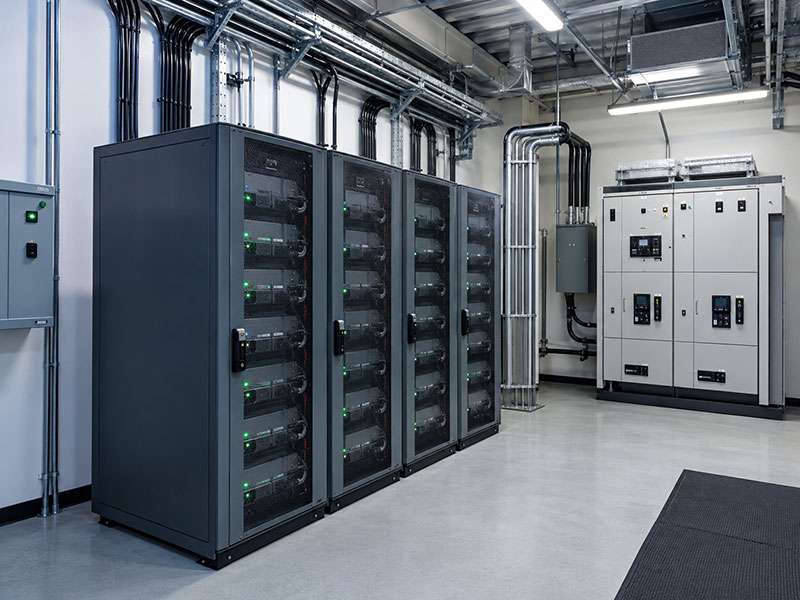
Battery storage is becoming a serious part of commercial energy strategy in Australia. For businesses with solar, high demand charges, volatile energy costs or growing electrification plans, a battery can look like a logical next step. It can store excess solar energy, reduce peak demand, support load shifting and give a site more control over how and when it uses electricity. Yet the success of a battery is not determined by the battery alone.
A behind-the-meter BESS sits on the customer side of the electricity meter. It works within the site’s own electrical system, interacting with solar generation, building loads, grid imports, grid exports, tariffs, demand peaks and sometimes backup systems.
This makes it different from a large grid-scale battery, which is usually designed around network or market functions. Behind-the-meter systems are more closely tied to what happens inside the building, facility or embedded network.
That is why energy data matters so much. Without accurate metering and clear visibility, a battery may be installed with good intentions yet deliver disappointing results. It may charge at the wrong time, discharge too early, miss demand peaks or fail to deliver the savings expected in the business case.
Key Points
A behind-the-meter BESS operates within the site’s own electrical system and must interact with solar generation, loads, tariffs and grid conditions — making site-level data essential to its performance.
Poor or incomplete metering is one of the most common causes of incorrect battery sizing, which can undermine return on investment before the system is even switched on.
Accurate interval data reveals the shape of demand across the day, helping engineers and energy consultants design battery systems around real load behaviour rather than averaged figures.
Battery performance extends beyond cost reduction to include solar self-consumption, tariff optimisation, resilience and potential participation in demand response and virtual power plant programmes.
Power quality monitoring is critical for behind-the-meter sites where inverters, EV chargers, variable speed drives and other power electronics can introduce voltage variation, harmonics and phase imbalance.
SATEC provides NMI-approved meters, power quality analysers and the Expertpower energy management platform to give commercial and industrial sites the metering infrastructure needed to justify, commission and optimise a behind-the-meter BESS investment.
A Battery Can Only Respond To What It Can See
A behind-the-meter BESS needs useful data to make useful decisions. At a basic level, the system needs to understand when the site is importing electricity from the grid, when it is exporting solar energy, when demand is rising and when stored energy should be used. This sounds straightforward. Many commercial sites are not.
A shopping centre may have multiple tenants, common services, rooftop solar and EV chargers. A hospital may have critical loads, backup generators, HVAC systems and strict reliability expectations. A manufacturing site may have sudden demand spikes caused by motors, compressors or production equipment. A commercial office building may have predictable daytime loads but changing tenant behaviour, seasonal solar output and complex tariff exposure.
In each case, battery performance depends on the quality of the data available. If site metering is limited or poorly placed, the battery control system may not have a true picture of the electrical environment. If the data is delayed, incomplete or not sufficiently detailed, the battery may operate based on assumptions rather than actual site conditions.
Better energy data helps answer the questions that matter before and after a battery is installed. What is the site’s real load profile? When do demand peaks occur? How often are they repeated? How much solar is genuinely available for charging? How much energy is exported to the grid? Are there loads that could be shifted before battery storage is even considered?
These are not minor details. They affect battery sizing, control strategy, expected savings and long-term performance.
Poor Data Leads To Poor Battery Sizing
One of the most common risks in battery projects is sizing the system based on incomplete or averaged data. A site’s monthly energy bill can show total consumption and peak demand but it does not always explain what caused those peaks or how long they lasted.
For example, a site may have a high demand charge caused by a short load spike that occurs only a few times a month. Another site may have long, sustained peaks that require a very different battery strategy. Two sites with similar peak demand on paper may need very different battery sizes.
This is where interval data becomes essential. Detailed metering can show the shape of demand across the day, not just the total amount of energy consumed. It can reveal whether peak shaving is realistic, whether solar charging is sufficient and whether the battery will cycle often enough to justify the investment.
A battery that is too small may not reduce demand peaks enough to make a meaningful difference. A battery that is too large may cost more than necessary and spend much of its time underused. Both outcomes weaken the return on investment.
Good metering helps avoid this. It gives engineers, energy consultants and site owners a clearer basis for design. It also makes it easier to test the assumptions behind a battery proposal before capital is committed.
Performance Is About More Than Cost Savings
Cost reduction is often the main reason Australian businesses consider battery storage. Performance should be viewed more broadly. A behind-the-meter BESS may be expected to support solar self-consumption, reduce grid imports during peak tariff periods, provide resilience or participate in demand response and virtual power plant programmes. Each of these functions depends on data.
For solar self-consumption, the site needs to understand how much solar is being generated, consumed, exported and stored. For demand management, it needs to know when demand is rising and whether the battery has enough capacity available to respond. For tariff optimisation, it needs visibility of time-of-use periods and the cost impact of charging or discharging at different times.
For resilience, the questions become even more operational. Which loads are critical? How long can they be supported? Is the battery ready when needed? Has it been cycling in a way that affects availability?
Data also helps identify when a battery is technically operating but not commercially performing. A system may appear to be running normally while still missing the site’s most expensive demand events. It may charge from the grid at a poor time or discharge before the true peak occurs. These problems are difficult to identify without accurate site-level monitoring.
Comparing What Data Enables Across The Battery Lifecycle
Here is a summary of how energy data supports different stages of a behind-the-meter BESS project:
| Stage | Without Accurate Data | With Accurate Data |
|---|---|---|
| Feasibility | Estimates based on bills only | Real load profiles, peak shapes and solar availability |
| Battery Sizing | Risk of over or undersizing | Sized to actual demand behaviour and cycling needs |
| Control Strategy | Generic settings | Optimised for tariff, solar and load patterns on site |
| Commissioning | Reliance on headline figures | Validated against actual switchboard and load conditions |
| Ongoing Performance | No visibility of missed peaks or poor cycling | Continuous monitoring with trackable savings and alerts |
| Power Quality | Issues may go undetected | Voltage variation, harmonics and phase imbalance identified early |
| Tariff Optimisation | Charging and discharging may occur at wrong times | Timed to time-of-use periods with cost impact visibility |
| Resilience Planning | Battery readiness unknown | Load behaviour and battery state visible at all times |
Power Quality Matters Too
Battery systems rely heavily on power electronics. inverters, solar systems, EV chargers, variable speed drives and other modern electrical equipment can all influence power quality. On many sites, the battery is joining an already complex electrical environment.
Power quality monitoring can help identify issues such as voltage variation, harmonics, phase imbalance and abnormal events. These issues may affect equipment performance, cause nuisance tripping or create problems that are incorrectly attributed to the battery.
For sites with critical operations, power quality visibility is especially important. A behind-the-meter BESS may form part of a broader energy resilience strategy but it should not introduce new uncertainty into the electrical system. Measuring power quality before and after installation can help confirm that the system is operating as intended and that any issues are identified early.
This is also valuable during commissioning. Rather than relying only on system settings and headline performance figures, the project team can validate what is actually happening at the switchboard, connection point and key loads.
The Role Of Ongoing Monitoring
Battery performance should not be treated as a once-off calculation. Site loads change. Tenants change. Tariffs change. Solar output varies by season. New equipment may be added. EV charging, electrification and operational growth can all change the way a site uses energy.
A behind-the-meter BESS that made sense under one load profile may need its control strategy reviewed as conditions change. Ongoing monitoring gives site owners the evidence needed to make those adjustments.
It also supports accountability. If a battery was installed to reduce peak demand, the site should be able to measure whether peak demand has actually fallen. If the goal was to increase solar self-consumption, the site should be able to track how much solar energy is being stored rather than exported. If the goal was resilience, the site should have visibility of battery readiness and load behaviour.
Energy data turns battery storage from a black box into a measurable asset.
How SATEC Supports Behind-The-Meter BESS Projects
Australia’s energy landscape is shifting rapidly. Rooftop solar has reached 28.3 GW of installed capacity across more than 4.3 million homes and businesses. Large-scale battery storage costs fell by 11 to 16 per cent in 2024–25 according to the CSIRO GenCost report.
A record 183,245 home battery units were sold in the second half of 2025 alone. The commercial case for battery storage has never been stronger and the need for accurate metering to support it has never been more important.
Energy metering infrastructure is the foundation of any credible BESS project. NMI-approved bi-directional meters are required for commercial and industrial behind-the-meter installations in Australia, meeting Class 0.5S accuracy under the NMI M 6-1 standard.
The SATEC range of NMI-approved meters is designed to meet these requirements and to capture the key energy flows across a site, including grid import, grid export, solar generation, battery charge and discharge and major load groups.
Power quality analysers from the SATEC range provide deeper visibility into the electrical conditions that can affect battery performance and site reliability. This is particularly relevant where BESS systems operate alongside solar inverters, EV chargers, HVAC equipment, motors or variable speed drives.
The PM180 and PRO Series combine Class A power quality analysis with real-time monitoring, making them well suited to complex or sensitive electrical environments.
Data collected by SATEC meters integrates with Expertpower, SATEC’s cloud-based energy management platform. Expertpower helps users monitor usage, demand, tariffs, power quality and site performance in one place. For behind-the-meter BESS applications, this gives facility managers, energy managers and consultants the visibility needed to assess whether the battery is delivering the expected outcome.
Rather than viewing the battery in isolation, this approach provides a whole-of-site picture. Battery performance is shaped by the interaction between generation, load, tariff structure, demand behaviour and electrical conditions.
With more than 50 years of energy management expertise, SATEC brings the energy metering knowledge and product range to support behind-the-meter projects from feasibility through to ongoing performance monitoring.
Better Data Makes Batteries Easier To Justify
Battery storage can deliver real value but only when it is designed, operated and monitored around the realities of the site. A business case built on poor data can lead to disappointing savings, incorrect sizing or missed opportunities.
Better energy data helps at every stage of the battery journey. Before installation, it supports feasibility studies, sizing and return on investment modelling. During commissioning, it helps validate performance. After installation, it gives the site a way to track savings, optimise control settings and respond to changing conditions.
A behind-the-meter BESS is not just a battery in a switchroom. It is part of a larger energy system. The more clearly that system is measured, the better the battery can perform.
For commercial and industrial sites considering battery storage, the first question should not be how large the battery should be. It should be whether the site has the data needed to make that decision properly.
FAQs - Behind-The-Meter BESS: Why Battery Performance Depends On Better Energy Data
What is a behind-the-meter BESS?
A behind-the-meter BESS is a battery energy storage system installed on the customer side of the electricity meter. It operates within the site’s own electrical system rather than on the grid and is designed to work alongside solar generation, building loads and the local tariff structure.
Why does energy metering matter for battery storage performance?
A battery can only respond to what its control system can see. Without accurate metering, the system may charge or discharge at the wrong time, miss demand peaks or cycle in ways that do not match the site’s actual energy costs and load patterns.
What type of energy meter is required for a commercial behind-the-meter BESS in Australia?
Commercial and industrial behind-the-meter installations require NMI pattern-approved bi-directional meters meeting Class 0.5S accuracy under the Australian NMI M 6-1 standard. Standard meters are not equipped to accurately capture the bi-directional energy flows created by a solar and battery storage system.
How does ongoing monitoring improve battery return on investment?
Ongoing monitoring allows site operators to track whether the battery is achieving its goals, such as peak demand reduction or increased solar self-consumption, and to adjust control settings as site conditions change over time.
Explore related topics:
Related Reading
- Battery Energy Storage Systems (BESS): The DC Metering Checklist
- Behind The Meter Solar and Storage: The New Standard for Energy Resilience
- Why Multiple Input DC Monitoring Is Ideal For Energy Systems
Trending in Your Sector


