

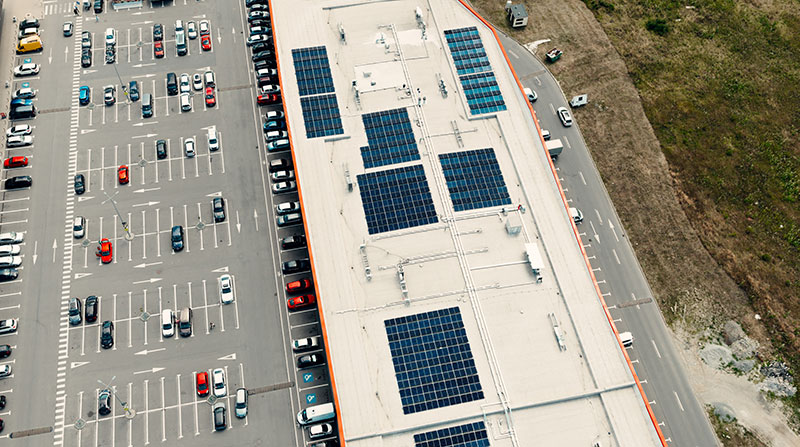
Australia has quietly become a world leader in rooftop solar. More than 4 million Australian homes now have solar panels installed, meaning roughly one in three households is generating its own electricity. As solar adoption continues to grow, interest in solar net metering is growing alongside it.
Understanding how net metering works and why accurate metering underpins the whole system is essential for anyone looking to get the most from a solar investment. Many people understand that solar panels can reduce power bills. Fewer understand exactly how solar net metering works and why the quality of metering technology matters so much.
Key Points
Solar net metering tracks the difference between electricity imported from the grid and surplus solar power exported back to it, determining what you owe or are owed each billing period.
Australia uses a net metering model rather than gross metering, meaning solar energy powers the building first with only excess generation sent to the grid.
The financial return on exported solar is governed by feed-in tariff rates that vary by state and electricity retailer, making it important to compare plans.
Feed-in tariff rates have declined significantly in recent years, which means self-consumption of solar energy is now often more financially valuable than exporting it.
As solar systems are increasingly paired with battery storage and demand management tools, metering has evolved from a billing function into a broader energy management tool.
SATEC provides National Measurement Institute approved meters and the Expertpower software platform, built specifically to support solar and energy management applications across Australian commercial and industrial sites.
What Is Solar Net Metering?
Solar net metering is a billing arrangement that measures the difference between the electricity a site imports from the grid and the surplus solar power it exports back to it.
During the day, a solar system may generate more electricity than a building is using at that moment. When that happens, the surplus flows out to the grid. At night or during periods of low solar generation, the site draws electricity from the grid again. Net metering tracks both directions of energy flow and uses that data to calculate the net outcome over the billing period.
There are two ways to measure solar power in Australia: net metering and gross metering. With gross metering, all electricity generated by the solar panels is fed back into the grid. With net metering, solar electricity powers the building first with only the excess exported to the grid. As feed-in tariffs are now much lower than the cost of retail electricity, net metering has become the standard approach for new solar installations in Australia.
In practical terms, solar net metering allows solar owners to receive value for the excess electricity their system sends to the grid through what is known as a feed-in tariff. The exact financial return depends on the local utility rules, tariff structure and metering framework, all of which vary across Australia.
How Solar Net Metering Works in Australia
To understand net metering, it helps to picture a two-way relationship between a site and the grid. When solar production is high and building demand is low, excess electricity is exported. When building demand exceeds solar output, electricity is imported from the grid. A suitable meter records both flows so the retailer or energy manager can determine the net balance.
A net meter tracks both the electricity consumed from the grid and the excess electricity generated by a solar system that is exported. When a home or business uses more energy than its solar panels produce, electricity is imported from the grid and the usage tariff applies. When the solar system produces more than the site needs, energy is exported and the feed-in tariff applies.
For example, a commercial building generating significant solar power during daylight hours may export part of that energy to the grid. By late afternoon or evening, when solar output has dropped but the building is still in use, it draws electricity from the grid again. Over the billing period, imported and exported energy values are compared to determine the net position.
This is why solar net metering depends on more than just the solar panels. The meter is the device that turns physical energy flows into reliable data for billing, monitoring and decision making.
Feed-In Tariffs and the Australian Context
The financial value of exported solar energy in Australia is determined by the feed-in tariff and this is where Australian conditions differ significantly from other markets. Feed-in tariffs now represent roughly a third of the retail electricity rate in many states, which encourages solar users to self-consume as much of their generation as possible rather than export it.
Rates vary considerably depending on where you live and which retailer you are with. Major retailers set their own rates, which can range from around 4 cents to 12 cents per kilowatt hour depending on the state and plan. Some states have regulated minimum rates while others have moved to fully deregulated structures.
In Western Australia, the government-regulated Distributed Energy Buyback Scheme pays around 2.5 cents per kilowatt hour during daylight hours and 10 cents per kilowatt hour in the late afternoon and evening when demand is higher. New South Wales has introduced a two-way tariff structure. From July 2025, Ausgrid adapted this tariff so that customers are charged 1.23 cents per kilowatt hour for solar exports between 10am and 3pm once a threshold is exceeded, while being paid 3.85 cents per kilowatt hour for exports between 4pm and 9pm.
This approach signals to solar owners that exporting during peak evening hours is more valuable to the grid than exporting during the middle of the day. These shifting structures reflect a broader reality: maximising the value of a solar system now requires understanding not just how much energy you export but when you export it.
Why Solar Net Metering Is Important
The appeal of net metering comes down to economics and energy visibility. A solar system becomes more valuable when exported energy is measured accurately and credited appropriately. For property owners and facility managers, net metering supports lower electricity costs by offsetting imported power with solar generation, improves the financial return on a solar investment and provides clearer insight into when energy is being used or sent back to the grid.
In 2024–25, Australian households with rooftop solar saved just over $3 billion in total, or approximately $125 per capita, on electricity costs. Net metering also encourages more efficient use of renewable energy. When a site has clear visibility into how energy moves across the site boundary, it is easier to manage loads, identify waste and assess whether battery storage or load-shifting strategies could deliver further savings.
The Role of Accurate Metering in Solar Performance
A discussion about solar net metering is incomplete without addressing meter accuracy. If meter data is unclear, delayed or unreliable, it becomes much harder to verify savings or understand site performance. This matters for both residential and commercial systems.
In larger sites such as shopping centres, office buildings, strata developments and industrial facilities, the need for precision becomes even greater. Multiple loads, varying demand profiles and more complex tariff arrangements make energy management difficult without trustworthy metering data. Accurate meters help users answer practical questions such as:
- How much solar energy was generated today?
- How much was consumed on site?
- How much was exported?
- When did imports spike and why?
- Is the system performing as expected?
These are not just technical questions. They shape financial outcomes and operational decisions.
Solar Net Metering and the Shift Towards Smarter Energy Management
The energy landscape is evolving and solar net metering now sits within a broader shift towards smarter energy use. Installing rooftop solar can save a household up to $1,500 annually on energy bills, with that figure almost doubling when battery storage is added. Many sites are now combining solar with battery storage, demand management strategies and energy analytics platforms.
In the second half of 2024, 28.4 per cent of new rooftop solar installations in Australia had an accompanying small-scale battery installed. This figure continues to rise as battery costs fall and government incentive programmes take hold. In that environment, metering is no longer just about billing. It becomes part of a wider strategy for visibility, optimisation and control. Businesses want to know not only how much solar they exported but whether they could have used more of that energy on site. They want to understand peak demand, power quality and how different assets affect overall performance.
This is where advanced metering adds significant value. A site with strong measurement capability can move beyond basic solar monitoring and start managing energy with far greater confidence.
Why SATEC Metering Solutions Support Solar Net Metering
When it comes to solar net metering, the quality of the metering solution matters enormously. Solar generation and export must be measured accurately and consistently if users are to trust the results and act on them. Advanced power meters deliver Class 0.5S accuracy for commercial and industrial installations. This level of precision is particularly important for sites where energy flows move in multiple directions.
Bi-directional energy measurement, interval data collection in line with National Electricity Rules (NER) Chapter 7 requirements and real-time monitoring capabilities are all supported, making the meters well suited to solar optimisation and regulatory compliance within Australian grid environments.
The product range has been designed to support accurate energy measurement across a wide range of applications. It covers power meters, billing and revenue metering, energy efficiency tools, power quality analysis and cloud-based energy management, all aimed at improving the performance and reliability of power systems.
Expertpower brings the software layer to this foundation. The platform allows users to collect energy data automatically, run complex calculations across multiple devices and view all information directly in a browser without requiring specialist software or extensive training. Instead of relying on basic summaries, building owners, consultants and energy managers can access detailed information that shows exactly how solar is interacting with building demand and the grid.
NMI-approved electricity meters carrying NITP-14 test verification certification are available in line with Australian trade measurement requirements, delivering billing-grade accuracy alongside strong power quality monitoring capability. This combination is particularly important in commercial and industrial environments where variable loads and electrical disturbances are common.
For sites where space is limited or retrofit conditions are challenging, compact metering options provide a practical advantage. In many real-world projects, the right metering technology must fit into existing infrastructure without compromising performance.
In short, if solar net metering is the billing and measurement framework, SATEC provides the tools that make it visible, reliable and useful across Australian sites of every type and scale.
What to Consider When Evaluating a Solar Net Metering Setup
Anyone planning a solar project should look beyond panel capacity and installation cost. The quality of the metering solution should be part of the conversation from the start.
A strong solar net metering setup depends on accurate import and export measurement, compatibility with the site’s energy strategy and easy access to clear data. It is also worth considering how metering information will be used over time. Billing is only one part of the picture. Ongoing performance analysis can uncover additional value long after the solar system has been commissioned.
This is especially relevant as more Australian sites move towards solar with battery storage, demand management and time-of-use tariff structures. In that environment, the quality of metering data shapes not just billing but every energy decision a site makes.
A Smarter Way to Understand Solar Energy
Solar net metering is more than a technical term. It is a practical mechanism that helps solar owners understand the value of the energy they generate and share with the grid. When it works well, it supports lower costs, better visibility and stronger energy decisions. None of that happens without dependable metering. Accurate measurement is what connects solar generation to billing outcomes and operational insight.
For organisations that want a clearer view of solar performance and site energy use, SATEC’s NMI-approved metering solutions and Expertpower software provide an effective foundation for smarter energy management across Australian commercial and industrial environments.
FAQs - Solar Net Metering Explained
What is the difference between net metering and gross metering in Australia?
With net metering, your solar energy powers your home or business first and only the surplus is exported to the grid. Gross metering sends all generated solar energy to the grid regardless of your own consumption, which is no longer recommended for new installations as feed-in tariff rates are now well below retail electricity prices.
How much can I earn from exporting solar energy to the grid in Australia?
Feed-in tariff rates vary by state and retailer, generally ranging from around 4 cents to 12 cents per kilowatt hour. Retail electricity rates are significantly higher than most feed-in tariffs so self-consuming your solar energy on site will usually save you more money than exporting it.
Do I need a special meter to use solar net metering?
Yes, you need a smart meter configured for two-way energy measurement that can record both electricity imported from the grid and surplus solar energy exported to it. Your solar installer will arrange this as part of the installation process and it must meet the requirements of your local network distributor.
Why does meter accuracy matter for solar net metering?
Inaccurate metering can result in incorrect billing and make it difficult to verify whether your solar system is performing as expected. For commercial and industrial sites in particular, poor metering data can obscure demand peaks, mask inefficiencies and reduce the overall financial return on a solar investment.
Explore related topics:
For Your Industry
Standards & Compliance
- The LGC Metering Solution for 100kW+ Commercial Solar Systems
- Commercial Solar Metering: What The 1 MW SRES Change Means
- NMI Approved Energy Meter With Ethernet: Why the EM133-XM Changes How You Manage Power
Related Reading
Trending in Your Sector


