

Electricity meters are the quiet workhorses of Australia’s energy system. They measure how much electricity a home, tenancy, commercial or industrial site uses. The measurement of electricity allows creation of energy bills, load profiling along with energy audits and regulatory compliance reporting.
If you’re upgrading a building, managing strata, operating an embedded network or simply trying to understand what’s installed at your switchboard, knowing the types of electricity meters in Australia can save you time and plenty of headaches later.
Australia’s metering landscape has evolved quickly in the last decade. Traditional accumulation meters are still out there but smart meters and advanced metering are being increasingly adopted due to increased energy cost and the request for more detailed analysis by consumers. This is especially true where time-of-use tariffs, solar, EV charging or detailed energy reporting are required.
Below is a clear breakdown of the main meter types you’ll encounter, what they do and where they fit best.
Why Meter Type Matters in Australia
The meter isn’t just a box that counts power. Meter type can determine whether readings are manual or remote, whether you can access interval data (such as 5-minute usage), whether time-of-use tariffs can be applied accurately, how solar exports are measured and credited and the level of visibility you have for energy management and power quality issues.
In other words, choosing the right meter can unlock better billing accuracy, reduce disputes and help you actually manage consumption rather than guessing.
1. Accumulation Meters (Basic Meters)
Accumulation meters are the older, simplest option. They record total energy consumption over time, usually in kilowatt-hours (kWh) but they do not break usage into time intervals.
You’ll typically see these as the classic spinning disc electromechanical meters or older digital meters with limited functionality.
How they’re read: Traditionally by a meter reader visiting the site, though some older digital meters may be connected to basic remote reading setups.
Best for: Simple tariff structures where you only need total usage and there’s no requirement for time-of-use pricing, solar export measurement or granular reporting.
Limitations: Since they don’t provide interval data, they’re not suited to modern energy strategies like peak and off-peak optimisation, advanced tenant billing or detailed energy analysis.
2. Interval Meters
Interval meters measure electricity usage in chunks of time. In Australia, this is commonly 5- minute to 30-minute intervals. Instead of one rolling total, they record a series of readings across the day. This enables more sophisticated tariffs and better insight into usage patterns.
How they’re read: Often remotely, depending on the communications setup but not all interval meters are smart in the modern sense.
Best for: Small to medium commercial sites, buildings shifting to time-of-use tariffs and anyone who wants more detail than an accumulation meter can provide.
Why they matter: With interval data, you can identify demand peaks, spot unusual after-hours loads and plan upgrades like solar or battery storage based on real usage patterns.
3. Smart Meters (Advanced Meters)
Smart meters are a type of interval meter with two-way communications and enhanced functionality. In most contexts, smart meter refers to a meter that can be read remotely, supports advanced tariffs and often enables remote configuration or diagnostic features depending on the network and retailer arrangements.
Key capabilities often include remote meter reads, improved billing accuracy and access to interval data that can support modern energy plans and reporting. Under new national rules, electricity retailers began accelerating smart meter installations from December 2025. By 2030, most homes and small businesses will have a smart meter.
Best for: Homes with time-of-use plans, EV charging, solar PV and many commercial sites that want better energy visibility and fewer estimated bills.
A practical note: Smart meter capability can depend not only on the device itself but also on how it’s commissioned and integrated into the local metering and market environment.
4. Single-Phase Meters
Single-phase meters are the most common type for standard Australian houses and small premises. Most residential properties receive single-phase power and the meter is designed to measure that supply arrangement.
Best for: Typical homes and small loads.
Common scenarios: Standard residential billing, basic solar setups (depending on inverter configuration) and small tenancy metering.
5. Three-Phase Meters
Three-phase meters are used where higher loads are required. Think larger homes, apartment buildings, commercial premises, workshops and sites with significant equipment like lifts, HVAC or large pumps.
Best for: Commercial buildings, strata common areas and any site with high demand or three-phase equipment.
Why it matters: Three-phase metering is critical for accurate measurement where power is delivered across three active lines. It also becomes important for diagnosing balance issues and load distribution in more complex electrical systems.
6. Import and Export Meters (Solar Compatible Meters)
If a site has solar PV, the meter often needs to measure both electricity imported from the grid and electricity exported back to the grid. These are commonly referred to as import and export meters or bi-directional meters.
Best for: Any building with solar PV, especially where export credits (feed-in tariffs) apply.
Important detail: Accurate import and export measurement matters not only for the bill but also for managing self-consumption strategies and verifying solar performance.
7. Sub-Meters (Tenancy and Internal Building Metering)
Sub-meters measure consumption behind a main meter. They’re common in apartments, multi-tenanted commercial buildings, retirement living and industrial sites where you need to allocate energy use across tenants, floors, equipment or cost centres.
Best for: Embedded networks, strata, facility managers and landlords who want fair, transparent billing and better internal visibility.
What sub-metering enables: More accurate on-charging, identifying high-load areas and targeted efficiency upgrades. It also supports accountability. Tenants can see and manage what they use.
8. Power Quality Meters and Advanced Monitoring Meters
Best for: Critical facilities, industrial sites and commercial buildings where downtime or equipment damage is costly.
Why this matters: Power quality issues can be invisible until something fails. Advanced monitoring can help diagnose problems early and provide the evidence needed to address supply or internal electrical issues.
How SATEC Products Are the Electricity Metering Solution
When you’re evaluating the types of electricity meters in Australia, the real question is often: what metering setup gives me accurate data, reduces disputes and supports smarter energy decisions?
That’s where SATEC fits in. SATEC provides metering solutions designed for the realities of modern Australian buildings, especially where space is tight, retrofits are complex and accurate measurement is non-negotiable.
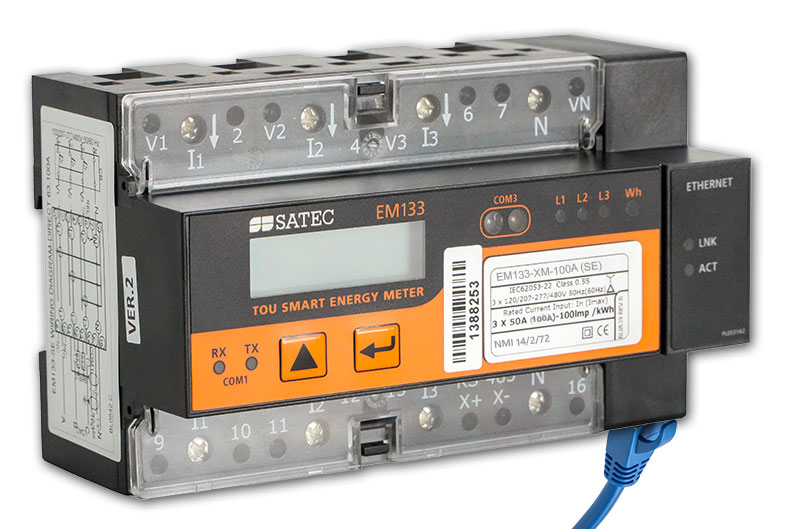
For multi-tenant environments, SATEC’s approach supports robust sub-metering and clear allocation of usage. This helps property managers and embedded networks bill fairly and confidently. SATEC’s metering range is built around practical needs like reliable performance, quality monitoring capabilities and Australian approvals where required, including NMI-approved metering options for compliant installations.
Where deeper insight is required, SATEC solutions can also support power quality monitoring. This is useful for facilities that need to protect equipment, validate electrical performance or troubleshoot persistent issues. To turn data into action, SATEC’s Expertpower software supports visibility and energy management. You can track usage, identify patterns and make informed decisions, whether you’re managing a single facility or a portfolio of sites.
In short, SATEC helps you move from meter readings to meaningful operational insight.
Choosing the Right Electricity Meter Type for Your Site
There’s no single best electricity meter for every situation. A home on a flat tariff may be fine with basic smart metering, while a multi-tenant commercial building typically benefits from carefully planned sub-metering and stronger data access.
If solar, EV charging or demand management is on the roadmap, interval data and a clear integration strategy become much more important. A good next step is to confirm what’s currently installed. Check whether it’s single-phase versus three-phase, accumulation versus interval and whether it has solar import and export capability. Then align upgrades to your billing model, compliance needs and energy goals.
FAQs - Types of Electricity Meters in Australia
What are the main types of electricity meters in Australia?
The most common types include accumulation (basic) meters, interval meters, smart meters and import/export meters for solar, plus single-phase and three-phase variants depending on supply.
What’s the difference between an interval meter and a smart meter?
An interval meter records usage in time blocks (often 5-30 minutes), while a smart meter is typically an interval meter with remote communications for automated readings and additional functionality.
Do I need a special electricity meter if I have solar?
Yes. Most solar installations require an import/export (bi-directional) meter so your grid usage and solar exports can be measured accurately for billing and feed-in credits.
Why would a building install sub-meters instead of relying on one main meter?
Sub-meters let you measure and allocate usage by tenant, area or equipment, which improves billing accuracy, reduces disputes and supports better energy management.