
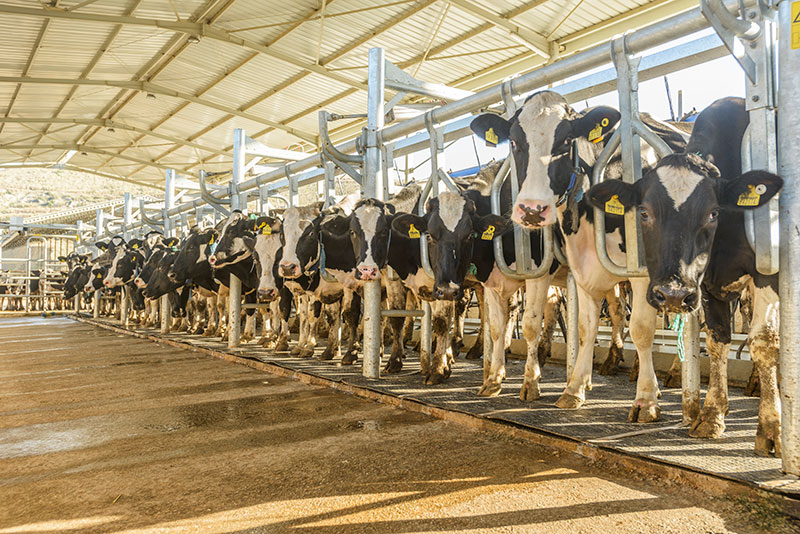
Dairy farms are energy-intensive businesses. Between milking, cooling, water heating, pumping, ventilation, lighting and wash-down cycles, electricity use can be large, constant and without good visibility, surprisingly wasteful. When margins are tight and weather, feed and milk price volatility are already hard enough to manage, power costs become one of the few big levers you can control.
That’s where smart electricity metering comes in. Instead of relying on a single monthly bill total or a few rough estimates, smart metering gives you clear, time-based insight into when and where electricity is being used. For dairy operations, that insight can translate into smarter scheduling, earlier fault detection, better peak-demand control and more confident investment decisions.
You’ll know whether a variable speed drive, a new chiller or solar plus storage will actually pay back. This post breaks down what smart metering is in a dairy context, the practical benefits, what to measure first and how to get started without making it complicated.
What Smart Electricity Metering Means on a Dairy Farm
At a basic level, smart metering is the ability to measure electricity use in detail, often in near real-time and turn that data into information you can act on. On dairy farms, “detail” matters. Energy loads are cyclical, timing-driven and affected by operational variables like herd size, milking routines, wash cycles and ambient temperature.
Smart metering typically includes interval data, so you can see patterns and peaks every 5, 15 or 30 minutes. It provides sub-metering on major equipment or distribution boards to isolate high-use processes. Power quality monitoring detects issues like voltage dips, harmonics, imbalance or poor power factor.
Dashboards and reporting make the data usable for farm owners, managers and contractors. Instead of guessing whether the bulk milk tank is driving your bills or whether the hot water system is overheating overnight, you can see it in black and white.
Why Dairy Farms Benefit So Much From Smart Electricity Metering
Many commercial sites gain value from energy data but dairy farms often see outsized benefits because their loads are both significant and operationally “tuneable”. Here are the main reasons farms adopt smart electricity metering and what it enables in practice.
Peak Demand Control and Avoiding Nasty Surprises
Demand charges or peak demand impacts, depending on your tariff structure, can make a short, high-load window far more expensive than it looks. On a dairy farm, multiple systems can stack up at the same time. Milking plant motors, vacuum pumps, refrigeration ramping, hot water recovery and wash-down all compete for power.
Smart electricity metering helps you identify those overlaps and adjust scheduling so equipment isn’t all ramping together. Even small timing changes can flatten peaks and reduce cost exposure.
Verifying What's Really Driving the Bill
Farms often know the biggest loads “in theory” but smart data can challenge assumptions. For example, refrigeration might dominate during summer afternoons, whilst hot water heating might be quietly chewing power at night if controls are drifting or insulation is failing.
With the right measurement points, smart metering answers questions. Does the plate cooler reduce chiller runtime as expected? Are milk cooling cycles more frequent than they should be? Is the hot water system cycling unnecessarily between milking sessions? Are pumps or fans running outside required hours?
This is where measurement becomes profit. You can target improvements where they matter.
Early Fault Detection and Equipment Health Clues
Dairy farms rely on equipment that can’t afford downtime. Smart electricity metering can reveal early warning signs such as rising kW draw on a motor, unusual runtime profiles, repeated start-stop behaviour or deteriorating power factor.
These clues can support preventive maintenance and reduce emergency callouts, especially for refrigeration and motor-driven assets.
Better Decisions on Solar, Batteries and Upgrades
Energy investments can be great on farms but only if they’re designed around how you actually use power. Interval data helps you size solar correctly, understand self-consumption potential and decide whether storage makes sense. It also improves the business case for upgrades like variable speed drives, heat recovery or more efficient cooling.
When you can show “before versus after” with confidence, it’s easier to justify capex and track payback.
Compliance, Reporting and Sustainability Outcomes Without the Admin Pain
More businesses in the dairy supply chain are tracking energy and emissions performance. Smart electricity metering makes energy reporting cleaner and more defensible because you’re using actual measured data, not averages or estimates.
That can help when responding to processor requirements, lender questions or internal sustainability targets.
What to Measure First on a Dairy Farm
A common mistake is to measure everything at once and end up drowning in data. The best approach is staged. Start with the highest-impact areas, then expand.
- For many dairy farms, the first measurement points that pay off are the main incoming supply for whole-of-site visibility and peaks.
- The milking plant distribution covers vacuum pumps, milk pumps, compressors and controls.
- Refrigeration and bulk milk cooling include chillers, condensers and circulation pumps.
- Hot water heating encompasses electric resistance, heat pumps or boosting systems.
- Water pumping and ventilation are especially important if they’re seasonal or timer-controlled.
Once these are measured, you can typically identify a handful of clear optimisation actions. These might include scheduling changes, control tweaks, maintenance priorities or targeted efficiency upgrades.
Turning Metering Data Into Action: a Practical Workflow
Smart electricity metering is only valuable if it leads to decisions. A simple workflow that works well on farms follows these steps.
- Baseline the site for two to four weeks to capture typical patterns and at least one hot spell if possible.
- Identify peaks and overlaps. What stacks up, when and why?
- Check power quality if you have unexplained issues like nuisance trips, motor overheating or unexplained energy spikes.
- Implement one to three changes such as schedule shifts, control adjustments or maintenance fixes.
- Verify improvement with the same metering view.
- Expand sub-metering only where the next decision needs more detail.
This keeps things manageable and makes sure your metering project delivers measurable ROI, not just charts.
How SATEC Provides the Metering Solution for Dairy Farms
SATEC’s approach is designed for sites that need reliable, accurate measurement with the ability to scale from a single point to a more detailed monitoring setup as the farm’s needs evolve. For dairy farms, SATEC can support revenue-grade and NMI-approved metering options where accuracy and compliance matter.
Multi-circuit measurement and sub-metering are ideal for separating milking, refrigeration, hot water and pumping loads. Power quality monitoring helps identify issues that impact equipment performance and operating efficiency. Compact, retrofit-friendly hardware matters in crowded switchboards and plant rooms. Integration-friendly solutions enable your energy data to be used in dashboards, reporting and broader site monitoring.
In practical terms, this means you can start with whole-of-site visibility to understand peaks and overall patterns. Then add sub-metering to the equipment that drives the biggest cost and risk. For farms dealing with sensitive motor loads and refrigeration reliability, power quality visibility can also be a game-changer. It helps diagnose issues that would otherwise be blamed on “mystery faults” or shrugged off as unavoidable.
If you’re aiming to reduce electricity costs, improve operational resilience or build a strong case for solar and efficiency upgrades, SATEC’s metering and monitoring products provide the data foundation to do it with confidence. Expertpower, SATEC’s cloud-based software solution, provides comprehensive energy management capabilities for submetering, billing, meter data management, energy efficiency, demand monitoring, power quality analysis and business intelligence.
Getting Started: Keep It Simple, Then Scale
Smart electricity metering doesn’t have to be a major IT project. The simplest successful projects start with one clear goal, like reducing peak demand, understanding refrigeration energy or verifying a planned upgrade. Then build from there.
If you’re not sure where the biggest savings are, start at the main supply and the top two loads, usually milking and cooling. Within a few weeks of good data, most farms uncover at least one “why are we doing it that way?” moment. That’s exactly the kind that turns into meaningful savings.
Talk to our team about your smart electricity metering needs.
FAQs - Smart Electricity Metering for Dairy Farms
How quickly can I see useful results after installing smart electricity metering?
Most farms start seeing clear usage patterns and peak-demand triggers within 1–2 weeks of interval data.
Do I need to meter every piece of equipment to get value?
No. Starting with the main supply and 2–3 major loads (like refrigeration, the milking plant and hot water) usually delivers the biggest insights fastest.
Can smart electricity metering help me decide if solar or batteries are worth it?
Yes. It shows when you use power across the day, which helps size solar correctly and estimate how much energy you’ll actually self-consume.
What makes SATEC a good fit for dairy farm metering and monitoring?
SATEC offers accurate metering, scalable sub-metering and power quality monitoring options that suit motor-heavy, reliability-critical farm operations.