

+61 2 4774-2959
[email protected]
  • About SATEC
  • Billing & Revenue Metering Catalogue
SATEC (Australia) Pty LtdSATEC (Australia) Pty LtdSATEC (Australia) Pty LtdSATEC (Australia) Pty Ltd
  • HARDWARE
    • All Metering Products
    • Current Transformers
    • DC Energy Metering
    • Expansion Modules
    • Frequency Control Ancillary Services – FCAS
    • Multi-Channel Energy Meters
    • NMI Approved Energy Meters
    • Phasor Measurement Unit
    • Power Quality Analysers
  • SOFTWARE
    • Expertpower SaaS – EMS, Billing, Power Quality
    • Meter Data Management (MDM)
    • Power Analysis Software (PAS)
  • SOLUTIONS
    • Automatic Demand Response
    • Disturbance Direction Detection
    • Frequency Control Ancillary Services (FCAS)
    • Large-Scale Generation Certificates (LGCs)
    • NMI Approved Retrofit Energy Metering
    • Phasor Measurement Unit
    • Power of Choice Metering
    • Time of Use (TOU) Control
  • NEWS
  • DOWNLOADS
    • Billing & Revenue Metering Catalogue
    • Current Product Catalogue
    • Manuals & Datasheets
    • Power Analysis Software (PAS)
  • CONTACT
    • About SATEC
NextPrevious
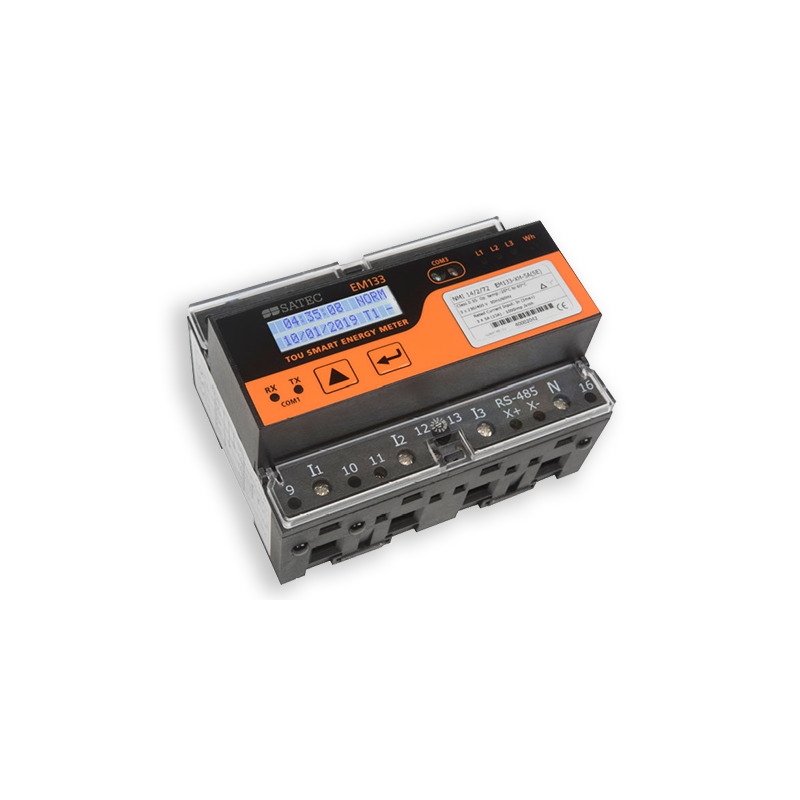
EM133-XM Smart Energy Meter

NMI Approved Electricity Energy Meter for use in Australia

By SATEC (Australia) Pty Ltd | Product News | Comments are Closed | 3 November, 2019 | 2

Electricity energy meters for use in the Australian market must be Pattern Approved, this involves a process of assessing and testing the electricity energy meter to comply with metrology conditions per NMI M 6-1.

The NMI approval process is to ensure confidence and integrity of the electricity measuring instrument complies with both Australian and international standards to ensure business and consumers are not impacted with billing of electricity energy meters being in error.

The testing of pattern approval is to ensure the electricity energy meter complies with various operating conditions, such as voltage, frequency, harmonics, impulses, temperature, humidity, solar radiation, dust, moisture, shock, vibration, magnetic induction, phase sequence, voltage unbalance, electrostatic discharge (ESD), insulation, electromagnetic interference, security, sealing, along with Accuracy and markings for unit of measurements.

NMI’s document NMI M 6-1 Electricity Meters sets out requirements for pattern approval of electricity meters covering metrology and technical standards while NMI’s document NM M 6-2 Electricity Meters sets out the testing requirements its format and reporting needs.

Electricity energy meters for use in the Australian market for trade and billing must be tested and comply to these requirements. Once all test reports are completed and are accessed by NMI, once processed and approved NMI will provide the NMI Number for use in the Australian market.

NMI’s document NMI M 6-1 Electricity Meters sets out requirements for pattern approval of electricity meters covering metrology and technical standards while NMI’s document NM M 6-2 Electricity Meters sets out the testing requirements its format and reporting needs.

NMI approval is required for all Embedded Network applications, meters defined as sub-meters, check meters used for trade or billing and for the electricity energy meter to be used in the NEM.

While currently it is not mandatory under NMI rules to incorporate a clock, interval data logging, communications and other features to the electricity energy meter, NMI does test these conditions if the electricity energy meter has been designed with these features.

Electricity energy meters for use in the NEM must be NMI approved but also must incorporate such features as clock, interval data logging, communications, disconnect and reconnect capabilities.

Upon Electricity Energy meters obtaining NMI approval further on-going quality control conditions are required with testing per NMI NITP 14.

All testing conditions must be traceable, all NMI approved electricity energy meters must have serial numbers with full traceability of test reports.

SATEC’s NMI approved electricity energy meters are factory tested under ISO 17025 standards with testing to NMI NITP 14. SATEC’s NMI approved electricity energy meters incorporate real time clock (RTC), event logs, interval data logs, communications along with disconnect and reconnect functions.

Contact SATEC to discuss all your metering needs.

electricity energy meter, energy metering, nmi approved

NextPrevious

BOOK AN ONLINE MEETING


INDUSTRY NEWS & VIEWS

Get fortnightly updates delivered straight to your inbox.

Energy Management Knowledge Base

NEWS

  • Colocation Data Centres: Why Tenant Energy Billing Is Becoming A Competitive Advantage
  • Behind-The-Meter BESS: Why Battery Performance Depends On Better Energy Data
  • Type 8 Energy Meters Explained: What Secondary Settlement Points Mean For Large Energy Users
  • Type 9 Energy Meters Explained: What Street Furniture Metering Means for Councils
  • What Does an EN50160 Power Quality Report Actually Tell You?
SATEC Australia logo

SATEC – Solutions And Technology for Energy Control

SATEC’s presence in Australia brings together 40 plus years of experience and knowledge for Energy Management Solutions.

The culmination of local expertise and SATEC’s Global leadership in metering, power quality analysers and software provides a source of knowledge to satisfy customer’s ever changing demands for today’s Energy and Power Quality Applications.

Quick Find

  • Contact
  • Metering Products
  • Energy Management Software
  • News – Events – Updates
  • Downloads
  • Billing & Revenue Metering Catalogue
  • Current Product Catalogue
  • Energy Management Knowledge Base
  • Terms & Conditions
  • Privacy Policy
  • Privacy Policy – eXpertConnect

Recent Posts

  • Colocation Data Centres: Why Tenant Energy Billing Is Becoming A Competitive Advantage

    Colocation Data Centres: Why Tenant Energy Billing Is Becoming A Competitive Advantage

    Discover why tenant energy billing is becoming a competitive advantage for colocation data centres as power demand, AI workloads and customer expectations grow.

    3 July, 2026
  • Behind-The-Meter BESS: Why Battery Performance Depends On Better Energy Data

    Behind-The-Meter BESS: Why Battery Performance Depends On Better Energy Data

    Behind the meter BESS performance depends on accurate energy data. Learn why metering, monitoring and visibility matter for battery storage ROI.

    2 July, 2026
© 2025 SATEC (Australia) Pty Ltd. | ABN 21-142640417 | SATEC® All Rights Reserved
  • HARDWARE
    • All Metering Products
    • Current Transformers
    • DC Energy Metering
    • Expansion Modules
    • Frequency Control Ancillary Services – FCAS
    • Multi-Channel Energy Meters
    • NMI Approved Energy Meters
    • Phasor Measurement Unit
    • Power Quality Analysers
  • SOFTWARE
    • Expertpower SaaS – EMS, Billing, Power Quality
    • Meter Data Management (MDM)
    • Power Analysis Software (PAS)
  • SOLUTIONS
    • Automatic Demand Response
    • Disturbance Direction Detection
    • Frequency Control Ancillary Services (FCAS)
    • Large-Scale Generation Certificates (LGCs)
    • NMI Approved Retrofit Energy Metering
    • Phasor Measurement Unit
    • Power of Choice Metering
    • Time of Use (TOU) Control
  • NEWS
  • DOWNLOADS
    • Billing & Revenue Metering Catalogue
    • Current Product Catalogue
    • Manuals & Datasheets
    • Power Analysis Software (PAS)
  • CONTACT
    • About SATEC
SATEC (Australia) Pty Ltd