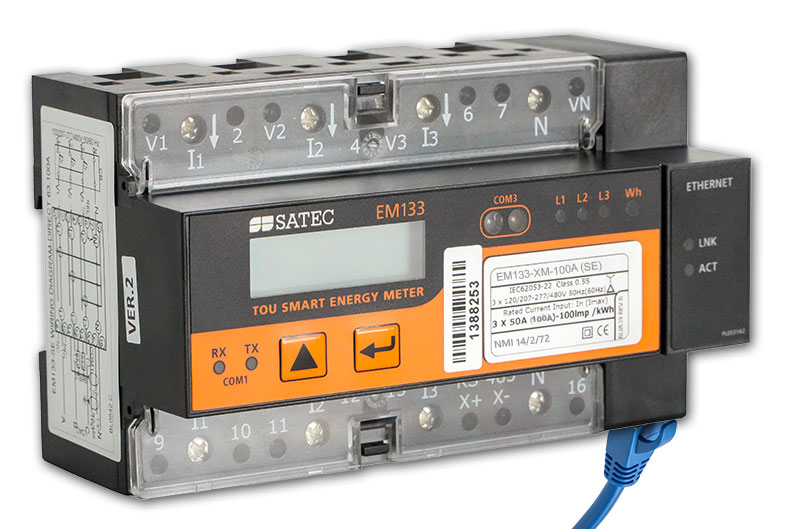


Energy metering is only as valuable as the data you can reliably retrieve. You can install the best meters on paper but if readings arrive late, incomplete or not at all, your billing, tenant reporting, energy management and compliance workflows all start to wobble. When that happens, the problem is often described in broad terms. People say “the network is bad” or “the meter dropped off.”
The real root cause typically falls into three categories: signal, firmware or power quality. This post breaks down the three most common causes of meter communications failure. We’ll explain how they show up in the field and what you can do to prevent them.
These issues can overlap, so troubleshooting works best when you approach them systematically rather than chasing symptoms.
Signal: The Invisible Bottleneck You Can't Ignore
Communication issues frequently start with signal conditions that look fine during commissioning and then become unstable under real operating conditions. Meters and gateways communicate over various mediums. These include wired RS-485, Ethernet, cellular and Wi-Fi. Yet signal-related failures share a common theme: the meter can’t maintain a clean, consistent path to the head-end system.
In retrofit environments, the signal path is rarely ideal. Meter rooms sit behind concrete. Switchboards create electromagnetic noise. Cable routes were never designed for modern data networks. Even new builds can suffer when the comms design is treated as an afterthought.
Signal problems tend to show up as intermittent dropouts rather than total silence. You might see meters that report normally for hours and then disappear. Or you might notice a cluster of devices that fail at the same time each day. Those patterns are clues. They point to contention, interference or physical layout constraints.
Common contributors to meter communications failure include poor antenna placement or gateway positioning for cellular, Wi-Fi and radio systems. RS-485 wiring issues are also frequent culprits. These include incorrect termination, star topology or long runs without proper design. Electrical noise can couple into comms cabling near variable speed drives, lifts or large plant equipment. Network equipment constraints matter too. These include overloaded gateways, misconfigured VLANs or aggressive firewall rules.
Troubleshooting signal starts with measurement and mapping. Assess Received Signal Strength Indicator (RSSI) and Reference Signal Received Power (RSRP) for cellular systems. Survey Wi-Fi coverage. Validate RS-485 termination and topology. Confirm that the gateway and backhaul are sized for the meter count and reporting frequency.
When you treat comms as a designed system rather than a loose collection of devices, meter communications failure becomes far less likely.
Firmware: Small Mismatches That Create Big Reliability Gaps
Firmware is the logic that dictates how a meter behaves, communicates and recovers from abnormal conditions. It can be easy to overlook, especially when devices appear to be working. Firmware issues can quietly erode stability over time.
Firmware-related problems often surface after one of three events: a network change, a configuration change or a power event. A meter may hold an IP address but fail to maintain a session. It might reject certain payloads or struggle with time synchronisation. In multi-vendor environments, minor protocol differences can also show up as sporadic failures. This is particularly true when gateway firmware and meter firmware are out of step.
Signs that firmware is involved include frequent reconnect loops, where the meter talks, drops and then talks again. Time drift or failed time sync can lead to rejected readings. You might see sudden instability after a gateway update or head-end platform update. Inconsistent behaviour across meters of the same model but different firmware revisions is another red flag.
Prevention comes down to governance. Maintain an approved firmware baseline. Document versions at commissioning. Plan updates rather than applying them ad hoc. It also helps to validate interoperability using a realistic test environment. This is especially important when protocols like Modbus are involved and polling behaviour can vary.
When firmware is treated as part of asset management rather than a one-time factory setting, you reduce the chance of recurring meter communications failure that drains technician time and disrupts downstream reporting.
Power Quality: When the Electrical Environment Disrupts the Data Layer
Power quality sits underneath everything. Meters are electrical devices first, communication devices second. If the supply is noisy or unstable, comms performance can degrade even when the network design and firmware are sound. The tricky part is that power quality problems don’t always announce themselves.
A site can look normal to occupants while still experiencing sags, transients, harmonics and frequency variations that affect sensitive electronics. In buildings with EV charging, lifts, variable speed drives or heavy switching loads, electrical disturbances can become routine.
Power quality issues commonly lead to meter resets or brownout conditions that interrupt reporting cycles. They can cause corrupted communications on RS-485 due to noise and ground potential differences. Gateway instability can occur when power supplies are marginal or poorly filtered. You might see short bursts of data loss that align with plant start or stop events.
If you suspect power quality, correlate comms dropouts with site activity. Look for patterns linked to HVAC cycling, pump starts, generator testing or load peaks. Measuring harmonics, voltage sags and transient events can turn a mystery comms problem into a clear electrical diagnosis. Mitigation might involve improving earthing and bonding. You could separate comms cabling from high-noise conductors. Adding filtering or surge protection may help. Sometimes you need to address the offending load directly.
In many cases, monitoring power quality directly provides the evidence you need to make a targeted fix rather than swapping devices and hoping the problem disappears.
How to Troubleshoot Meter Communications Failure Without Guesswork
When a meter goes quiet, the temptation is to start rebooting hardware. That sometimes works but it rarely prevents a repeat incident. A more reliable approach is to work from the outside in.
- First, confirm the backhaul path. Check internet, cellular or network reachability.
- Second, validate the gateway health. Review uptime, resources, logs and time sync.
- Third, check the local comms layer. Examine RS-485, Ethernet or Wi-Fi parameters, signal metrics and wiring.
- Fourth, review firmware versions and recent changes.
- Finally, investigate power quality correlations.
This sequence keeps the process efficient and helps you avoid misdiagnosing an electrical problem as a network problem. It also prevents mistaking a firmware mismatch for bad signal.
Why SATEC Is the Energy Metering Solution
SATEC’s approach is built for real-world sites where retrofit constraints, noisy switchrooms and mixed loads are common. Instead of treating metering as isolated hardware, SATEC delivers an energy metering solution that combines robust devices with strong diagnostics and operational visibility. This is exactly what you need to reduce recurring meter communications failure.
SATEC energy meters and power quality instrumentation are designed to perform reliably in challenging electrical environments. They offer capabilities that support both accurate measurement and deeper electrical insight. That matters when comms issues are actually symptoms of harmonics, transients or unstable supply conditions.
SATEC also supports advanced monitoring through Expertpower. This enables teams to turn raw electrical and metering data into actionable insights. When you can see what the network is doing, what the meter is doing and what the electrical environment is doing, troubleshooting becomes faster and far more repeatable. That visibility helps facilities teams and service providers move from reactive fixes to preventative management.
For projects where space, access and retrofit realities are non-negotiable, SATEC’s compact, field-proven solutions are well suited to delivering consistent data flows. Your reporting, billing and operational decisions can then be based on data you can trust.
Taking a System-Wide Approach to Energy Meter Communications
Signal, firmware and power quality are different domains but they converge on the same outcome: reliable energy meter data delivery. If you address only one layer, you can still experience instability. A designed communications approach, disciplined firmware management and an honest look at the electrical environment will prevent most issues before they start.
If meter communications failure is impacting your site, the fastest path forwards is to diagnose systematically and implement fixes that reduce risk across all three layers. That way, the next outage doesn’t become a recurring ticket.
Talk to our team about energy meter communications failure and our solutions to the issue today.
FAQs - Signal, Firmware and Power Quality: The 3 Most Common Causes of Meter Communications Failure
What is meter communications failure?
Meter communications failure is when a meter can’t reliably send data to the gateway or head-end system, resulting in missing, delayed or incomplete readings.
How can I tell if the issue is signal-related or something else?
Signal problems usually show up as intermittent dropouts or a cluster of meters failing in the same area, especially in basements, plant rooms or behind heavy structure.
Can firmware really cause intermittent communication issues?
Yes. Firmware mismatches or bugs can trigger reconnect loops, time sync problems or instability after network or platform changes.
How does power quality affect meter communications?
Voltage sags, transients, harmonics and electrical noise can reset meters, disrupt RS-485 communications or destabilise gateways, leading to recurring meter communications failure.