

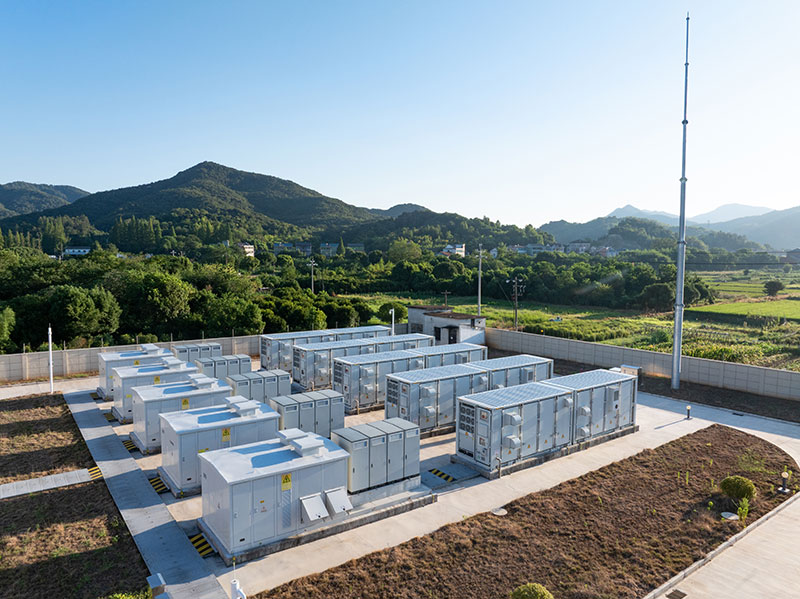
Battery Energy Storage Systems (BESS) are no longer side projects. They’re becoming core infrastructure for renewables firming, peak shaving, resilience, grid services and behind-the-meter optimisation. There’s a quiet truth that separates a BESS that performs on paper from one that performs in the real world: you can’t control (or monetise) what you can’t measure.
In BESS, measurement starts on the DC side. That’s where energy is actually stored and exchanged, where bi-directional flows are constant and where converter behaviour, ripple and temperature effects can make “good enough” metering drift into “unreliable data” surprisingly fast.
Why DC Metering Is Different in a BESS
AC metering is familiar territory: sinusoidal waveforms, established methods and a long history of standards and installation practices. In a BESS, DC metering lives in a harsher neighbourhood.
You’re dealing with bi-directional power flow (charge and discharge, sometimes switching quickly), high currents and high DC voltages (plus tight thermal constraints), power electronics switching that introduces ripple, noise and fast transients and multiple conversion stages (battery racks → DC bus → PCS/inverter → AC).
If your DC measurements aren’t stable and trustworthy, the knock-on effects are real: incorrect performance reporting, false efficiency claims, commissioning delays, warranty disputes and missed revenue opportunities (especially where availability and response performance matter).
The DC Metering Checklist for BESS
Define What You're Measuring (and Why)
Start by being explicit about the outcomes. In BESS projects, the same word – “energy” – can mean different things depending on who’s asking.
Common measurement intents include operational control (what’s happening right now on the DC bus), performance reporting (round-trip efficiency, losses, utilisation), commercial settlement or allocation (internal tenant billing, cost attribution, project KPIs) and grid services verification (response and accuracy under dynamic conditions).
Locking this in early helps you decide meter placement, accuracy requirements, sampling rates and data retention before installation decisions box you in.
Choose the Measurement Boundary (DC Bus vs Battery String vs Rack)
A BESS can be metered at multiple DC layers and each tells a different truth. String or rack level metering is best for diagnostics, balancing and spotting underperforming modules. DC bus level metering is best for system-level energy accounting and conversion analysis. PCS/inverter interface metering helps reconcile DC-side energy with AC export/import.
A clean design often uses a system boundary meter at the DC bus plus selective sub-metering where it improves insight or reduces risk during troubleshooting.
Ensure Bi-directional Energy Integration Is Handled Correctly
This sounds obvious, but it’s one of the most common sources of reporting errors. Your DC metering approach must correctly accumulate energy in both directions, avoid sign errors during mode changes, maintain accuracy across low-load and high-load conditions and keep stable time synchronisation so energy totals reconcile with other systems.
In practice, this is where commissioning teams often discover that different devices interpret “import/export” differently, especially when the BESS switches between charge, discharge and standby.
Accuracy and Stability: Focus on the Full Operating Envelope
A BESS rarely sits at one neat operating point. It spends time at partial load (trickle charge, low export), under rapid ramping (responding to control signals), in hot enclosures (thermal stress affects sensors) and in noisy electrical environments (EMC and switching effects).
So, validate not just a headline accuracy figure but performance across the expected current range (including very low current), DC voltage range (including upper end), temperature range in the actual cabinet and dynamic changes (step responses, short bursts, ramps).
Sensor Selection: DC Shunt vs Hall Effect vs Flux Gate Sensor
You don’t need to turn your project into a sensor debate but you do need to pick intentionally. At a high level, DC shunt-based measurement can be very accurate but demands careful thermal design and placement.
Hall effect solutions provide isolation and can be easier mechanically but may introduce drift or noise sensitivity depending on implementation. More specialised transducers can improve stability and bandwidth, often at higher cost.
The introduction of Flux gate technology is great for high-accuracy measurement, with excellent sensitivity and long-term stability (low drift). It’s also robust and reliable in harsh environments, which makes it a solid choice for precision sensing and current measurement applications.
In BESS, the “right” answer is usually the one that stays accurate under heat, vibration and switching noise, while remaining serviceable in the field.
Capture the DC Reality: Ripple, Noise and Fast Transients
A BESS DC bus is not always “flat DC.” Switching ripple and transient behaviour can distort measurement unless the metering system is designed to cope with it.
Ask: What is the sampling rate and filtering approach? Does the system report true DC values under ripple conditions? Can it capture events (spikes, dips, unusual oscillations) that correlate with inverter or battery behaviour?
Even if your main KPI is kWh, these fast behaviours often explain why the kWh doesn’t reconcile.
Time Synchronisation and Data Integrity
In a BESS project, data comes from many places: BMS, PCS, SCADA, EMS, revenue meters and metering gateways. If time bases drift, you’ll spend weeks arguing over whose totals are “right.”
Your metering setup should support consistent time stamping (ideally aligned to a common sync source), stable interval recording (for example, 1-min, 5-min, 15-min as required), event logs that survive reboots and comms outages and secure, auditable records when data is used for commercial outcomes.
Communications and Integration: Don't Leave It to the End
The best meter in the world is useless if the EMS can’t read it cleanly. Before finalising, confirm protocol compatibility with your SCADA/EMS stack, network segmentation and cybersecurity expectations, data points required (power, energy, voltage, current, alarms, events) and commissioning workflow (how you will validate end-to-end data).
Integration problems are rarely “just IT.” They directly affect availability and performance reporting, two things BESS projects live and die by.
Installation Details That Make or Break Accuracy
DC metering is unforgiving about physical realities. Pay attention to conductor routing and induced noise, sensor placement relative to heat sources, connection quality (torque, corrosion protection, inspection access) and enclosure temperature management.
Treat metering as part of the electrical design, not an accessory bolted on at the end.
Commissioning: Prove It With a Reconciliation Plan
A solid BESS commissioning plan includes reconciliation across boundaries: battery-side estimates (from BMS) versus DC bus meter, DC bus energy versus AC-side export/import and loss analysis across conversion stages.
This isn’t about catching someone out. It’s about establishing a trusted measurement chain early, so performance conversations later are grounded in evidence.
How SATEC Provides the DC Metering Solution for BESS
SATEC’s approach to BESS metering is built around the realities above: bi-directional flows, power-electronics noise and the need for dependable, actionable data.
Accurate energy measurement and compliance-ready metering are central to SATEC’s offering, including NMI-approved meters for applications that require confidence in metrology. For BESS owners and integrators, that matters when you need energy totals that stand up to scrutiny – internally, commercially or in reporting.
Just as importantly, BESS isn’t only about kWh totals. It’s operational. SATEC’s strengths in power quality monitoring help teams see what’s happening around the DC/AC interface and across power-electronic behaviour, supporting faster diagnosis, smoother commissioning and clearer performance narratives.
Finally, measurement is only as useful as what you do with it. SATEC’s Expertpower software supports turning metering data into usable insights, helping teams trend performance, investigate anomalies and build reporting workflows that match how BESS is actually operated.
In short, SATEC meters what matters, captures the behaviours that explain performance and helps make the data usable so your BESS system isn’t just installed but genuinely understood.
A Quick Way to Use This Checklist
If you’re early in design, focus on boundaries, bi-directional integration, sensor choice and integration requirements. If you’re commissioning or troubleshooting, focus on reconciliation, time alignment, ripple/transients and thermal stability. Either way, treat DC metering as a first-class system, not a box-ticking exercise.
In BESS, measurement isn’t admin. It’s performance.
FAQs - Battery Energy Storage Systems: The DC Metering Checklist
What does BESS mean?
BESS stands for Battery Energy Storage System, which stores electricity in batteries and delivers it back when needed for cost savings, resilience or grid support.
Why is DC metering important in a BESS?
The battery stores and transfers energy on the DC side, DC metering is the most direct way to measure true charge/discharge energy and validate performance.
Where should DC meters be installed in a BESS?
Typically at the DC bus for system-level energy accounting, with additional rack or string-level metering if you need deeper diagnostics and performance insight.
How do I know if my BESS metering data is trustworthy?
If your DC and AC totals reconcile within an expected tolerance, time stamps are aligned and readings remain stable across temperature and load changes, your measurement chain is likely solid.
Explore related topics:
For Your Industry
Standards & Compliance
Related Reading
- DC Energy Metering Solutions for Solar Battery Storage & Microgrids: Advanced Monitoring Technology for Renewable Energy Systems
- Behind-The-Meter BESS: Why Battery Performance Depends On Better Energy Data
- The Role of the DC Power Meter in Microgrids and Renewable Energy Systems
Trending in Your Sector


