
Unbalance is one of those power quality problems that looks small on a report and then shows up as hot motors, nuisance trips, overheating conductors and unexplained downtime. The tricky part is that unbalance can be discussed two ways: voltage unbalance and current unbalance.
They’re related yet they don’t behave the same way and they don’t always point to the same root cause. If you’ve ever looked at your data and thought, “Voltage looks fine, so why are the currents all over the place?” (or the reverse), you’re not alone.
This article breaks down voltage vs current unbalance, explains why the distinction matters and offers a practical way to decide which issue to tackle first.
Key Points
Unbalance in three-phase systems can look minor in reports but cause overheating, nuisance trips, vibration, losses and downtime.
Voltage unbalance is uneven phase voltages at the measurement point and often indicates an upstream or distribution-side issue.
Current unbalance is uneven phase currents and is usually driven by load distribution or equipment behaviour on-site.
Voltage and current unbalance are linked, but they don’t always track together because load and impedance can skew one without heavily skewing the other.
Fix current unbalance first when it’s localised to specific feeders; prioritise voltage unbalance first when it’s widespread at the main incomer and supply-driven.
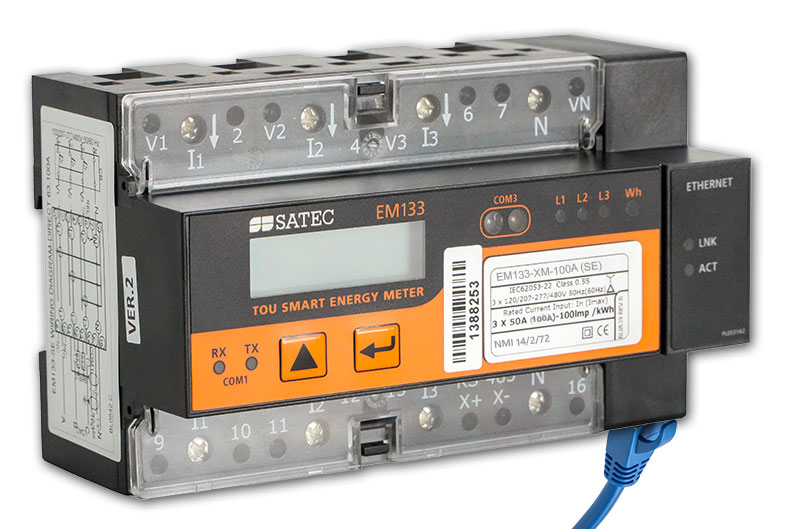
SATEC energy meters and ExpertPower provide time-stamped visibility of voltage and current unbalance at the incomer and downstream boards to pinpoint the source, verify fixes and support evidence-based escalation.
What Unbalance Actually Means in a Three-Phase System
In a healthy three-phase system, the three phase voltages are roughly equal in magnitude and separated by 120 degrees. The currents follow suit when the load is balanced and the supply is stable. Unbalance happens when those conditions drift. This results in one phase being “different” enough to create extra heating, losses, vibration and stress on electrical equipment.
Unbalance isn’t just an efficiency issue. Even small voltage unbalance levels can produce disproportionately large increases in motor heating. That’s why it can feel like unbalance “comes out of nowhere” even when your voltages only look slightly uneven.
Voltage Unbalance: What It Is and What It Usually Means
Voltage unbalance describes differences between the three phase-to-phase (or phase-to-neutral) voltages. It can come from upstream network conditions, distribution issues, transformer taps, uneven single-phase loading on a shared supply or wiring and connection problems. A key insight: voltage is what the supply is providing at the point of measurement.
If voltage unbalance is present at your main switchboard, the site is receiving an uneven supply or the site distribution is influencing the voltage seen at that point. Common signs that voltage unbalance is the primary problem include similar unbalance patterns across multiple feeders, unbalance that appears even when loads are relatively steady and unbalance that worsens during certain times of day tied to upstream demand or neighbouring loads.
Current Unbalance: What It Is and What It Usually Means
Current unbalance describes differences between the three phase currents feeding a load or group of loads. Current unbalance is often driven by the load itself. This includes uneven phase loading, single-phase loads clustered on one phase or a three-phase load with internal issues (such as a motor or VSD problem). Current can also become unbalanced due to connection issues, failing components or one phase experiencing higher impedance.
A critical nuance in voltage vs current unbalance is that current unbalance can be very large even when voltage unbalance looks modest. That’s common in buildings where the supply is relatively stable but the distribution of single-phase loads is not.
Current unbalance often shows up as one phase consistently carrying more load than the others, hot spots in switchboards or breakers on the heavily loaded phase and neutral heating in systems with significant single-phase non-linear loads.
How They're Connected (and Why They Don't Always Match)
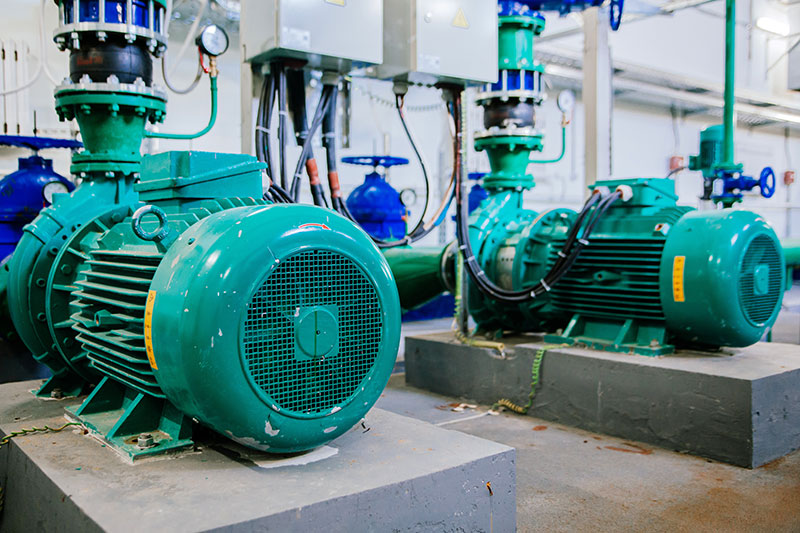
Voltage and current are linked through impedance and load behaviour. If voltage is unbalanced, the currents in three-phase equipment, especially induction motors, tend to become unbalanced as the motor tries to “make up” torque with whatever it’s given. That creates negative-sequence currents that drive heating.
On the other hand, a heavily unbalanced load can cause voltage drop on the most loaded phase through cables, transformers and switchgear impedance. This creates local voltage unbalance downstream even if the upstream supply is fine.
That’s why voltage vs current unbalance is not a simple “either/or.” The practical question becomes: which one is the driver and which one is the symptom at your measurement point?
Quick Diagnostic Thinking: Supply Problem or Load Problem?
A practical way to separate causes is to compare where you measure and how widespread the effect is. If voltage unbalance is visible at the incomer (main supply) and appears across many subcircuits, the supply or upstream distribution is likely contributing. If voltage is fairly even at the incomer but current is strongly unbalanced on certain feeders, the load distribution is usually the place to start.
Another useful clue is stability. Supply-driven voltage unbalance often moves with external conditions. Load-driven current unbalance is frequently persistent and tied to how equipment is distributed and scheduled on-site.
Which Should You Fix First?
In most sites, fix current unbalance first… with one important exception.
Start With Current Unbalance When
Current unbalance is typically the faster, more controllable win. Facilities can often reduce it by rebalancing circuits, shifting single-phase loads and correcting distribution choices. Reducing current unbalance lowers heat stress in cables, breakers, busbars and transformers. It can also reduce the voltage drop that creates downstream voltage unbalance.
This is especially true in commercial buildings with many single-phase loads spread unevenly across phases over time. Think lighting, small power, IT equipment and kitchen loads.
Prioritise Voltage Unbalance First When
Voltage unbalance at the point of common coupling (your main incomer) is outside acceptable limits or is clearly being driven upstream. Load reshuffling helps yet it cannot fully solve a supply that’s arriving uneven.
In those cases, the best outcomes usually involve a mix of documenting the issue, checking site connections and transformer condition and escalating to the network operator with evidence.
A Simple Rule of Thumb
If voltage unbalance is high everywhere, treat it as a supply or distribution issue and tackle voltage first.
If voltage looks reasonable but currents are skewed on certain feeders, treat it as a load management issue and tackle current first.
What Fixing Unbalance Looks Like in Practice
Fixing unbalance is often more about disciplined measurement and targeted actions than big hardware changes. Typical corrective actions include checking for loose or deteriorating connections, verifying phase allocation across single-phase circuits and reviewing large three-phase equipment health and settings (particularly motors and VSDs).
Measurement is the enabler. Without time-stamped visibility, it’s easy to chase symptoms. With the right monitoring, you can see when unbalance appears, where it originates and which circuits are responsible.
How SATEC Provides the Energy Metering Solution
Solving unbalance starts with answering three questions:
- Where is it happening?
- When is it happening?
- How severe is it, and what is it doing over time?
That’s exactly where SATEC’s metering and power quality monitoring capability becomes the practical foundation for action.
SATEC’s power meters and monitoring solutions are designed to give you clear visibility of three-phase voltages and currents so you can compare patterns at the incomer, distribution boards and critical loads. They provide power quality insight that helps you differentiate steady issues from time-based events. You also get reliable data for internal troubleshooting and for evidence-based discussions with stakeholders, contractors and network operators.
When unbalance becomes a recurring operational headache, data alone is not enough, it needs to be usable. Pairing SATEC meters with Expertpower supports ongoing monitoring, trending and reporting. This means your team can verify improvements after load shifting, confirm whether a suspected feeder is driving the issue and keep an eye on drift over time.
If you’re working through voltage vs current unbalance, the fastest path to clarity is usually to meter at the main switchboard and at the problem feeder(s). That approach lets you separate supply behaviour from load behaviour and fix the right thing first, instead of treating the loudest symptom.
A Practical Sequence to Follow
A clean, low-drama workflow often looks like this:
- Measure voltage and current unbalance at the incomer and at key downstream boards.
- Identify whether the issue is widespread or localised.
- If localised, rebalance single-phase loads and check terminations on the affected feeder.
- If widespread, validate connections and escalate upstream with trend data.
- Re-measure after changes to confirm the improvement and quantify risk reduction.
That sequence keeps voltage vs current unbalance grounded in evidence and avoids expensive trial-and-error.
FAQs - Voltage Unbalance vs Current Unbalance
What’s the main difference between Voltage vs Current Unbalance?
Voltage unbalance is uneven phase voltages from the supply or distribution, while current unbalance is uneven phase currents usually driven by load distribution or equipment behaviour.
Can current be unbalanced even if voltage looks balanced?
Yes. Single-phase loads stacked on one phase or an issue within a three-phase load, can create significant current unbalance even when the supply voltage is relatively even.
Which should I fix first: voltage unbalance or current unbalance?
Fix current unbalance first when it’s localised to specific feeders or loads; prioritise voltage unbalance first when it’s widespread at the main incomer and appears supply-driven.
What’s the best way to pinpoint where the unbalance is coming from?
Meter at the main switchboard and at the affected distribution boards/critical loads, then compare trends to see whether the unbalance is site-created or arriving from upstream.