

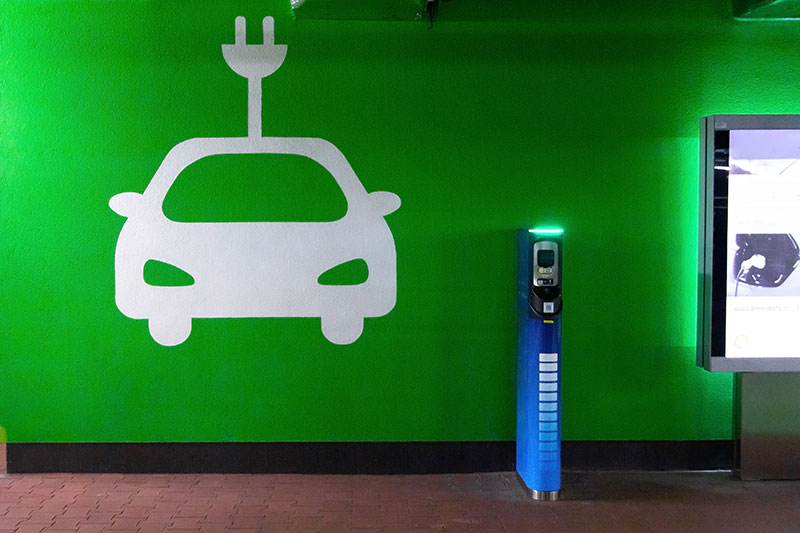
EV charging has shifted from future planning to immediate infrastructure priority across Australian buildings. Offices need workplace charging to attract quality tenants, strata buildings must satisfy residents and fleets are electrifying faster than many sites can upgrade their electrical supply. As soon as chargers arrive, three operational questions emerge.
- How do we prevent demand spikes?
- How do we bill fairly and defend those charges?
- How do we stay within the site’s capacity without constant operational headaches?
This is where power consumption metering for EV chargers becomes essential. Metering transforms charging from guesswork into measurable, manageable load. With the right approach, you can control demand, allocate costs accurately and plan upgrades based on real data rather than assumptions.
Why EV Charging Makes Energy Management Harder
EV chargers are unusual loads. They can be large, variable and highly correlated with human behaviour. A site might see predictable daytime base load, then a sharp ramp when staff plug in at 9am or when residents return home in the evening. Even moderate AC chargers add up quickly when dozens operate simultaneously. DC fast charging creates step changes that stress capacity even more.
This complexity amplifies when the people paying for electricity are not the people using it. In many buildings, the owners corporation, landlord or facility operator pays the electricity bill, while residents, tenants or visitors consume the energy. Without precise measurement, charging costs become a source of friction, disputes and poor return on investment.
Australian electricity tariffs make this even more critical. Demand charges are billed based on your highest demand for electricity in kilowatts during a 15 or 30 minute interval. Without metering, these demand charges can catch building managers by surprise.
What Power Consumption Metering for EV Chargers Actually Measures
At its simplest, metering answers this question: how much electricity went into EV charging? That usually means measuring kWh for each charger, each circuit or each charging zone. Good solutions go further. They capture the electrical characteristics that affect how the site behaves under load, such as demand (kW) profiles and time-of-use patterns.
The right measurement point depends on what you’re trying to achieve. Charger-level metering supports user billing, cost allocation and reporting by vehicle or driver. Circuit or distribution-level metering helps manage demand and understand how charging impacts switchboards and feeders. Site-wide metering and integration connects EV charging behaviour to overall building load. This is critical for capacity planning and avoiding peak demand surprises.
A practical strategy often uses more than one layer. You need granular measurement for billing plus electrical distribution metering for demand control and constraint management.
Managing Demand: Staying Ahead of Peaks
Many sites discover the hard way that EV charging can push them into peak demand charges or even nuisance trips. Demand management maintains service while preventing the site from exceeding agreed limits, upstream equipment ratings or the practical capacity of existing supply.
Metering supports demand management in three key ways.
Visibility Into When Peaks Occur
Demand issues are rarely constant. They are usually time-based, driven by arrival patterns, work shifts or residential routines. Metering lets you identify the peak windows and understand whether the driver is everyone charging at once, charging coinciding with HVAC start-up or fleet charging after hours.
Data to Set Realistic Load Limits
Sites often set arbitrary limits on charging power. They find these limits are either too conservative, annoying users, or too optimistic, causing peaks. Metering enables evidence-based limits: maximum aggregate kW for a charging group or dynamic limits that flex based on building load.
A Foundation for Smarter Control
Load management systems can modulate charger output based on available capacity. That control is only as good as the data feeding it. Accurate metering across the right points in electrical distribution makes it possible to implement controls that are stable, fair and aligned with the site’s actual constraints.
The National Construction Code 2022 establishes EV readiness requirements for certain building classes, including apartment complexes and commercial developments. Many of these installations now require load management systems. Metering provides the essential data these systems need to function effectively.
Billing and Cost Allocation: Accuracy That Prevents Disputes
Once charging is in place, someone will ask: who pays? Without metering, the answer is usually unsatisfying. Flat fees can be unfair to light users and too cheap for heavy users. Estimates erode trust. Manual tracking becomes unmanageable as the number of users grows.
Power consumption metering for EV chargers enables billing models that scale and remain defensible.
User-Pays Billing
Charger-level kWh data supports charging users for exactly what they consume. This is useful for strata, commercial tenant charging, public access and fleets with multiple departments.
Modern smart charging infrastructure ensures that each charging session is individually metered and billed directly to the user’s account, providing complete transparency and fairness.
Cost Allocation Within Buildings
In offices or mixed-use buildings, metering enables allocating EV charging costs to tenancies or cost centres. This keeps base building costs from being distorted and reduces friction between occupants.
Time-of-Use and Tariff Alignment
Electricity costs are rarely flat. Tariffs can vary by time of day, demand or network charges. Metering data makes it possible to align pricing or reporting with the way costs are actually incurred. This is especially important where peak demand charges are significant.
From 1 July 2025, residential electricity prices rose across NSW, South Australia and south-east Queensland, with increases ranging from 0.5% to 9.7%. As electricity prices continue rising, accurate cost allocation becomes more important for maintaining trust between building operators and users.
The practical benefit is trust. When a resident disputes a bill or a tenant questions an allocation, metering provides the evidence, provided the metering is properly verified based on its accuracy performance, standards, quality of the metering to comply with Australian standards such as NMI approved metering.
Meters that are not compliant with rigid standards make it difficult to have traceability on accuracy and performance.
Capacity Constraints: Planning Upgrades With Confidence
Capacity constraints are often the real limiter for EV charging growth. Upgrading supply capacity can be expensive and slow, so most sites try to maximise existing assets first. That only works when you understand what the assets are actually doing.
Metering helps answer three critical capacity questions.
What Is the True Spare Capacity?
Many buildings have more headroom than expected at certain times and less at others. A monthly bill or a single maximum demand number rarely tells the full story. Metering provides the load profile that shows how much capacity is available during the hours people want to charge.
Where Are the Bottlenecks?
Constraints are not always at the main supply. They can appear at a particular switchboard, feeder or protective device. Distribution-level metering highlights which parts of the system are approaching limits and which are comfortably within specification.
How Fast Is Charging Demand Growing?
EV adoption tends to accelerate. Metering gives you trend lines. You can see how many kWh are being consumed for charging, how the maximum coincident demand is changing and which times are becoming more congested. This supports staged planning: add chargers now, schedule upgrades later and justify capital expenditure with real site data.
Australia’s fast-charging network expanded to around 1,200 locations with over 3,400 plugs by mid-2025, with workplace charging initiatives gaining momentum as governments recognised the alignment between charging patterns and solar production curves. As adoption accelerates, metering becomes the foundation for managing this growth intelligently.
Making Metering Work in the Real World
A metering plan succeeds when it’s aligned to your operational goals. Start with the questions you need to answer: billing, peak avoidance, reporting, capacity planning or all of the above. Then select the measurement points that provide those answers without creating a data swamp.
Integrations also matter. Metering data is most useful when it can be reported, analysed and shared with the people who need it. These include facility managers, strata managers, energy consultants and finance teams.
Accuracy, reliability and scalability should be treated as core requirements. EV charging will expand and a metering solution should not need to be redesigned every time you add another charging bank.
How SATEC Provides the Power Consumption Metering Solution
SATEC’s energy metering and monitoring portfolio is well suited to EV charging environments where accuracy, visibility and trustworthy reporting are essential. EV charging often sits at the intersection of tenant billing and electrical infrastructure constraints. Having metering that supports both operational and commercial outcomes matters.
SATEC’s approach can be deployed at the level that matches your site’s needs.
SATEC’s power meters and monitoring solutions can measure energy consumption for EV charging circuits and distribution points. They provide dependable kWh and demand data for billing and load management insights.
Where sites need broader electrical visibility, SATEC’s power quality monitoring capability helps reveal issues that can accompany high and variable charging loads. This supports smoother operation and better diagnostics.
For sites that want to turn readings into action, Expertpower supports visualisation and reporting. Stakeholders can understand charging consumption patterns, peak windows and growth trends. This makes it easier to communicate with building owners, strata committees, tenants and project teams using consistent data rather than estimates.
In practice, SATEC’s products help you implement power consumption metering for EV chargers in a way that supports fair charging cost recovery, clearer capacity planning and more confident decisions about when to apply load management or upgrade infrastructure.
A Smarter Path to Scalable EV Charging
EV charging can be a genuine asset for a building or fleet. It can also create new operational risk when it’s unmanaged. Metering is the difference between expanding with confidence and chasing problems after they show up on invoices, in complaints or in overloaded switchboards.
With power consumption metering for EV chargers, you gain the visibility to control demand, the accuracy to bill fairly and the evidence to plan capacity upgrades intelligently. As charger numbers increase and user expectations rise, metering becomes less about reporting and more about keeping the entire charging ecosystem stable, scalable and commercially sound.
Talk to our experts today.
FAQs - Power Consumption Metering for EV Chargers
Why do I need Power Consumption Metering for EV Chargers if the chargers already have apps?
Charger apps often focus on session data, while independent metering provides defensible, site-wide accuracy for billing, demand tracking and reporting across multiple chargers and boards.
Can Power Consumption Metering for EV Chargers help reduce demand charges?
Yes, by showing when EV charging coincides with building peaks, metering data supports load management settings that limit coincident demand and avoid costly spikes.
What’s the best place to meter EV charging: at each charger or at the switchboard?
Charger-level metering is best for user billing, while switchboard or circuit metering is best for capacity and demand management; many sites use both for complete visibility.
How does metering support capacity planning for future chargers?
Metering reveals real load profiles and growth trends so you can confirm actual spare capacity, identify bottlenecks and time upgrades based on evidence rather than assumptions.
Explore related topics:
For Your Industry
- Electric Truck Charging: Why Depot Metering Is The Key To Managing New Power Demand
- How Power Monitoring Devices Help Reduce Energy Costs in Commercial Buildings
Standards & Compliance
Related Reading
- Why EV Charging Infrastructure Now Requires a Power Quality Audit
- How Check Metering Can Reveal Hidden Load Issues and Power Anomalies
Trending in Your Sector


