
Solar has become a mainstream way for homes, businesses and industrial sites to cut energy costs and reduce reliance on the grid. Installing panels is only the first step though. If you can’t clearly see what your system is producing, how much you’re consuming and when those patterns change, you’re leaving performance (and money) on the table.
That’s where solar power monitoring comes in. Done well, it turns your solar setup from a “set and hope” asset into a continuously optimised part of your energy strategy. It helps you verify output, spot faults early and make smarter operational decisions.
What Is Solar Power Monitoring?
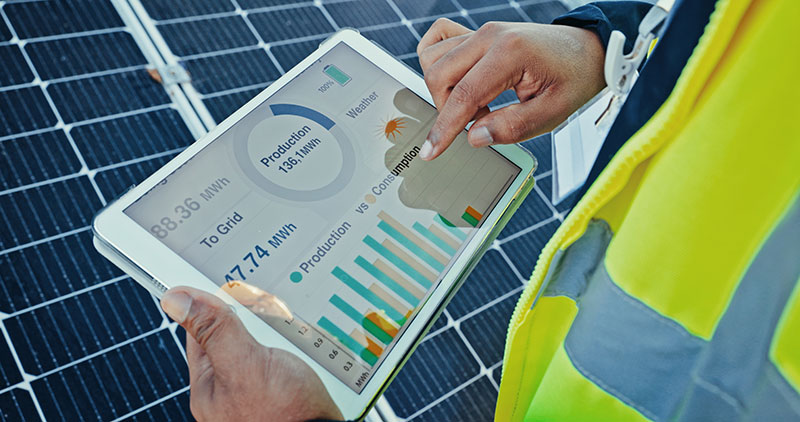
Solar power monitoring is the ongoing measurement and analysis of solar generation and energy flows across your site. Depending on the setup, it can show:
- How much electricity your solar system produces in real time and over time.
- It reveals how much energy your site uses and when.
- It tracks how much solar is consumed onsite versus exported to the grid.
- You can see what you’re importing from the grid and what it costs.
- Most importantly, it shows whether performance is tracking as expected based on system size, season and weather.
At the simplest level, monitoring is a dashboard that tracks inverter output. At a more advanced level, it becomes a complete visibility layer across solar generation, site load and quality metrics. This supports both financial reporting and technical diagnosis.
Why Solar Output Alone Isn't Enough
Many systems come with inverter monitoring, which is helpful but incomplete. Inverter data typically focuses on what the panels are producing. That’s only one part of the story. If you want to understand savings, ROI and operational opportunities, you also need visibility into what your site is doing with that energy.
For example, your inverter says you generated 500 kWh today but your bill didn’t drop. Why? Your export looks high, yet you expected more self-consumption. What changed in load? Your system is generating but equipment is intermittently tripping. Could power quality be a factor?
When monitoring includes both generation and consumption, you get answers quickly. It’s the difference between “my solar is working” and “my solar is delivering maximum value.”
Key Benefits of Solar Power Monitoring
A practical solar power monitoring approach delivers benefits across performance, maintenance and financial outcomes.
Verify System Performance and Detect Issues Early
Solar systems degrade over time and can be impacted by shading, soiling, inverter faults, loose connections or string issues. Monitoring helps you detect underperformance early, before it becomes a months-long loss in output.
Improve Self-Consumption and Reduce Peak Demand
For commercial sites, the biggest savings often come from using solar onsite rather than exporting. Monitoring helps you understand when you’re exporting versus consuming. It supports operational changes like shifting loads into solar-rich windows.
Validate Savings and Strengthen Reporting
If you’re reporting sustainability metrics, managing budgets or explaining performance to stakeholders, solar power monitoring provides the evidence. It turns “we think this helps” into “here’s what it saved and when.”
Support Smarter Investment Decisions
When you can see actual site patterns, decisions around battery storage, EV charging, additional solar capacity or demand management become more data-driven. Monitoring highlights whether you have a daytime surplus worth storing or a peak demand problem worth targeting.
What to Measure for Meaningful Insights
If your goal is simply to check that the inverter is running, you’ll get basic generation data. If your goal is optimisation and operational control, you’ll want a broader set of measurements.
Generation metrics include real-time solar output (kW) and energy produced (kWh). You need daily, weekly and monthly production trends. Performance comparisons between expected and actual output are also valuable where possible.
Consumption and grid interaction covers total site consumption (kW/kWh), import from the grid and export to the grid, solar self-consumption rate (how much solar you use onsite) and peak demand timing and magnitude.
Quality and reliability (especially for commercial and industrial sites) should track voltage variations, power factor behaviour and disturbances. These are indicators that may correlate with equipment reliability or nuisance trips.
The right combination depends on your site type. A single building may focus on generation and consumption. A multi-tenant or industrial facility may need more detailed metering points to properly allocate usage and diagnose issues.
Common Solar Monitoring Challenges (and How to Avoid Them)
Even with good intentions, monitoring setups can fall short. Here are a few common problems.
- Dashboards without context: Real-time graphs are great but without site consumption and grid data, you can’t link generation to actual savings. Make sure monitoring includes the “whole energy picture.”
- Data that isn’t trustworthy: If metering accuracy is questionable, the insights won’t be used. Accuracy matters when you’re reconciling bills, validating savings or allocating costs.
- Blind spots in multi-load sites: Monitoring only at the inverter can miss important patterns. A large load might turn on at the wrong time, or a specific distribution board could cause demand spikes. Strategic metering points help you see where energy is really going.
How SATEC Provides the Metering Solution for Solar Power Monitoring
For solar power monitoring to be genuinely useful, the foundation has to be solid. You need accurate measurement, reliable data capture and a clear view of how energy moves through the site.
SATEC’s metering and power monitoring products are designed to deliver that foundation. They support a complete picture of solar generation, site consumption and grid interaction. This matters for both performance verification and ongoing optimisation.
With SATEC, you can implement a monitoring approach that supports accurate measurement of energy flows. This includes import/export and onsite consumption patterns. Power quality monitoring helps identify issues that may impact equipment performance and operational stability.
NMI approved metering provides compliance and trusted measurement where it’s important for reporting and reconciliation. Integration with Expertpower cloud software enables centralised visibility and analysis across energy data. This allows stakeholders to move from raw readings to actionable insights.
For retrofit-heavy sites where space and installation practicalities matter, SATEC’s compact metering options can help simplify deployment. This makes it easier to instrument the points that matter without turning monitoring into a major construction project.
The result is solar power monitoring that doesn’t just display data. It supports decisions by diagnosing underperformance, improving self-consumption, tracking demand behaviour and building confidence in savings.
Choosing the Right Solar Power Monitoring Approach
A good monitoring setup is tailored, not generic. The “right” approach depends on what you’re trying to achieve. If you want peace of mind, start with generation tracking and basic alerts. If you want financial optimisation, include site consumption, import/export and demand visibility. If you want operational reliability, consider adding power quality monitoring and additional metering points for critical loads.
In all cases, aim for monitoring that’s easy to use, trusted by stakeholders and grounded in accurate metering. When you can see what’s happening in real time and over time, solar stops being a passive asset and becomes a controllable advantage. Solar is already a strong move. Solar power monitoring is how you make sure it keeps paying you back, day after day, season after season.
FAQs - Solar Power Monitoring
What is solar power monitoring?
Solar power monitoring tracks how much electricity your solar system generates and how that energy is used across your site, often in real time and over time.
Can solar power monitoring help identify faults or underperformance?
Yes. By tracking trends and comparing expected vs actual output, solar power monitoring can flag issues like shading, soiling, inverter problems or wiring faults early.
Do I need more than inverter monitoring?
If you want to understand actual savings and optimise self-consumption, you’ll usually need monitoring that includes site consumption and grid import/export, not just inverter output.
How do SATEC products support solar power monitoring?
SATEC provides energy metering and power monitoring to accurately measure generation, consumption and import/export, with Expertpower supporting centralised visibility and analysis.
Explore related topics:
For Your Industry
Standards & Compliance
- Solar Net Metering Explained: How It Works and Why Accurate Metering Matters
- Commercial Solar Metering: What The 1 MW SRES Change Means
Related Reading


