

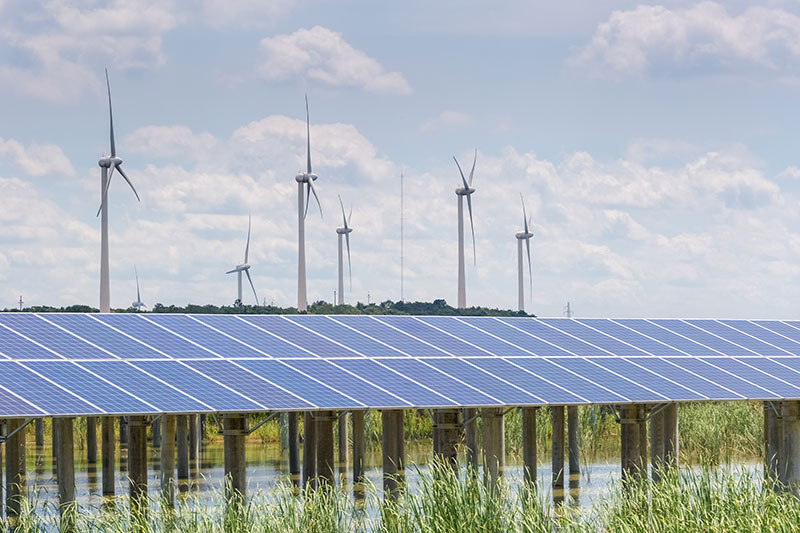
Large-scale Generation Certificates are tradeable financial certificates created for eligible large-scale renewable energy power stations under Australia’s Large-scale Renewable Energy Target (LRET). Each certificate represents one megawatt-hour (MWh) of eligible renewable electricity generated or displaced by an approved power station such as solar, wind and other sources.
In simple terms, renewable energy generators create electricity from clean sources, prove their generation with accurate metering and compliance data, create LGCs through the official registry and then sell or surrender those certificates.
The value of LGCs becomes a crucial revenue stream for many renewable projects, particularly large solar and wind farms.
How Large-scale Generation Certificates Work
LGCs operate within a well-defined regulatory and digital framework managed by the Clean Energy Regulator. The process follows a clear lifecycle from generation through to certificate surrender.
Eligible Generation
To participate in the LGC scheme, your system must meet specific criteria. It needs to be a large-scale power station, which typically means a capacity greater than 100 kW. The system must use eligible renewable sources such as solar, wind, hydro or certain bioenergy types. Finally, it must be accredited with the Clean Energy Regulator under the LRET scheme.
From the moment you receive accreditation, every MWh of eligible renewable energy becomes potential LGC revenue, provided you can accurately measure it.
Measurement and Data
Accurate metering forms the foundation of the LGC system. You need revenue-grade meters that meet relevant standards, reliable interval data captured at regular intervals and clear separation of auxiliary or fossil fuel energy where applicable. Only net eligible renewable generation counts towards LGC creation.
If your metering is inaccurate, everything downstream suffers. This includes LGC volumes, revenue calculations and compliance reporting. Getting the metering right from the start protects your revenue stream and simplifies audits.
Certificate Creation in the REC Registry
Once your generation data is verified, you or your registered agent can create LGCs through the online REC Registry managed by the Clean Energy Regulator. Each MWh of eligible generation equals one Large-scale Generation Certificate. The registry tracks creation, transfer and surrender, providing a transparent audit trail for all stakeholders.
LGCs must be created within specific timeframes. All certificates must be created by 31 December of the year following the electricity generation. For example, electricity generated in 2025 must have its LGCs created by 31 December 2026.
Trading and Surrender
Once created and validated, LGCs can be sold on the open market or through long-term offtake agreements. They’re often bundled into power purchase agreements (PPAs) to provide revenue certainty. Electricity retailers and other liable entities must surrender a specified number of LGCs annually to meet their obligations under the Renewable Energy Target.
LGC prices fluctuate based on supply, demand and policy settings. This means they can significantly impact project economics and investment decisions.
LGCs Versus STCs: Understanding the Difference
Large-scale Generation Certificates (LGCs) and Small-scale Technology Certificates (STCs) are related but distinct under Australia’s Renewable Energy Target. Understanding the difference matters for project planning.
STCs apply to smaller systems up to 100 kW in capacity. They provide an upfront incentive calculated on deemed energy production over several years. This gives households and small businesses an immediate discount on installation costs.
LGCs apply to larger power stations greater than 100 kW. They’re created over time based on actual MWh generated rather than estimated production. For developers and large energy users, LGCs provide a continuing revenue stream aligned with real performance, not just system size on paper.
Who Uses Large-scale Generation Certificates?
LGCs matter to a surprisingly broad range of participants across the energy sector.
- Renewable project developers and asset owners earn LGCs as an additional revenue stream. They use them to improve project internal rates of return and bankability, making it easier to secure financing for new developments.
- Electricity retailers face legal obligations as liable entities. They must acquire and surrender a set number of LGCs each year to meet Renewable Energy Target requirements. Failure to comply results in substantial shortfall charges.
- Large energy users and corporates increasingly buy and surrender LGCs voluntarily. This supports sustainability goals and allows them to claim renewable electricity usage in environmental, social and governance (ESG) reporting.
- Brokers and aggregators play an important role in the market. They match supply and demand, manage price risk and structure LGC deals between generators and purchasers.
If your organisation operates anywhere near renewable generation or corporate sustainability, LGCs are likely part of your conversation now or will be soon.
Why LGCs Matter for Business and Decarbonisation
LGCs do more than satisfy compliance requirements. They create tangible outcomes for investment and emissions reduction. They support investment in large-scale solar, wind and other renewables by creating an additional revenue line beyond electricity sales.
This improved project economics encourages new renewable capacity. LGCs reduce emissions by rewarding clean generation that displaces fossil fuel electricity. The mechanism creates a financial incentive for renewable energy production. They enable credible claims about renewable electricity usage, which is particularly important for organisations reporting under ESG frameworks or pursuing net zero targets.
However, LGCs operate within a time-bound policy framework. The Renewable Energy Target currently runs until 2030, when the LRET will cease creating new LGCs. Understanding the evolving market and timelines is important for long-lived assets.
The Australian Government has introduced the Guarantee of Origin (GO) scheme, which includes Renewable Electricity Guarantee of Origin (REGO) certificates, to provide continuity beyond 2030.
Why Metering Is Mission-critical for LGCs
LGCs are awarded per verified MWh, meaning metering isn’t just a technical detail. It’s the backbone of your certificate revenue and compliance story. Good metering means every eligible MWh is captured, leaving no revenue on the table.
It provides audit-ready data if the Clean Energy Regulator reviews your project. It gives confidence to lenders, investors and offtakers that LGC volumes are real, not optimistic projections.
Poor metering creates serious risks. It can lead to under-creation of LGCs, disputes with counterparties and potential compliance issues. The cost of inadequate metering far exceeds the investment in quality measurement infrastructure.
How SATEC's Products Provide the Metering Solution
SATEC’s metering and software ecosystem is built to support the accurate, high-integrity data that Large-scale Generation Certificates depend on. Our products integrate seamlessly into the LGC framework.
NMI-approved, Utility-grade Meters
SATEC’s NMI approved energy meters meet strict National Measurement Institute (NMI) and revenue metering requirements. This makes them suitable for connection points on large-scale solar, wind and embedded networks. They accurately measure exported energy to the grid and provide the high-accuracy interval metering needed to substantiate LGC creation.
That accuracy helps ensure that for every genuine MWh of renewable generation, you receive the corresponding Large-scale Generation Certificate in the REC Registry. You’re working with verified data, not rounded-down estimates.
Advanced Power Quality and Analytics
Renewable plants operate in complex grid conditions. SATEC power meters don’t just count kilowatt-hours; they monitor power quality parameters such as harmonics, voltage events and unbalance.
This matters because better insights into performance and losses translate to more net eligible generation. Early detection of faults helps maintain output and therefore LGC volumes over the asset’s lifetime. When you’re modelling LGC revenue over 10 to 15 years, avoiding preventable losses creates significant value.
Seamless Data for Compliance and Reporting
When paired with SATEC’s Expertpower energy management platform, you can consolidate metering data from multiple sites or meters. You can generate clear, consistent reports aligned with your LGC creation periods. You can provide agents, auditors and the Clean Energy Regulator with the data they need in a clean, structured format.
This reduces the administrative burden for your team and makes life easier for everyone involved in LGC trading, compliance and finance.
Retrofit-friendly Hardware for Existing Sites
Many organisations are retrofitting metering on existing large-scale solar or industrial sites. They want to improve visibility or support new renewable initiatives.
SATEC’s compact, flexible meters suit space-constrained switchboards and motor control centres. They work well for brownfield upgrades where downtime needs to be minimised. They handle multi-circuit and multi-tenant environments, including embedded networks, even when SATEC isn’t the embedded network manager.
This means you don’t have to design the perfect metering scheme from scratch on day one. You can scale and refine your metering as your LGC strategy matures.
Getting Started with LGCs and Fit-for-purpose Metering
If you’re considering a project that may create Large-scale Generation Certificates, think about metering right from the start, alongside panel selection. Ask yourself these key questions:
- Are our meters compliant and accurate enough for LGC creation?
- Can we easily separate eligible renewable output from auxiliary or non-eligible loads?
- Do we have a robust data and reporting pathway to support the REC Registry process?
- Are we leaving LGC revenue on the table because of missing or inadequate metering?
SATEC can help you design a metering solution that answers yes to all the right questions. We turn your clean energy generation into reliable, auditable LGC revenue. Talk to our LGC team today.
FAQs - Large-scale Generation Certificates
What are Large-scale Generation Certificates?
Large-scale Generation Certificates (LGCs) are tradable certificates created for each megawatt-hour of eligible renewable electricity generated by accredited large-scale power stations.
How do I earn LGCs for my renewable project?
You must have an accredited renewable power station, accurate compliant metering and verified generation data submitted through the REC Registry.
What’s the difference between LGCs and STCs?
STCs provide an upfront incentive for small systems, while LGCs are created over time based on actual renewable energy generation from larger systems.
Why is quality metering important for LGCs?
Metering accuracy determines how many LGCs you can claim, ensuring every eligible MWh is captured and compliant for reporting and audit purposes.
Explore related topics:
Standards & Compliance
Related Reading
- How Solar Power Monitoring Systems Help Spot Underperforming Panels, Strings and Inverters
- Why Multiple Input DC Monitoring Is Ideal For Energy Systems
Trending in Your Sector


