

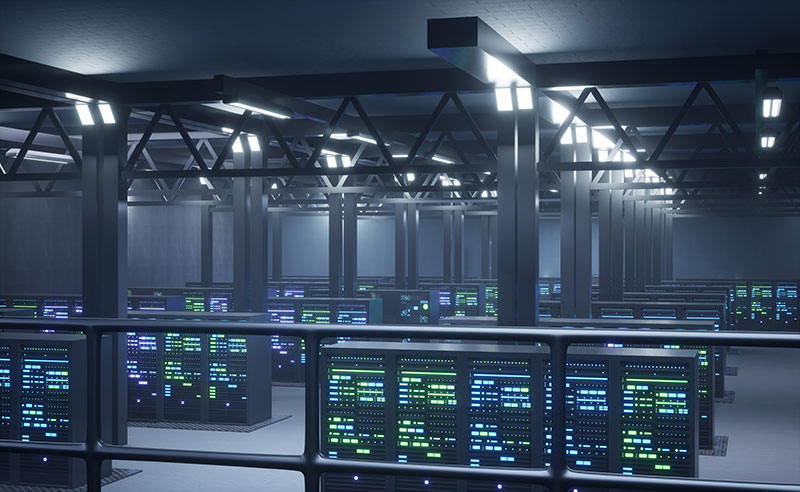
Australia’s digital infrastructure is undergoing a rapid transformation. Hyperscale facilities, intensive AI workloads and the demand for 24/7 cloud services are dramatically escalating power requirements, density and operational complexity. Data centre operators are under immense pressure to concurrently improve energy efficiency, integrate onsite renewables, meet stricter reporting requirements and maintain “never-fail” uptime.
In this challenging environment, high-resolution energy metering and robust power quality management are no longer optional technical components. They are core to the commercial performance, risk profile and future readiness of every data centre in Australia.
Why Basic kWh Energy Metering Fails Modern Data Centres
Traditional metering systems were designed to measure a single metric: kilowatt-hours (kWh) used for billing. However, for a modern, complex data centre, this is only the starting point. Today’s operators need deep insight into not just how much energy is used, but where, when and how clean that power actually is.
Relying on simple, low-resolution energy metering creates critical blind spots that can hide severe operational and financial risks:
Hidden Component Stress
A harmonic distortion issue upstream may not immediately trip a breaker but it quietly stresses expensive assets like transformers, UPS systems and IT power supplies, leading to premature failure and replacement costs.
IT Load Vulnerability
A brief voltage sag lasting a few hundred milliseconds is often missed by simple logs, yet this small disturbance can be enough to push sensitive IT equipment over the edge, causing unexpected downtime.
Wasted Capacity and Hotspots
Undiagnosed imbalances between phases or poorly managed load distribution across PDUs and racks lead directly to overheating (hotspots), accelerated equipment aging and wasted electrical capacity that could otherwise be generating revenue.
Without high-resolution power quality analytics and waveform capture, these insidious issues are easy to miss until they manifest as unexplained outages, reduced equipment life or inflated energy bills.
The Shift to Granular, Multi-Level Energy Metering Architectures
Australia’s next generation of data centres is rapidly adopting multi-level metering. This tiered architecture involves deploying revenue-grade meters and power quality analysers across the entire electrical path, giving operators a detailed, end-to-end picture from the grid to the rack.
Critical metering points include:
- Incoming feeders and main switchboards.
- UPS outputs and critical distribution boards.
- Major mechanical loads, such such as chillers, cooling towers, and Computer Room Air Handler (CRAH)/Computer Room Air Conditioning (CRAC) units.
- Floor distribution, PDUs, and in some cases, down to the row or even rack level.
This detailed approach supports the calculation of an accurate PUE (Power Usage Effectiveness), allows for crucial benchmarking between different halls or tenants, and helps pinpoint energy inefficiencies that would otherwise be hidden within aggregate facility numbers.
For colocation providers, granular metering ensures fair, defensible and transparent billing for tenants, clearly separating IT loads from shared infrastructure costs, a key competitive differentiator in a market demanding auditable energy data.
Power Quality: The Engine of Resilience and Cost Control
It is a mistake to treat power quality as a purely technical, back-end engineering concern. In reality, it acts as a direct lever on the commercial viability and resilience of the entire data centre operation.
Poor power quality is a hidden cost multiplier because it can:
- Increase failure rates in IT hardware and power supplies
- Reduce the efficiency of transformers and UPS systems, increasing running costs.
- Trigger unnecessary transfers to backup power or cause spurious alarms.
- Expose the site to penalties or contractual disputes with the network provider.
By contrast, continuous monitoring of voltage, current waveforms, harmonics, flicker, unbalance and transients allows teams to move from reactive firefighting to proactive resilience management. This means detecting an evolving harmonic problem after a new tenant moves in, or spotting subtle trends as load profiles shift, before an incident occurs.
This proactive stance is vital given the increased volatility of the modern Australian grid, which is integrating more renewable and distributed energy resources.
Meeting Sustainability and Regulatory Expectations
Energy consumption and emissions from data centres are under intense scrutiny from regulators, investors and corporate customers pursuing net-zero and science-based targets. Advanced energy metering and power quality solutions are foundational to meeting these expectations.
They provide the necessary instrumentation layer for accurate, time-stamped energy and demand data, allowing facilities to:
- Support credible sustainability reporting.
- Segregate loads for accurate emissions allocation by tenant, service, or business unit.
- Validate the savings generated by energy efficiency projects.
- Ensure successful integration of on-site renewables, batteries, and other distributed energy resources (DERs).
Simply put, you cannot credibly manage or report what you cannot accurately measure. Advanced energy metering allows sustainability, engineering and finance teams to operate using a single, verifiable set of performance data.
Turning Energy Data into Actionable Analytics
Collecting vast amounts of data is only the first step. The true value lies in transforming this raw input into useful intelligence for operations, capacity planning and management reporting.
Modern data centres require their energy metering and power quality platforms to deliver integrated analytics, including:
Real-time dashboards
Providing a system-wide view of load, power quality and capacity, with the ability to drill down by hall or asset.
Event correlation
Tools that link disturbances, alarms and outages with high-detail waveform captures and contextual data.
Trend analysis and forecasting
Tools to predict how demand, power quality indices and loading are evolving, aiding future planning.
Open integration
Standard protocols and APIs, ensuring metering data flows seamlessly into DCIM, BMS, EMS and billing platforms, eliminating data silos.
The hardware in the switchboard is evolving into a key component of a broad data and analytics ecosystem, supporting faster, smarter decisions at every organisational level.
Designing for the Future, Not Just Today
The most critical shift for Australia’s next generation of facilities is recognising energy metering and power quality as strategic infrastructure, not merely a compliance task and selecting technology partners, like SATEC, that can support that long-term vision.
When SATEC’s energy metering solutions are embedded early in the design process, with clear thought given to what needs to be measured, at what resolution and for which stakeholders, it maximises return on investment.
High-accuracy SATEC power quality meters at main incomers and critical boards, combined with compact downstream meters and the Expertpower energy management platform, give designers and operators a consistent data backbone.
This makes it easier to right-size electrical infrastructure, support flexible revenue models such as granular tenant billing and confidently integrate emerging technologies from battery storage to grid services and demand response.
As AI, edge computing and cloud demand continue to reshape the digital landscape, Australian data centres that make strategic investments in robust SATEC metering and power quality platforms will be best prepared. They will ensure performance, transparency and trust, backed by accurate, defensible data from grid connection all the way to the IT load.
Talk to our energy metering and power quality experts today about your needs.
FAQs - Mastering Power Quality and Energy Metering in Data Centres
Why isn’t basic kWh energy metering enough for modern data centres?
Basic kWh metering only tells you how much energy is used, not where, when or the quality of the power. Modern data centres need high-resolution metering and power quality analytics to uncover hidden risks, inefficiencies and capacity constraints.
What is multi-level (granular) energy metering and how does it help?
Multi-level energy metering uses revenue-grade meters and power quality analysers from the grid incomer down to critical loads, PDUs and sometimes racks. This enables accurate PUE, fair tenant billing and precise identification of inefficiencies across different halls, tenants or systems.
How does power quality monitoring impact uptime and cost?
Continuous monitoring of voltage, harmonics, flicker, unbalance and transients helps detect issues like harmonic distortion or voltage sags before they cause outages or equipment failures. This reduces unplanned downtime, extends asset life and avoids unnecessary energy and maintenance costs.
How do SATEC solutions support future-ready, sustainable data centres?
SATEC’s high-accuracy meters and ExpertPower platform provide time-stamped, granular data for accurate reporting, tenant billing and verification of efficiency projects. Embedded early in design, they create a consistent data backbone that supports grid integration, renewables, batteries and evolving revenue models.
Explore related topics:
For Your Industry
Related Reading
- Power Quality Branch Circuit Monitoring: The Missing Link in your Electrical Strategy
- Why Real-Time Power Quality Monitoring Matters for Harmonic Distortion
- Energy Metering Advancements
Trending in Your Sector


