

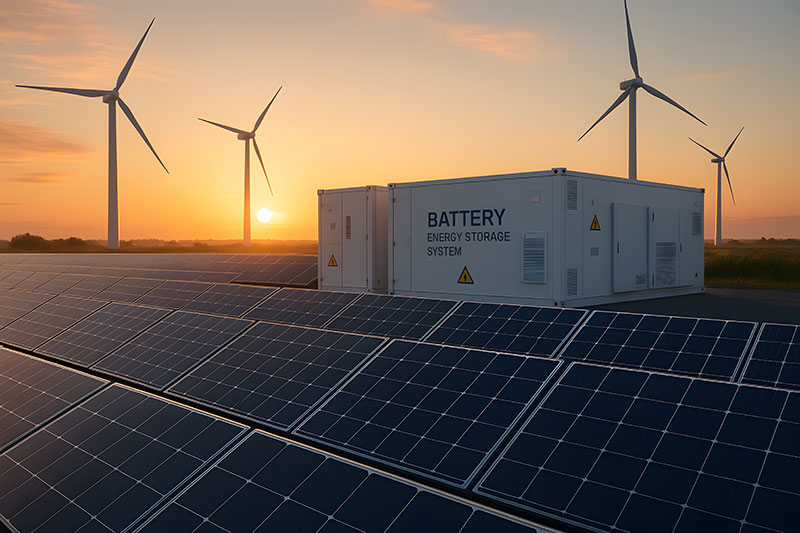
As renewable energy adoption accelerates across Australia, the broader and increased applications for alternating current (AC) and direct current (DC) electricity metering represents a critical consideration in modern power systems.
With solar, wind and other renewable installations rapidly increasing, understanding the fundamental differences in how these energy flows are measured becomes increasingly vital for system designers, installers and energy managers.
Traditional AC metering methodologies that served the grid for decades must now work alongside specialised DC measurement approaches as distributed energy resources (DER) reshape our energy landscape.
Fundamental Circuit Design Differences: AC vs DC Measurement Principles
The foundational distinction between AC and DC electricity metering lies in their underlying measurement principles. AC energy meters typically employ current transformers (CTs) that operate based on electromagnetic induction principles. While DC electricity meters utilise DC shunts, Hall Effects Sensors or Flux Gate Sensors as part of their measurement applications.
AC Meters
- Current sensing: Use current transformers (CTs) based on electromagnetic induction to step down currents and provide galvanic isolation.
- Voltage sensing: Typically via potential transformers (PTs) or direct Voltage up to 690/1000V AC
- Power calculation: Sampling voltage and current waveforms at high rates, compute instantaneous power and integrate; must handle phase angle, power factor, and harmonics (RMS and distortion).
- Calibration focus: Phase-shift compensation, frequency response, and harmonic accuracy.
- Standards: In Australia, accuracy classes and tests are defined by the AS 62053 series.
DC Meters
- Current sensing: Commonly use DC shunts, Hall-Effect or Flux-Gate sensors providing measurements.
- Voltage sensing: Direct Voltage typically up to 690V DC with higher measurements up to 1500/3000 VDC application dependent.
- Power calculation: Multiply (near-constant) voltage and current; no phase or reactive power terms. Sampling targets transients/ripple rather than sinusoidal harmonics.
- Calibration focus: Offset/thermal drift, long-term stability, and accuracy over wide DC operating ranges (including reverse energy if required)
- Standards IEC 62053-41
Bottom line: AC designs revolve around transformer-based isolation and waveform analytics (phase, PF, harmonics), while DC designs emphasise direct, static measurements (shunt or Hall sensing) with drift and isolation management—no phase or reactive components to correct.
Australian Standards Governing Energy Metering
Electricity metering in Australia operates under a comprehensive framework of standards that ensure accuracy, reliability and interoperability. These standards define the technical requirements, testing methodologies and performance criteria that electricity meters should meet for various applications.
The regulatory environment continues to evolve as new technologies emerge, particularly to address the growing intersection between traditional grid infrastructure and distributed energy resources.
For both AC and DC electricity metering applications, compliance with relevant standards provides assurance to stakeholders that measurements meet the necessary precision thresholds for their intended use cases.
These standards also facilitate consistency across different manufacturers and installation contexts, enabling seamless integration into existing energy management systems.
AS/IEC 62052-11
AS/IEC 62052-11 establishes the general requirements, tests and test conditions for electricity metering equipment.
It applies to both AC and DC electricity meters and covers aspects such as electrical requirements, mechanical requirements, climatic conditions and electromagnetic compatibility.
For DC electricity metering in particular, the standard addresses specific considerations related to constant current performance across varying voltage levels.
The standard also defines the importance of immunity to external electromagnetic influences, which can affect measurement accuracy in renewable energy installations where power electronic converters generate electromagnetic interference.
Testing under AS/IEC 62052.11 helps ensure meters maintain their specified accuracy class under real-world operating conditions, including temperature variations, humidity and voltage fluctuations that commonly occur in solar and battery storage applications.
AS/IEC 62053
This series defines specific accuracy classes and testing requirements for different types of AC electricity meters. AS 62053-22 and AS 62053-23 address static meters for active and reactive energy respectively.
These standards establish the critical accuracy classes (such as Class 0.5S, Class 0.2S and Class 0.1S) that determine a meter’s suitability for revenue-grade applications.
For DC electricity measurement in renewable applications, the IEC 62053-41 standard is particularly relevant as it covers static meters for DC electricity measurement.
This standard specifies the accuracy requirements under varying load conditions, which is crucial for accurately quantifying energy flows in bi-directional systems like battery storage installations and grid-interactive solar systems.
IEC 62053-41 sets the particular (type-test) requirements for static DC watt-hour meters of accuracy class 0.5 and class 1.0. It applies to meters used on DC systems (up to 1,500 V DC) and focuses on type tests only (conformance at the design/type level, not routine tests).
Accuracy testing: Defines permitted error limits for classes 0.5 and 1 at reference conditions and requires verification across the meter’s declared operating range (current, voltage, etc.). Influence quantities are assessed to confirm the meter stays within limits. (High-level scope; details are in the paid standard.)
Test framework it relies on: For general test conditions and methods (mechanical, electrical, environmental/climatic, EMC immunity), 62053-41 is used together with IEC 62052-11, which specifies the common test methods/conditions (e.g., electromagnetic and climatic immunity tests). Product safety comes from IEC 62052-31.
NMI M6-1 Pattern Approval for Utility Meters
For meters used in AC revenue applications, the National Measurement Institute’s (NMI) Pattern Approval specification establishes additional requirements specific to the Australian regulatory context.
This standard ensures meters used for billing purposes maintain their accuracy over their operational lifetime and resist tampering or unauthorised adjustment.
For DC metering applications for renewable systems accuracy standards are currently covered under IEC 62053-41.
The applications of AC and DC electricity metering extend across various sectors, from traditional grid infrastructure to emerging renewable energy systems.
Each application presents unique requirements and challenges that influence the selection of appropriate metering technologies. The circuit design differences between AC and DC meters become particularly significant in specific use cases where accuracy, reliability and integration capabilities determine system performance.
Understanding these application contexts helps system designers and energy managers select the appropriate metering solutions that align with their technical requirements, regulatory obligations and operational objectives.
Renewable Energy Integration: Metering Challenges and Solutions
Renewable energy systems present unique metering challenges due to their hybrid nature, often involving both AC and DC components. Solar PV systems generate DC power that requires conversion to AC for grid connection or conventional usage.
Accurate measurement at both the DC generation side and AC grid interface becomes essential for system performance evaluation and revenue determination. On the DC side, high-precision shunt-based or flux gate sensors can provide the most accurate measurement of generated energy before inversion losses. Although Hall Effect sensors provide accuracy performance subject to accuracy levels required.
These meters should account for the wide voltage ranges typical in PV arrays under varying irradiance conditions. Australian solar installations should comply with Clean Energy Council guidelines which reference to appropriate standards.
Battery storage systems introduce additional complexity, requiring bi-directional DC electricity metering to track energy flows during both charging and discharging cycles.
DC electricity metering accuracy systems should take into account across the full operating voltage range of the battery system and currents during rapid charge/discharge events, system accuracy also is dependent on the DC meter and sensors used.
DC Microgrids and Energy Management Systems
DC microgrids represent an emerging application area where specialised DC electricity metering becomes essential for effective energy management. These systems eliminate conversion losses by maintaining DC throughout the distribution network, making them particularly suitable for data centres, telecommunications facilities and remote power systems.
DC metering in these contexts requires handling higher voltage ranges (typically 380-400VDC) while maintaining precision across varying load conditions. Unlike AC systems, DC meters must account for the absence of natural zero-crossings, which complicates power calculation and necessitates different sampling approaches.
Energy management systems for DC microgrids rely on high-resolution temporal data to optimise power flows between generation, storage and loads. Australian implementation of DC microgrids, particularly in remote and off-grid applications, continues to grow as system costs decrease.
Future Trends in AC and DC Metering Technologies
The continued evolution of energy systems toward greater decentralisation and renewable integration will drive further advancements in both AC and DC electricity metering technologies. Emerging trends include the development of hybrid metering systems capable of simultaneously handling both AC and DC measurements, simplifying installation in mixed systems while reducing equipment costs.
These integrated solutions should provide unified data management with consistent accuracy classes across both measurement domains. Advancements in semiconductor technology are enabling higher precision in shunt-based DC and Hall Effect Sensor measurements while reducing power consumption and physical footprint.
Cloud-based metering architectures that separate measurement from computation functions show particular promise for distributed energy resources, allowing for more sophisticated analysis without increasing on-site hardware complexity.
For Australia’s evolving energy landscape, the importance of high-resolution, accurate metering data in supporting market data for participation by distributed resources is essential.
Looking forward, the boundaries between traditional AC metering and specialised DC measurement will continue to blur as systems become increasingly integrated, with future standards likely to adopt a more unified approach to energy metering regardless of AC or DC systems.
SATEC specialises in high-precision metering solutions for both AC and DC applications. Our comprehensive range includes NMI approved revenue-grade meters suitable for grid connections, renewable energy systems and industrial applications.
With expertise spanning power quality analysis, energy metering and data management systems, SATEC provides Australian organisations with the tools needed to monitor, analyse and optimise their electrical systems. Our technical support team offers guidance on selecting appropriate metering solutions for specific applications, ensuring compliance with relevant Australian standards and regulations.
For DC metering applications, SATEC offers specialised solutions featuring shunt measurement, hall effect or flux-gate sensors technology with temperature compensation and wide operating voltage ranges suitable for renewable energy systems.
These meters integrate seamlessly with our Expertpower software platform for comprehensive energy management capabilities, supporting organisations in their transition to more sustainable energy practices whilst maintaining measurement precision and system reliability.
FAQs - AC vs DC Electricity Meters
What’s the core difference between AC and DC electricity meters?
AC meters use CTs/PTs to sample alternating waveforms, while DC electricity meters typically use precision shunts or Hall-effect sensors to measure constant current/voltage with temperature compensation.
Where should I measure in solar + battery systems – on the AC or DC side?
Use DC metering at the PV/battery side for generation and charge/discharge accuracy and AC metering at the grid interface for import/export, settlement and system performance.
Which Australian standards apply if I need compliance or billing-grade accuracy?
General requirements are under AS 62052.11 for AC and DC. Accuracy classes are covered under AS 62053 for AC systems and IEC 62053.41 for DC systems.
What accuracy class should I choose?
Select Class 0.5S where accuracy monitoring is required, considering temperature range and load variability at your site.
Explore related topics:
For Your Industry
- Branch Circuit Monitoring for Data Centres: Uptime, Efficiency and Capacity Planning
- Solar Energy Monitoring vs Inverter Monitoring: What’s the Difference?
Related Reading
- AC vs DC Power: Differences and Applications
- True RMS vs Average-Responding Meters: Why Your Readings Don’t Match on Modern Loads
- Three Phase Electric Meter vs Single Phase Meter: What’s the Difference?
Trending in Your Sector


