

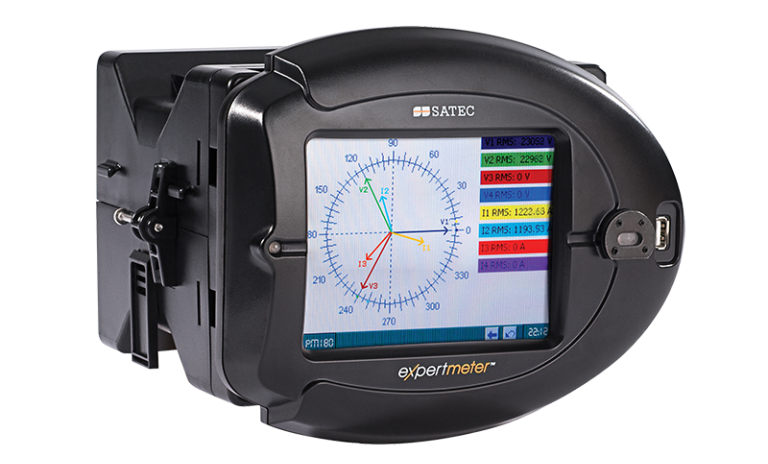
Australian networks are changing fast. More renewables, more complex loads and more scrutiny on power quality (PQ) are putting extra pressure on TSOs, DNSPs and large energy users to really know what’s happening on their networks, in real time.
With our latest PM180 firmware release on 16/11/2025, we’ve taken a big step in that direction. The PM180 now supports IEC TR 61850-90-17, the technical report that defines a standardised model for power quality data transmission within IEC 61850 environments.
In practice, that means cleaner integration, richer power quality visibility and a device that’s already aligned with where IEC 61850 Edition 3 is heading.
In short: if you care about power quality and interoperability, this is a very important update.
A quick look at IEC TR 61850-90-17
IEC TR 61850-90-17:2017 is a technical report that explains how to use IEC 61850 to represent and transmit power quality data from PQ instruments (like meters and recorders) to systems such as SCADA, PQ monitoring platforms and other clients. In practical terms, it:
- Defines a standardised PQ data model for IEC 61850
- Extends the IEC 61850 namespace with logical nodes and data objects specific to power quality
- Aligns PQ modelling with IEC 61000-4-30 and related PQ standards, so everyone is talking the same “PQ language”
Although it’s currently a technical report, 90-17 is one of the key building blocks for IEC 61850 Edition 3, particularly in the power quality domain. Implementing it now inside the PM180 means you’re not waiting for the standard to land, you’re already aligned with it.
What this means for PM180 Power Quality Analyser users
By incorporating IEC TR 61850-90-17, the PM180 now exposes PQ data using the standard, recognised IEC 61850 PQ model, instead of relying on proprietary mappings. For you, that translates into:
Standard logical nodes and data objects for Power Quality
Voltage sags and swells, flicker, harmonics, interruptions and other PQ phenomena are presented in a consistent way, in line with the technical report’s data model.
Cleaner, faster engineering
SCADA/EMS and IEC 61850 engineering tools can use the new ICD directly. That means less custom mapping, fewer surprises during FAT/SAT, and more reusable templates across projects.
Better multi-vendor interoperability
Since the PM180 follows the same PQ modelling guidelines as other 90-17-aware devices, it’s easier to integrate into mixed fleets and multi-OEM substations.
Most importantly, it positions your PM180 fleet for IEC 61850 Edition 3 without waiting for another major upgrade.
Why this matters for TSO, DNO and SCADA/EMS teams
For Australian TSOs, DNSPs, large industrials and embedded networks interfacing with the NEM, this is not just a firmware bump, it’s a meaningful enabler for more integrated and future-ready PQ monitoring.
1. Seamless integration into existing IEC 61850 networks
The move to a standardised PQ model pays off immediately during project engineering and commissioning. You get:
More consistent data across sites and vendors
Whether the PQ data comes from a PM180 or another compliant device, your SCADA/EMS sees a familiar, structured model. That reduces configuration differences between substations and simplifies documentation.
Reduced engineering effort and risk
Because you’re using a standard model, test plans become easier, integration is more predictable, and long-term maintenance is less dependent on the knowledge of one or two “IEC 61850 gurus”.
For organisations rolling out multi-year IEC 61850 programs, this consistency is worth a lot.
2. Real-time PQ visibility inside SCADA and EMS
Power quality historically sat in its own world – often in standalone PQ analysis software or periodic reports. With the PM180’s 90-17 implementation, PQ data can now sit comfortably inside your existing IEC 61850-based SCADA and EMS environment. That means:
Real-time PQ awareness
Operators can see and react to voltage quality deviations as they happen, using existing SCADA one-line diagrams, trends and alarms.
Better disturbance analysis
During an event, PQ data can be correlated with breaker operations, protection system behaviour and network topology in real time, rather than being reconstructed days later from multiple systems.
Stronger support for compliance and reporting
Because PQ data uses standard definitions, it’s easier to feed this into compliance dashboards, long-term power quality reports and regulatory submissions.
With increasing DER penetration, EV charging, and sensitive industrial loads in the Australian grid, that integrated view of PQ is becoming essential rather than “nice to have”.
3. A genuinely future-proof path to IEC 61850 Edition 3
The biggest strategic benefit of this firmware update is future-proofing. By adopting IEC TR 61850-90-17 now:
Your PM180 fleet is aligned with the PQ direction of IEC 61850 Edition 3, rather than being locked into legacy modelling approaches.
You reduce the likelihood of a disruptive retrofit later, where devices need to be replaced or heavily reconfigured just to keep up with the standard.
You can plan new substation and network projects with Edition-3-ready PQ modelling in mind from day one, instead of designing around workarounds that will age poorly.
In other words: you’re not just solving today’s integration challenges – you’re buying yourself a smoother upgrade path for the next generation of IEC 61850 deployments.
Practical upgrade considerations
A few points to keep in mind as you plan your rollout:
Backup and document your current configuration
Because IEC 61850 settings will reset to default after the upgrade, make sure you:
- Export current configuration files
- Capture any site-specific datasets, reports and control blocks
- Note any SCADA or EMS dependencies that rely on existing mappings
Update engineering tool templates
- Bring the new ICD into your IEC 61850 engineering tools, refresh device templates, and verify that generated SCD/CID files are aligned with your new PQ requirements.
Coordinate across teams
PQ engineers, SCADA engineers and protection teams will often have different views on which signals matter most. Use this upgrade as an opportunity to:
- Agree on key PQ parameters for real-time monitoring
- Define what should be logged long-term for analysis and compliance
- Review alarm thresholds and escalation paths in SCADA/EMS
Taking a structured approach up front will pay dividends as you standardise more sites on the new firmware.
What’s next?
The PM180’s support for IEC TR 61850-90-17 is a significant step towards fully standardised, interoperable power quality monitoring in IEC 61850-based networks. Right now, it gives Australian TSOs, DNSPs and large energy users:
- A cleaner way to bring PQ data into SCADA/EMS
- A more consistent approach to PQ across vendors and sites
- A clear, low-friction path towards IEC 61850 Edition 3
As the standards evolve and Edition 3 is finalised, PM180 users will already have the core PQ building blocks in place – rather than starting from scratch. If you’d like to talk about how this firmware fits into your IEC 61850 roadmap, your SCADA/EMS architecture or specific project requirements, our team is here to help.
We can walk through configurations, example use cases and migration approaches tailored to Australian network conditions and regulatory expectations.
FAQs - The PM180 Power Quality Analyser: IEC 61850 Power Quality Standards
Do I need to upgrade all PM180 devices to this firmware straight away?
No, but we recommend planning the upgrade for any PM180 that’s integrated into IEC 61850-based SCADA/EMS or used for power quality monitoring so you can benefit from the new standardised PQ model.
What happens to my existing IEC 61850 configuration when I update?
When you install firmware V31.XX.64, all IEC 61850 settings on the PM180 reset to default, so you should back up your configuration and be prepared to re-apply or re-engineer it using the new ICD file.
How does IEC TR 61850-90-17 improve my SCADA/EMS integration?
It provides a standardised way to model and transmit PQ data, reducing custom mapping and making PQ events and measurements easier to visualise and use across different systems and vendors.
Is this update enough to prepare for IEC 61850 Edition 3?
It doesn’t replace Edition 3, but it aligns the PM180 with the power quality modelling that Edition 3 is expected to adopt, giving you a smoother, lower-risk path when the new edition is released.