
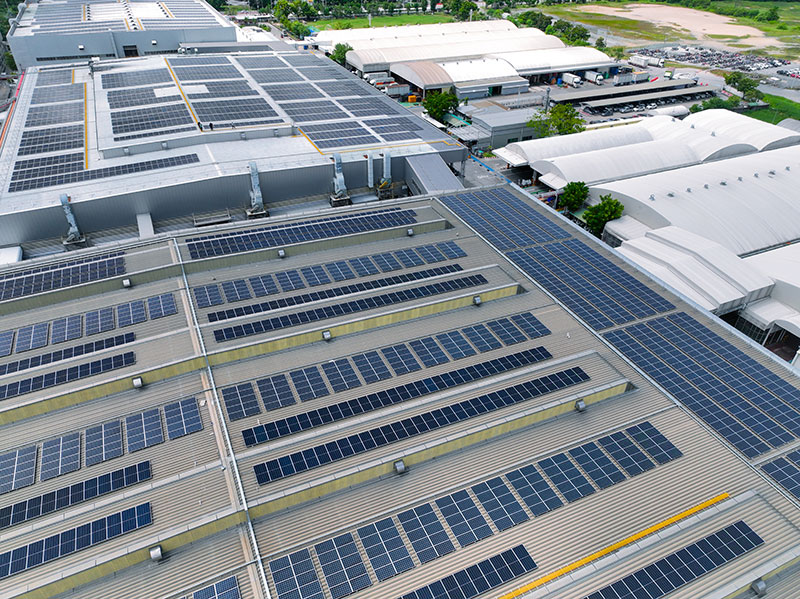
If you’re running solar, whether it’s a rooftop system on a commercial building, a portfolio of sites or a behind-the-meter setup, visibility is everything. Solar generation can look fine on paper whilst quietly underperforming for months due to shading, inverter clipping, string faults, degraded panels or export limitations. That’s where a solar data logger becomes a game-changer. It turns solar from a black box into a measurable, optimisable asset.
What Is a Solar Data Logger?
A solar data logger is a device (or integrated system) that collects, stores and transmits performance data from solar equipment. This typically includes inverters, meters, combiner boxes, weather sensors and sometimes battery systems. Think of it as the “recorder” and “messenger” for your solar system. It continuously captures operational information and sends it to a monitoring platform so you can track performance over time, detect issues early and verify financial outcomes.
Most modern systems provide real-time dashboards and alerts. However, the logger is the piece that makes the data available in the first place. Without it, you’re often limited to periodic manual checks, basic inverter screens or incomplete monitoring that doesn’t reflect what’s truly happening at the grid connection.
Why a Solar Data Logger Matters
Solar is a performance business. Small losses add up, especially in commercial settings where tariffs, demand charges and export rules get complicated. A solar data logger helps you in several key ways.
Catch underperformance early. A single string fault can shave off production quietly. Logging lets you spot drops, inconsistencies and degradation trends before they become expensive.
Prove savings and ROI. If you’re making decisions based on solar yield, self-consumption or export revenue, you need trustworthy data. This supports reporting and payback verification.
Improve operational efficiency. Automatic alerts reduce site visits. Remote diagnostics help technicians arrive with the right parts and the right plan.
Support compliance and stakeholder reporting. Many sites need data for tenancy reporting, ESG metrics, internal audits or grant requirements. A logger gives you a consistent record, not just a snapshot.
What Data Should a Solar Data Logger Capture?
Not all loggers are created equal. At a minimum, your solar data logger should capture these essentials:
- Generation (kW / kWh) at inverter and/or site level
- Voltage, current, and power factor (where relevant)
- Inverter status, alarms, and error codes
- Energy flow context: grid import/export and load (ideally from revenue-grade metering)
- Timestamped interval data (such as 5-, 15-, or 30-minute intervals)
- Communications health (so you know when data is missing or stale)
For higher-value monitoring, look for support for additional features. String-level monitoring proves especially important on larger arrays. Weather sensors (irradiance, temperature) enable performance ratio calculations. Battery metrics (state of charge, charge/discharge power) become essential for systems with storage. Power quality indicators (harmonics, voltage events) matter if the site has sensitive equipment.
The key point is this: generation data alone is useful but generation plus accurate import/export and load data is what turns monitoring into decision-making.
Where a Solar Data Logger Fits in the Monitoring Stack
A solar data logger is often part of a broader energy monitoring ecosystem. Typically, the stack looks like this:
Solar assets (panels, inverters, batteries) produce operational data. Meters measure energy at key points, including inverter output, main incoming supply, sub-mains and tenant feeds. The solar data logger aggregates and transmits data via communications methods. Finally, the software platform visualises trends, creates reports, triggers alerts and supports analysis.
In many real-world sites, the solar logger reads inverter data well. However, metering data is where systems fall down. If your grid import/export measurement isn’t accurate (or isn’t compliant for the purpose you need), your reporting can be misleading. This is why metering choice matters just as much as the logger.
How to Choose the Right Solar Data Logger
Here are practical criteria that separate basic monitoring from a system you can trust.
Connectivity that suits the site
Commercial and industrial environments aren’t always friendly to Wi-Fi. Look for flexible options: Ethernet, RS485/Modbus and 4G where required.
Device compatibility and open protocols
If you’re not locked into one inverter brand, prioritise Modbus compatibility. Look for the ability to integrate multiple device types.
Data resolution and retention
Interval logging needs to match your reporting needs. If you need 15-minute intervals for analysis or billing alignment, confirm the system supports that reliably.
Alerting and diagnostics
A logger that can flag inverter faults, communications dropouts or performance anomalies will save time and money.
Security and reliability
Industrial-grade environments demand stable hardware, secure remote access and strong data integrity.
Metering accuracy
If you’re using data to settle costs, validate contracts or report on performance, your metering must be accurate and fit for purpose.
SATEC's Products as the Metering Solution for Solar Monitoring
A solar data logger is only as valuable as the data it receives. That’s where SATEC comes in. For solar sites that need dependable, high-quality measurement at the point of connection (and across key circuits), SATEC’s metering solutions provide the foundation for trustworthy monitoring.
SATEC supplies energy metering and power monitoring products designed for demanding commercial environments. Accurate import/export measurement, interval data and reliable communications are critical in these settings. In solar applications, SATEC meters can be deployed to measure several key points:
- Main incoming supply (site grid import/export).
- Solar generation output (at inverter output or solar distribution points).
- Load circuits and sub-mains (to understand self-consumption and tenant usage).
- Power quality parameters (where sensitive equipment or compliance requirements exist).
This approach enables a clear, validated picture of how energy is flowing. You can see what you generate, what you consume on-site, what you export and how the site behaves across time. When combined with a solar data logger and a monitoring platform, SATEC metering helps ensure your reporting is based on robust measurement.
This supports performance verification, operational troubleshooting and smarter energy decisions. In short: the logger tells the story and SATEC’s metering makes sure the story is accurate.
Common Mistakes to Avoid
- Relying only on inverter data. This works well for inverter status but isn’t always enough for whole-of-site energy flow.
- Ignoring communications. Missing data can hide issues. Choose hardware with clear communications health monitoring.
- Under-specifying metering. If accuracy matters, choose a metering solution built for the job.
- No plan for scale. Today it’s one site, tomorrow it’s ten. Choose gear that won’t box you in.
Building a Solar Monitoring System You Can Trust
A solar data logger is one of the most cost-effective upgrades you can make to a solar asset. It turns generation into a measurable system you can actively manage. The best results come from pairing logging with accurate metering. This means you’re not just seeing solar output but understanding the full energy picture: generation, consumption, and export.
If you want solar monitoring you can trust, build it on solid metering foundations. Let the logger do what it does best: keep the data flowing and the problems visible. Discuss your solar data logger needs with our team today.
FAQs - Solar Data Logger + Metering
What is a Solar Data Logger?
A Solar Data Logger collects performance data from your solar system (often from inverters and meters) and sends it to a monitoring platform so you can track output, faults and trends over time.
Do I still need a Solar Data Logger if my inverter has monitoring?
Inverter monitoring is helpful but a Solar Data Logger can add whole-of-site visibility (including import/export and load) and improve reliability, alerting and integration across devices.
What data should a Solar Data Logger capture for commercial solar?
At minimum it should log generation (kW/kWh) with timestamps, inverter status/alarms and interval data, ideally alongside accurate grid import/export metering for full energy-flow insight.
How does SATEC fit into a Solar Data Logger setup?
SATEC’s meters provide accurate, dependable measurement of generation, import/export and sub-mains so the Solar Data Logger and software platform are working with data you can trust.