

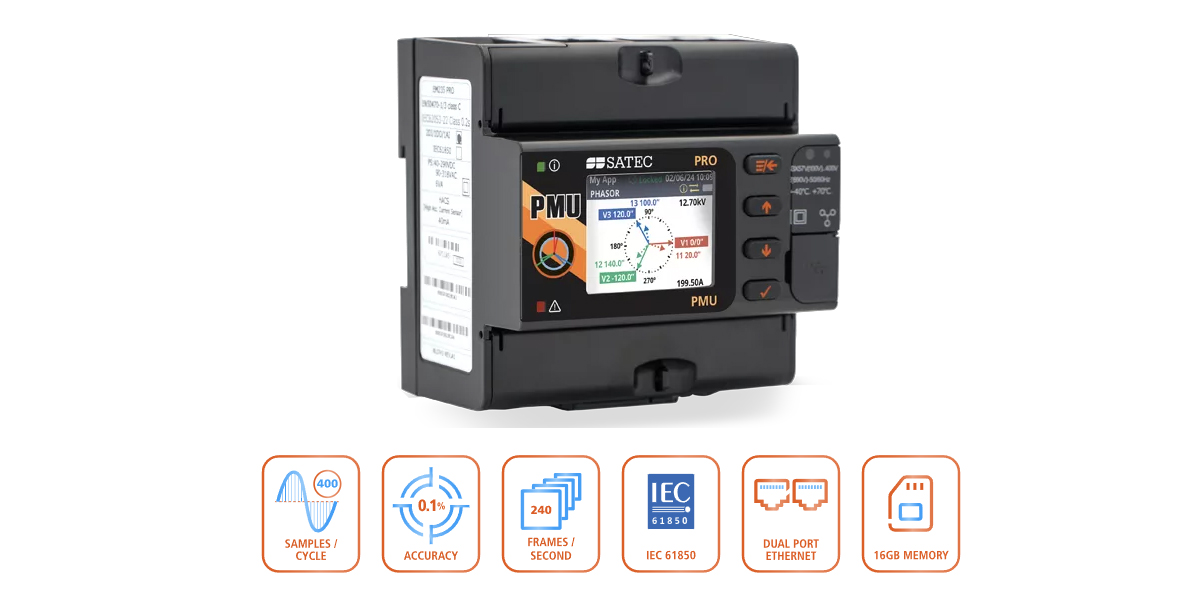
Australia’s energy landscape is evolving rapidly with increasing renewable penetration and distributed energy resources. This transition creates unprecedented challenges for maintaining grid stability and reliability. Micro-Phasor Measurement Units (μPMUs) offer a powerful solution through high-precision, real-time monitoring of electrical parameters across the grid.
These advanced synchrophasor devices provide synchronised measurements of voltage, current and phase angles at sub-second intervals, offering unprecedented visibility into distribution network behaviour. For Australian utilities facing reliability challenges, Micro-PMU technology enables early detection of instabilities, facilitates rapid response to faults, and supports the integration of renewable resources whilst maintaining grid resilience.
Grid reliability hinges on precise measurement and rapid response, capabilities that Micro-PMUs deliver with exceptional accuracy.
Understanding Synchrophasor Technology and Micro-PMU Applications
Synchrophasor technology provides time-synchronised measurements of electrical quantities, capturing the magnitude, phase angle and frequency of power system parameters with precision timestamped to a common time reference. Unlike conventional SCADA systems that typically sample at 2-4 second intervals, Micro-PMUs capture data at speeds up to 200 frames per second, revealing transient events and dynamic behaviours previously undetectable.
This high-resolution monitoring creates a comprehensive picture of power system state at any given moment. Micro-PMUs represent the next evolution in synchrophasor technology, bringing previously centralised transmission-level capabilities to distribution networks. Their compact size make widespread deployment feasible whilst maintaining measurement accuracy.
These devices timestamp measurements using precise GPS synchronisation, allowing operators to correlate events across geographically dispersed locations and reconstruct the sequence of disturbances during system events.
Australian Grid Challenges and Regulatory Framework
Australia’s electricity system faces unique challenges that make advanced monitoring particularly valuable. The National Electricity Market (NEM) spans over 5,000 kilometres, creating one of the world’s longest interconnected power systems.
This vast geographical spread introduces vulnerabilities to regional disturbances and complicates system coordination. Additionally, Australia has experienced dramatic growth in renewable energy sources, with variable generation creating new power flow patterns and reducing system inertia.
The increasing penetration of distributed energy resources, including rooftop solar installations which now exceed 3 million nationwide, introduces bi-directional power flows and visibility challenges for network operators. Remote communities reliant on isolated microgrids particularly benefit from enhanced monitoring capabilities to maintain reliable service.
These factors collectively underscore the need for sophisticated monitoring technologies like Micro-PMUs that provide granular, real-time insights into system behaviour across the network.
IEEE C37.118.1-2011: Synchrophasor Measurements for Power Systems
The IEEE C37.118.1-2011 standard establishes the performance requirements for synchrophasor measurement systems in power grids. It defines two performance classes: P-class (protection) for applications requiring fast response and M-class (measurement) for applications requiring greater precision under steady-state conditions.
The standard specifies accuracy requirements for frequency, rate of change of frequency (RoCoF), and total vector error (TVE) under various operating conditions. For Australian implementation, this standard ensures Micro-PMU measurements maintain sufficient accuracy for critical applications like fault detection and stability monitoring.
The standard mandates that synchronised measurements should maintain total vector errors below 1% under nominal system conditions, with specific requirements for performance during dynamic events and frequency excursions. IEEE C37.118.1 also specifies reporting rates from 10 to 120 frames per second, though modern Micro-PMUs often exceed these requirements, offering sampling rates up to 200 frames per second for enhanced visibility into fast-changing system phenomena.
IEC/IEEE 60255-118-1:2018: Measuring relays and protection equipment
The jointly developed IEC/IEEE 60255-118-1:2018 standard represents the international harmonisation of synchrophasor measurement requirements, incorporating elements from both IEEE C37.118.1 and IEC standards.
This comprehensive standard addresses measurement requirements for synchrophasors used in protection, automation and control systems within electrical networks. It defines compliance testing procedures and performance metrics that ensure reliable operation under various system conditions.
For Australian utilities implementing Micro-PMU solutions, this standard provides a globally recognised framework for evaluating device performance and interoperability. The standard includes explicit requirements for measurement accuracy under both steady-state and dynamic conditions, establishing performance criteria for frequency deviation, magnitude modulation and phase angle steps.
IEC/IEEE 60255-118-1:2018 also addresses time synchronisation requirements, mandating that synchrophasor measurements should be referenced to UTC with precision sufficient to maintain phase angle measurement errors below 0.57 degrees (equivalent to 26.5 microseconds at 50 Hz).
Australian Energy Market Operator (AEMO) Power System Data Communication Standard
AEMO’s Power System Data Communication Standard establishes requirements for data exchange between participants in the National Electricity Market and AEMO’s control centres.
While not specifically addressing Micro-PMUs, this standard establishes the framework for integration of advanced monitoring technologies into market operations. The standard specifies requirements for data quality, availability and security, all critical considerations for synchrophasor data networks.
For Micro-PMU deployments in Australia, compliance with this standard ensures seamless integration with existing market systems and operational workflows. The standard emphasises high data availability (typically 99.9% or better), minimal latency and robust security measures to protect critical infrastructure data.
AEMO’s standard also specifies protocols for data exchange, naming conventions and redundancy requirements, all essential considerations when implementing wide-area Micro-PMU monitoring networks across the Australian grid. These requirements align with the capabilities of modern Micro-PMU systems, which typically offer multiple communication interfaces, secure data transmission protocols and redundant data paths.
Micro-PMU technology offers transformative benefits for Australian grid operations across multiple applications. The high-resolution, time-synchronised measurements enable sophisticated analysis techniques that were previously impossible with conventional monitoring systems.
When strategically deployed across distribution networks, Micro-PMUs create unprecedented visibility into system behaviour, revealing dynamic interactions and transient phenomena that affect stability and reliability. This enhanced observability translates into concrete operational advantages, including faster fault location, improved power quality management and more accurate state estimation.
For renewable integration, Micro-PMUs provide the detailed phase angle measurements needed to maintain synchronism as traditional synchronous generators are replaced with inverter-based resources.
Renewable Integration and Dynamic Stability Monitoring
Australia’s rapid adoption of renewable energy creates new challenges for system stability. The variable nature of wind and solar generation, combined with reduced system inertia, makes the grid more susceptible to rapid frequency fluctuations and voltage stability issues.
Micro-PMUs provide the high-resolution monitoring needed to manage these challenges effectively. By continuously measuring phase angles across the network, operators can detect developing stability issues before they escalate into system-wide problems. This early detection capability is particularly valuable in regions with high renewable penetration, such as South Australia, where system strength has become a critical concern.
The precise frequency and RoCoF measurements from Micro-PMUs enable advanced control schemes that respond dynamically to changing grid conditions. For microgrids and isolated networks, which are increasingly common in remote Australian communities, Micro-PMUs provide essential synchronisation references that maintain stable operation when transitioning between grid-connected and islanded modes.
The detailed harmonic analysis capabilities of advanced Micro-PMUs also help operators identify and mitigate power quality issues associated with inverter-based resources.
Future Directions for Micro-PMU Technology in Australia
As Australia continues its energy transition, Micro-PMU technology will play an increasingly vital role in maintaining grid reliability and enabling higher renewable penetration. Emerging developments include more compact, cost-effective Micro-PMU designs that enable wider deployment across distribution networks, edge computing capabilities that process synchrophasor data locally to reduce communication bandwidth requirements and advanced analytics platforms that transform raw measurements into actionable operational intelligence.
The integration of Micro-PMU data with other grid technologies, including smart inverters, battery storage systems and dynamic line rating systems, creates opportunities for comprehensive grid optimisation. For Australian utilities planning grid modernisation initiatives, Micro-PMUs should be considered a foundational technology that enables broader digital transformation.
By investing in synchrophasor monitoring infrastructure today, network operators position themselves to address both current challenges and future opportunities in Australia’s evolving energy landscape.
SATEC Australia offers industry-leading Micro-PMU solutions designed specifically for Australian power networks. Our advanced synchrophasor products deliver measurement accuracy exceeding IEEE C37.118.1 requirements, with sampling rates up to 200 frames per second for unparalleled visibility into system dynamics.
SATEC’s Micro-PMU solutions integrate seamlessly with existing network management systems, providing the high-resolution data needed for advanced applications including fault detection, stability monitoring and renewable integration. Our expert team provides comprehensive support from initial planning through deployment and ongoing operations, ensuring optimal results from your synchrophasor investment.
SATEC’s commitment to standards compliance and measurement precision makes us the trusted partner for utilities seeking to enhance grid visibility and reliability through advanced monitoring solutions.
FAQs - Real-Time Micro-PMU Synchrophasor Monitoring
What is a micro-PMU and how is it different from traditional SCADA monitoring?
A micro-PMU (μPMUs) is a high-precision synchrophasor device that measures voltage, current and phase angle in real time at up to 200 frames per second, revealing fast transients and dynamic behaviour that conventional SCADA (2–4 second sampling) simply can’t see.
Why are Micro-PMUs important for the Australian grid?
Australia’s long, renewable-heavy NEM and growing distributed energy resources create complex, bi-directional power flows and Micro-PMUs provide the granular, time-synchronised visibility needed to detect instabilities early and maintain reliability across vast networks.
Do μPMUs comply with relevant standards and AEMO requirements?
Yes. Modern Micro-PMUs are designed to meet IEEE C37.118.1 and IEC/IEEE 60255-118-1 synchrophasor standards and can be integrated in line with AEMO’s Power System Data Communication Standard for secure, high-quality data exchange.
How can SATEC’s Micro-PMU solutions help my utility or network?
SATEC Australia’s Micro-PMU products deliver measurement accuracy beyond IEEE requirements, up to 200 fps sampling, and seamless integration with existing systems to support applications including renewable integration and dynamic stability monitoring, backed by local technical expertise.