

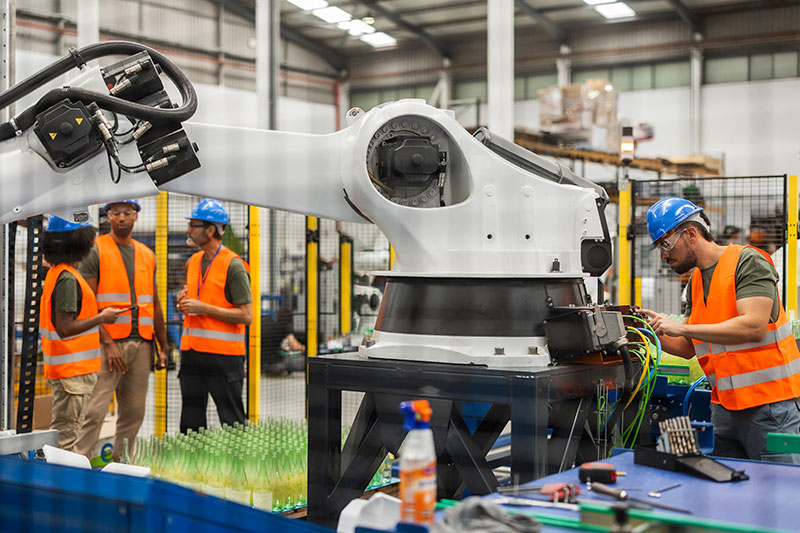
Manufacturing sites are energy-dense, time-sensitive and full of equipment that rarely behaves predictably. A few minutes of unexpected downtime can ripple through production schedules, labour costs and delivery commitments. Meanwhile, a handful of short peak-demand events can quietly inflate electricity bills for months. That’s why an electricity monitor is one of the most practical tools a manufacturing business can deploy.
It doesn’t just show you how much power you used. When set up properly, it reveals when you use it, where it’s going and what drives those costly spikes, often down to a specific line, motor or shift pattern.
Why Peak Demand Hurts Manufacturers More Than Most
Many manufacturers focus on total consumption (kWh) because it’s easy to understand. But in commercial and industrial settings, the bigger financial sting often comes from peak demand, typically measured in kW or kVA.
Your tariff may charge you not only for the energy you consume but for the highest level of demand you draw in a billing period. In practice, that means a short event, like several large motors starting at once or a compressor cycling during a production surge, can set a peak that influences the whole month’s cost.
Most utilities measure peak demand in 15-minute intervals, so even a brief spike can have lasting financial consequences. Manufacturing is especially vulnerable because loads are large and can start or stop abruptly. Processes run in cycles, involving batching, heating, cooling and cleaning. Compressed air systems and extraction can be major “silent” drivers of demand.
Shift changes can stack loads through start-up routines, warm-up sequences and break restarts. An electricity monitor gives you the time-resolution to see these patterns, rather than guessing.
What an Electricity Monitor Should Measure in a Factory
A basic monitor that only shows whole-site usage can help but it won’t get you to root causes. In manufacturing, you want an electricity monitor that can provide real-time demand (kW or kVA) and peaks by interval.
You need submetering by area, line or equipment group through multi-circuit monitoring. Power factor measurements and ideally reactive power, help spot inefficiencies. Power quality indicators can link events to equipment issues where relevant. Trends by shift, product run or batch allow you to compare like-for-like.
The goal is to connect energy behaviour to operational behaviour. Start-ups, changeovers, compressed air cycles, oven ramps, chillers and unplanned stops all leave distinctive signatures in your energy data.
Identifying Peak Demand Drivers: The Usual Suspects
Once you have an electricity monitor capturing interval and sub-metered data, peak demand events stop being mysterious. Here are the most common drivers in manufacturing and what the data tends to show.
Start-Up Stacking
If multiple high-load assets start within the same few minutes, you’ll see a sharp demand spike that doesn’t reflect normal running. Common examples include large motors and pumps starting simultaneously, HVAC and process cooling ramping at shift start, conveyors, extraction and compressors firing together.
What to look for: repeated spikes at the same time of day, often aligned to shift start or post-break restarts.
Action: stagger start sequences, adjust restart procedures or automate soft-start logic where feasible.
Compressed Air ``Always-On`` Behaviour
Compressed air is notorious for leaking and cycling inefficiently. A compressor that short-cycles during production surges can create demand spikes and a compressor running hard when the plant is quiet is a clear red flag.
What to look for: compressor load that doesn’t drop during breaks, nights or weekends – or frequent cycling events correlated with peaks.
Action: leak audits, pressure optimisation, control tuning and isolating non-critical air circuits after hours.
Heating and Cooling Ramps
Ovens, kilns, process heaters, chillers and refrigeration plant can create predictable ramps. If controls are poorly tuned, they can also create short, expensive peaks.
What to look for: peaks that align to temperature recovery cycles, defrost cycles or simultaneous heating and cooling overlaps.
Action: adjust ramp schedules, pre-heat off-peak, tune setpoints and deadbands, coordinate control strategies.
Process Changeovers and Cleaning
Changeovers often trigger multiple loads at once. Washdown pumps, extraction, heating and conveyors can all activate together. They can become “peak generators” even when production output is low.
What to look for: peaks during non-production periods, especially changeover windows.
Action: sequence loads, shift certain steps or use procedural controls to avoid stacking.
The Hidden Downtime Cost: Energy Signatures That Tell on You
Downtime is often measured in minutes and units produced but the hidden cost includes energy waste and equipment stress. An electricity monitor can help you quantify and prove these costs in ways that resonate with production managers and finance teams.
``Idle`` Isn't Idle
Many sites have equipment that draws significant power while waiting. Conveyors, extraction, chillers, compressors, hydraulics and process heating all consume energy during downtime.
What to look for: sustained load on a line meter during periods when production is logged as down.
Why it matters: you’re paying for energy without output and sometimes still driving peak demand.
Stop-Start Cycles That Punish Demand Charges
Unplanned stops can create repeated start-ups. That means repeated inrush events and demand spikes, sometimes higher than steady-state operation.
What to look for: a saw-tooth pattern of demand correlated with downtime logs or alarm history.
Why it matters: demand-based charges and maintenance costs both creep upward.
Power Quality Events Linked to Nuisance Trips
Some downtime is “mystery downtime”… a drive trips, a PLC faults, a breaker goes. If you monitor power quality in parallel, you can investigate whether voltage sags, harmonics or transients are contributing.
What to look for: event timestamps that line up with trips, resets or failed batches.
Why it matters: the fix may be electrical (filtering, tuning, protection settings) not purely mechanical.
After-Hours Energy That Should Not Exist
One of the easiest wins is the “shadow load”- everything that stays on after production ends.
What to look for: predictable baseload that’s too high and step changes that don’t match rostered activity.
Why it matters: these costs add up daily and can indicate hidden faults like leaking air or stuck valves.
Turning Data Into Decisions: A Simple Approach That Works
An electricity monitor is only valuable if the business uses it. Here’s a practical workflow that manufacturing teams adopt quickly.
- Establish a baseline with one to two weeks of interval data, whole-site plus key areas.
- Tag operational events such as shift start, breaks, batch runs and maintenance windows.
- Identify the top three peak events, not the average but your worst three.
- Trace peaks to circuits or assets with submetering, focusing on areas like the compressor room, production lines, HVAC or ovens.
- Implement one operational change at a time. Stagger start sequences, adjust compressor control or reschedule heat ramps.
- Measure again and report improvements in kW peak reduction and avoided downtime waste.
This approach keeps the conversation grounded: one hypothesis, one change, one measurable result.
How SATEC Is the Metering Solution for Manufacturing Sites
For manufacturing, you need a metering solution that’s accurate, scalable and detailed enough to isolate problems, not just display a single number.
SATEC’s product range is designed for exactly that. Advanced electricity monitoring and submetering break down energy use by line, zone or equipment group, so you can identify the real peak demand drivers.
Power quality monitoring options investigate electrical contributors to downtime, like voltage disturbances and harmonic issues. Software and analytics capabilities turn raw electrical measurements into dashboards, trends and actionable insights across shifts and production cycles.
Industrial communication and integration support means your electricity monitor data can align with operational systems and reporting workflows.
In short, SATEC provides the metering hardware and supporting platform you need to move from “we think it’s the compressor” to “we can prove it and here’s what to do about it.”
Energy Visibility Is Operational Leverage
A factory isn’t a household. Your energy behaviour is intertwined with quality, maintenance and reliability. An electricity monitor gives you leverage. It exposes the peaks you can prevent, the waste you can cut and the downtime patterns you can finally quantify.
If your next step is to reduce demand charges, stabilise production or build a business case for upgrades, start with monitoring. When you can see the problem clearly, fixes become faster and far easier to justify. Talk to our team today.
FAQs - Electricity Monitor for Manufacturing
What is an electricity monitor in a manufacturing facility?
An electricity monitor tracks real-time and interval power use (kW/kWh) across a site and can submeter key lines or equipment to show where energy is going.
How does an electricity monitor help reduce peak demand charges?
It reveals exactly when and where demand spikes occur, so you can stagger start-ups, tune controls (like compressors) and avoid load “stacking” that sets monthly peaks.
Can an electricity monitor help identify the cost of downtime?
Yes. By showing energy draw during “non-production” periods, it highlights wasted power from idling equipment and repeated restart cycles that can also drive peak demand.
Do I need submeters or is whole-site monitoring enough?
Whole-site data shows when peaks happen but submeters are usually needed to pinpoint the specific machines or processes causing them and to validate fixes.
Explore related topics:
For Your Industry
Related Reading
- How To Improve Load Factor And Reduce Electricity Demand Charges In Australia
- How To Use An Energy Consumption Monitor To Find Hidden Energy Waste
- How Electricity Energy Meter Data Improves Energy Management
Trending in Your Sector


