

Australia’s transition to renewable energy presents both remarkable opportunities and significant technical challenges for grid stability. As solar, wind and other variable renewable sources comprise an ever-growing portion of the National Electricity Market (NEM), maintaining grid reliability requires advanced monitoring solutions.
IEEE C37.118 compliant synchrophasor technology represents a breakthrough in grid stability management, offering real-time visibility into system performance at unprecedented speeds. This standard governs how Phasor Measurement Units (PMUs) operate, enabling precise monitoring of electrical wave characteristics across vast distances, creating a synchronised view of the entire grid state.
For Australia’s rapidly evolving energy landscape, these capabilities prove essential for managing the transition while ensuring electrical system stability and reliability.
Understanding Synchrophasors and Their Role in Modern Grid Management
Synchrophasors represent real-time measurements of electrical quantities on an electricity grid, captured with precise time synchronisation. Unlike conventional SCADA systems that typically sample data every 2-4 seconds, IEEE C37.118 compliant PMUs capture measurements at rates of 50-200 frames per second. Each measurement is time-stamped using GPS synchronisation to an accuracy of ±500 nanoseconds.
This precision enables power system operators to observe phase angle differences across vast geographical areas, providing unprecedented visibility into grid dynamics. The technology proves particularly valuable for identifying and analysing transient phenomena, oscillations and power swings that might otherwise go undetected by conventional monitoring systems.
In the Australian context, where transmission lines span enormous distances between generation sources and population centres, synchrophasor technology offers critical insights into grid behaviour.
IEEE C37.118 Standard: The Technical Framework for Synchrophasor Systems
The IEEE C37.118 standard establishes the technical framework for synchrophasor measurement and data communication systems. Originally published in 2005 and significantly updated in 2011, this international standard defines performance requirements, measurement methods and data exchange formats for synchrophasor technology implementation.
The standard comprises two main components: C37.118.1, which covers measurement aspects, and C37.118.2, which addresses data communication protocols. Together, these components ensure interoperability between devices from different manufacturers and consistency in measurement quality across an entire network.
For Australian utilities and transmission system operators implementing grid modernisation initiatives, adherence to this standard ensures integration compatibility with existing systems while providing a platform for future expansion.
IEEE C37.118.1: Measurement Requirements
IEEE C37.118.1 establishes the performance requirements for synchrophasor measurement, including accuracy specifications under steady-state and dynamic conditions.
The standard defines two performance classes: P-class (Protection) for applications requiring fast response, and M-class (Measurement) for higher accuracy under steady conditions. For Australia’s increasingly renewable-powered grid, the P-class measurements prove vital for detecting fast-changing conditions that might indicate grid instability.
The standard specifies Total Vector Error (TVE) requirements, typically ≤1% for compliance, alongside frequency error and rate of change of frequency (RoCoF) error limits.
IEEE C37.118.1 also defines testing methodologies to verify compliance with these requirements, ensuring that PMU deployments across Australia’s National Electricity Market provide reliable, consistent measurements regardless of manufacturer or installation location.
IEEE C37.118.2: Data Communication
IEEE C37.118.2 defines the framework for real-time synchrophasor data exchange between PMUs, Phasor Data Concentrators (PDCs) and control centres. The standard specifies message formats, data structures and communication protocols that enable seamless integration of components from different vendors into cohesive monitoring networks.
For Australian grid operators managing increasing renewable penetration, this standardisation proves invaluable for system scalability. The protocol supports various transport mechanisms, including TCP, UDP and serial communications, providing flexibility in deployment architecture.
Each data frame contains time-stamped measurements along with quality indicators and status flags that help operators assess data reliability. Australian standards for metering equipment increasingly reference these international protocols to ensure compatibility with modern grid monitoring systems and facilitate accurate data collection for market settlement and operational decisions.
Synchrophasor Applications for the Australian Grid
Synchrophasor technology supports numerous applications essential for managing Australia’s evolving power system. Wide Area Monitoring Systems (WAMS) utilise PMU data for comprehensive visibility across large network areas, while situational awareness tools help operators visualise system conditions in real time.
Advanced applications include oscillation detection and damping, voltage stability assessment and islanding detection, all critical for managing high renewable penetration. The technology also supports post-event analysis, allowing engineers to reconstruct the sequence of events leading to disturbances with millisecond precision.
AEMO’s Power System Security Guidelines increasingly incorporate synchrophasor data for enhanced monitoring and control. For renewable-rich regions like South Australia, where wind generation frequently exceeds local demand, synchrophasors provide essential visibility into system dynamics during challenging operating conditions and support the secure integration of more renewable resources.
Australia faces unique challenges in renewable integration that make synchrophasor technology particularly valuable. The NEM spans five interconnected regions across eastern and southern Australia, covering over 5,000 kilometres of transmission lines.
This vast geographical spread, combined with increasing renewable penetration in remote locations, creates new flow patterns and stability concerns that traditional monitoring systems struggle to address. In regions like South Australia, where renewable generation has exceeded 100% of local demand at times, grid operators require sophisticated tools to maintain system security.
Synchrophasors deliver the high-resolution, time-synchronised measurements needed to monitor these new operating conditions and respond appropriately to emerging stability issues.
Islanding Detection and Prevention in High-Renewable Zones
Islanding, when portions of the grid become electrically isolated yet continue operating, presents significant safety and operational challenges, particularly in areas with high renewable penetration.
IEEE C37.118 compliant PMUs excel at detecting potential islanding conditions by monitoring phase angle differences between regions, providing early warning of developing separation. This capability proves particularly valuable in states like South Australia and Tasmania, which connect to the broader NEM through limited interconnections.
For network operators, the ability to detect phase angle separations developing across these interconnections offers crucial time for intervention before actual islanding occurs. Energy Networks Australia’s transformation roadmap identifies enhanced monitoring systems as essential for managing these emerging challenges.
Synchrophasor technology supports adaptive protection schemes that can automatically respond to developing conditions, helping to prevent cascading failures and maintain system security even with high proportions of inverter-based resources replacing traditional synchronous generation.
Real-time Stability Assessment for Variable Renewable Integration
As Australia progresses toward higher renewable penetration, real-time stability assessment becomes increasingly essential for secure system operation. Synchrophasor technology provides the high-resolution data required for dynamic stability assessment, enabling continuous evaluation of the system’s ability to withstand potential disturbances.
The technology helps identify stability margins, allowing operators to optimise renewable generation while maintaining sufficient system strength. Through advanced applications like Modal Analysis and Voltage Stability Assessment, synchrophasor systems can detect early signs of instability before traditional indicators show problems.
For Australian transmission operators, this capability supports higher renewable hosting capacity without compromising reliability. AEMO’s generation information page shows the substantial pipeline of renewable projects seeking connection, underscoring the growing importance of advanced monitoring for system security.
The implementation of synchrophasor-based stability assessment tools represents a crucial enabler for Australia’s renewable energy transition.
The Path Forward for Australian Grid Modernisation
Implementing IEEE C37.118 compliant synchrophasor systems represents a critical step in Australia’s grid modernisation journey. As renewable penetration continues to increase, the enhanced visibility and analytical capabilities provided by this technology will prove essential for maintaining system security and reliability.
The investment in synchrophasor infrastructure delivers benefits beyond immediate operational needs, creating a platform for future advanced applications and supporting ongoing renewable integration. For transmission operators, distribution companies and renewable developers, understanding and leveraging this technology opens new possibilities for grid optimisation and stability enhancement.
IEEE C37.118 compliant synchrophasor systems stand among the most important of these enablers, providing the detailed, time-synchronised measurements needed to operate tomorrow’s renewable-dominated grid with today’s, or better, levels of reliability and security.
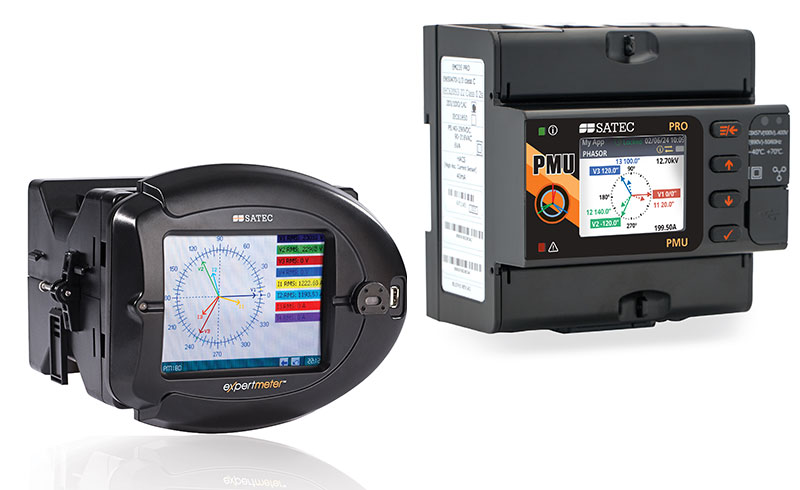
SATEC provides industry-leading PMU solutions with IEEE C37.118 compliance, delivering unparalleled visibility into grid dynamics with measurement speeds of up to 200 frames per second, far exceeding minimum requirements.
Our PMU technology offers exceptional accuracy for monitoring phase angle, frequency and rate of change of frequency (RoCoF), supporting Australian utilities and network operators in their renewable integration efforts. SATEC’s PMU comes with integrated high-speed data recording capabilities that capture pre-and post-event information, enabling detailed analysis of grid disturbances and facilitating continuous improvement in system security.
Our solutions integrate seamlessly with existing energy management systems while providing the advanced capabilities required for tomorrow’s renewable-dominated grid.
FAQs - IEEE C37.118 Synchrophasors for Australia’s Renewable Integration
What is IEEE C37.118 and why is it important for Australia’s grid?
IEEE C37.118 is the international standard that defines how synchrophasor measurements are taken and communicated, ensuring PMUs from different vendors work together reliably. For Australia, it underpins the high-speed, high-accuracy visibility needed to manage a renewable-heavy NEM.
How do synchrophasors differ from traditional SCADA monitoring?
Traditional SCADA typically samples data every few seconds, while IEEE C37.118-compliant PMUs capture 50–200 measurements per second with GPS time-stamping, providing much finer-grained insight into fast-changing grid conditions.
How do synchrophasors help with renewable integration and grid stability?
Synchrophasors give operators real-time visibility of phase angles, frequency and oscillations across wide areas, helping them detect instability early and securely host more wind and solar on the grid.
Why choose SATEC PMUs for Australian applications?
SATEC’s IEEE C37.118-compliant PMUs deliver high-speed measurements up to 200 frames per second, integrated disturbance recording, and seamless integration with existing systems, supporting utilities and operators as they modernise the grid for a renewable future.
Explore related topics:
For Your Industry
Standards & Compliance
- Wide Area Monitoring System (WAMS) with IEEE C37.118 Compliant PMUs
- PMU to PDC Real-Time Data Transfer: IEEE C37.118 Interoperability for Australian Grid Infrastructure
Related Reading


