

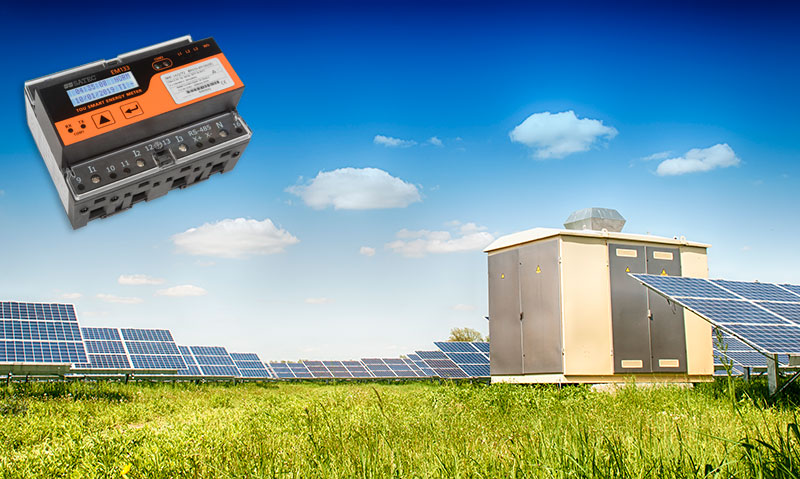
Solar plus battery storage installations require advanced smart metering infrastructure to ensure accurate energy measurement, billing compliance and optimal system performance complete with National Measurement Institute (NMI) approved energy metering.
Smart metering integration with Battery Energy Storage Systems (BESS) presents unique challenges for Australian installers, particularly when navigating National Electricity Rules and local regulatory requirements.
Smart Metering Architecture for Solar BESS Integration
Advanced smart metering infrastructure for solar plus storage systems requires bi-directional measurement capabilities to accurately track energy flows during charging, discharging and grid interaction periods.
Modern smart meters must capture real-time data for solar generation, battery state-of-charge and net grid consumption or export. The metering configuration typically includes production meters for solar arrays, consumption meters for load monitoring and import/export meters at the grid connection point.
National Measurement Institute (NMI) standards govern accuracy requirements for revenue-grade metering, including Class 0.5S accuracy recommended for commercial and industrial applications.
Smart metering embraces communication options along with supporting interval data logging aligned with market settlement periods.
Australian Regulatory Framework and Compliance Standards
Solar battery installations must comply with multiple regulatory frameworks depending on system size, location and grid connection arrangements.
Understanding these requirements early in the design phase prevents costly retrofits and ensures seamless commissioning processes for residential, commercial and industrial deployments.
AS 4777 Grid Connection Requirements
AS 4777 sets the product/performance requirements for grid-connected inverters, covering things like power quality limits (harmonics, voltage fluctuation), voltage/frequency disturbance ride-through and mandated response modes (e.g., volt-var / volt-watt / frequency-watt).
Smart meters monitoring solar BESS installations provide a broad range of electrical data such as voltage, power factor, current, demand, harmonics and energy as a bare minimum.
NMI M6-1 Electricity Meters Pattern Approval
The National Measurement Institute’s (NMI) M6-1 standard governs electricity meter accuracy, environmental performance and functionality requirements for revenue metering applications.
Solar BESS installations requiring bi-directional energy measurement utilise pattern-approved meters meeting accuracy Class 1 or better for residential applications and Class 0.5S for commercial and industrial installations.
NMI pattern approval processes also include testing for four quadrant energy meters that measure reverse energy flows, maintaining accuracy across wide current and power factor ranges.
Smart meters that have interval data collection capabilities along with real-time clock, event logging, Basic Power Quality Data (BPQD) and other advanced features provide critical data collection for forensic analysis.
AEMO Market Settlement and Data Requirements
Australian Energy Market Operator (AEMO) procedures specify data collection, validation and reporting requirements for grid-connected energy storage systems participating in electricity markets.
Smart metering systems should provide 5-minute interval data for settlement purposes, other interval data is available on advanced smart energy meters.
Energy metering for Frequency Control Ancillary Services (FCAS) applications require high speed response of 50ms or less with more advanced smart meters providing data logging requirements per AEMO specifications.
Successful commissioning of smart metering systems for solar BESS and all other energy monitoring applications requires a systematic approach for validation and programming as part of the verification procedures.
Measurement Accuracy Verification and Calibration Procedures
Commissioning procedures should verify measurement accuracy across bi-directional energy flows, with particular attention to low-current accuracy during standby and trickle-charging modes.
Test protocols should validate current transformer ratios, voltage reference accuracy and power measurement precision using calibrated reference standards traceable to national standards.
Solar generation output will vary based on weather conditions which have an impact on energy production based on irradiance levels. NATA-accredited testing facilities provide calibration certificates meeting regulatory requirements for revenue-grade energy metering.
Optimising Solar BESS Performance Through Advanced Metering
Smart metering integration represents a critical component of successful solar plus battery storage installations, enabling accurate energy accounting, regulatory compliance and system optimisation across diverse Australian market conditions.
Proper design and commissioning of smart metering infrastructure ensures reliable revenue-grade measurement, supports grid stability services and provides the data foundation for energy trading and demand management applications.
Professional installation teams should prioritise accuracy verification, communication system reliability and ongoing calibration requirements to maximise system value and operational performance throughout the asset lifecycle.
SATEC provides comprehensive smart metering solutions specifically designed for solar plus battery storage applications across Australian energy markets. Our advanced power meters deliver Class 0.5S accuracy for commercial BESS installations, with multiple communication capabilities and cloud-based data management through the Expertpower platform.
SATEC meters support bi-directional energy measurement, interval data collection per NER Chapter 7 requirements, and real-time monitoring capabilities essential for solar battery system optimisation and regulatory compliance in Australian grid environments.
FAQs - Smart Metering for Solar Plus Battery Storage
Do solar plus battery systems need NMI pattern-approved meters?
Yes. Use NMI M6-1 pattern-approved, bi-directional meters: Class 1 or better for residential and Class 0.5S for commercial and industrial installations.
What metering configuration is typical for solar BESS?
Install production meters for PV, consumption meters for loads and an import/export meter at the grid point to capture charging, discharging and net grid flows.
What data and standards must my smart metering comply with?
Meters must comply with AS 62053-22 and AS 62052-11 along with interval data monitoring (e.g., 5-minute for settlement) with remote communications.
What should commissioning verify for smart metering?
Validation and programming of energy meters, CT ratios, voltage references, phase angles and communications.
Explore related topics:
Standards & Compliance
- Small-scale Technology Certificates (STCs): How They Work and Why Smart Metering Matters
- NEM Metering Installation Types Explained: A Complete Guide To Types 1 To 9
Related Reading
Trending in Your Sector


